.png)
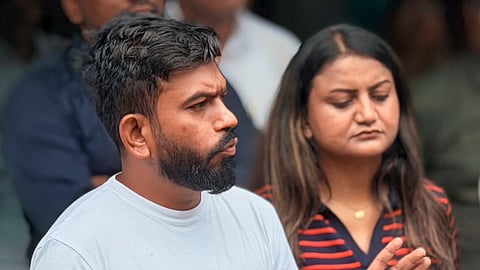
Foreign links or domestic dissent? Questions surrounding the CJP protests
India cannot afford to be complacent about attempts by external actors to manipulate its political debate, undermine public confidence in institutions or exploit domestic grievances. Any covert foreign sponsorship of political mobilisation, if established, would raise serious questions about democratic accountability, particularly where undisclosed interests seek to influence public decisions without accepting responsibility for the consequences.
Protecting India's electoral mandate therefore requires law enforcement and counter-intelligence agencies to have the capacity to identify and investigate organised foreign interference. Such efforts, however, must be grounded in verifiable evidence, follow due process and distinguish legitimate political dissent from unlawful activity.
Questions over overseas influence and the CJP movement
Concerns about foreign interference have increasingly featured in Indian political commentary and social media discussions. These concerns centre on the interaction between overseas commentators, international advocacy networks, digital platforms and domestic protest movements.
The emergence of the so-called Gen Z movement, including the Cockroach Janta Party (CJP), has brought these questions into sharper focus. Social media claims have described the movement as a potential cross-border influence operation targeting India and the elected government led by Prime Minister Narendra Modi. Such descriptions reflect concerns expressed by some commentators, but they should not be treated as established findings without corroborating evidence.
The movement's transition from online satire to street mobilisation has nevertheless raised questions about how digital communities develop into organised political campaigns. The Associated Press reported on the movement's emergence online and its subsequent street demonstrations, including calls to turn an internet joke into a revolution.
Digital platforms can undoubtedly help transform online communities into political pressure groups. Similar dynamics have been observed in countries where youth-led mobilisation has challenged governments and contributed to significant political upheaval. However, the presence of overseas supporters, international media attention or coordinated online messaging does not, by itself, establish foreign direction or financing.
The relevant questions concern who funds a movement, who administers its accounts, whether promotional spending is disclosed, how its organisational structures operate and whether any external entity exercises control over its activities. Where a movement acquires substantial reach before establishing transparent structures, examining these issues would help establish whether its growth reflects organic public participation, organised campaigning or a combination of the two.
Overseas commentators and the reach of digital political messaging
Overseas commentators have become prominent participants in debates concerning India's internal politics and national security. Some international publications and media platforms adopt strongly critical positions on the policies of the government in New Delhi. Their reporting and commentary can influence how Indian political developments are discussed abroad and among sections of the Indian diaspora.
Critics of some overseas media coverage argue that particular narratives reinforce anti-government campaigns within India. There have also been allegations that overseas funding and commentary have contributed to attempts to influence Indian electoral and political debates. These allegations require scrutiny of specific financial and organisational links rather than assumptions based on a publication's political orientation.
YouTube vloggers and other digital creators, both within India and abroad, also have the ability to amplify political messages to large audiences. Videos such as those asking why the “Modi Govt is scared of Cockroach Party” illustrate how influential online personalities can frame a movement's significance and encourage public engagement with its demands.
Such communication can connect domestic controversies with international audiences, including members of the Indian diaspora. It can also bring attention to issues that might otherwise receive limited coverage. The central concern arises when political communication involves undisclosed sponsorship, coordinated distribution intended to manufacture an appearance of widespread support, or operational links to foreign entities seeking to influence India's political processes.
A credible investigation would need to establish whether any such relationships exist. Investigators would have to distinguish independent commentary, voluntary audience engagement and legitimate advocacy from covertly directed campaigns designed to manipulate public opinion.
Pieter Friedrich and the 2021 farmers' protest toolkit controversy
The activities of foreign-based activists have previously attracted scrutiny in India. One prominent example is Pieter Friedrich, also referred to in some reports as Peter Friedrich, whose name emerged during the investigation into a social media toolkit circulated during the 2021 farmers' protests.
Delhi Police alleged that the toolkit was connected to efforts to coordinate online campaigning around the farmers' agitation. Investigators examined the document's authorship, the accounts listed in it and the people who might have been involved in its preparation and circulation. Friedrich's name appeared in reporting on the investigation, and police raised questions about his possible links to individuals associated with the document.
Friedrich denied involvement in preparing the toolkit and disputed allegations concerning his role. The fact that his name featured in the investigation should therefore not be treated as proof that he directed the campaign or was responsible for unlawful activity.
The controversy nevertheless illustrates why investigators may need to examine the international dimensions of political mobilisation. Questions about foreign-based individuals' involvement in domestic campaigns, their public statements, their organisational affiliations and the sources of any financial support can be legitimate subjects of inquiry where credible evidence warrants it.
The original allegations against Friedrich also raise broader questions about overseas advocacy concerning India, including criticism of the Indian government and support for separatist causes. Critics have accused some foreign-based activists of promoting narratives hostile to India and sections of the Indian diaspora, particularly Hindus in the United States. Such accusations must be assessed individually, using documented statements and evidence of conduct rather than treating all criticism of the Indian government as hostile activity.
The important questions remain whether any foreign citizen or organisation is acting on behalf of an undisclosed sponsor, whether funding or direction is being concealed and whether specific activities violate Indian law. The answers should emerge from evidence-based investigations, not from the nationality or political views of the people involved.
Lessons from Nepal, Bangladesh and other protest movements
The so-called Gen Z movements in countries such as Nepal and Bangladesh have also featured in discussions about the influence of international networks on domestic political change. Youth-led protests in both countries contributed to periods of serious political disruption and changes in government.
Some commentators have alleged that Western actors, foreign interests or wealthy individuals played a role in supporting or encouraging these movements. Such allegations require country-specific evidence, including financial records, communications and documented organisational links. Political upheaval or the participation of foreign-based commentators alone cannot establish that an external power orchestrated a protest movement.
The consequences of rapid political change can nevertheless be significant. Disruption to public administration, economic uncertainty and violence can undermine stability, particularly where protests escalate into confrontations with security forces or political opponents.
Similar concerns have been expressed about student protests and political mobilisation in France and Belgium, where critics argue that radical left-wing and Islamist groups have sought to use public demonstrations to challenge incumbent governments. These interpretations are contested and must be examined against evidence of specific organisations' conduct rather than applied broadly to protesters or political movements.
For India, the lesson is not that youth-led protests or international advocacy should automatically be regarded as threats. It is that authorities should have effective mechanisms to identify covert interference where it exists, while protecting the right of citizens to criticise the government and participate in peaceful demonstrations.
How foreign interference can exploit domestic grievances
Foreign actors seeking political leverage could attempt to exploit existing dissatisfaction through concealed funding, fabricated material, coordinated accounts or inflammatory messaging. Repeated circulation of similar claims across videos, articles and social media platforms could create the impression of spontaneous public consensus, even where some activity is organised or artificially amplified.
Overseas audiences can also help spread messages, support advocacy campaigns and attract international attention to domestic disputes. When such activity is directed or financed covertly by foreign interests, it can become a channel for influencing political debate through intermediaries.
Potential consequences include the intensification of social divisions, confrontation between rival groups and disruption of public institutions. Where demonstrably false claims or deliberate incitement accompany mass mobilisation, the risk of violence and political instability can increase.
However, it is equally important to recognise that domestic grievances may be genuine. Concerns about electoral processes, governance, civil liberties or public accountability cannot be dismissed simply because they receive international attention. Addressing legitimate grievances transparently and through established institutions can reduce the opportunities available to those seeking to exploit public dissatisfaction.
The challenge for Indian authorities is to identify unlawful foreign interference without conflating it with political opposition, independent journalism, international solidarity or peaceful protest.
What India can learn from Germany, Britain and Australia
Several democracies have introduced legal mechanisms to address particular forms of foreign interference and improve transparency around political influence.
Germany's Criminal Code, under Section 99, criminalises specified intelligence activities undertaken for a foreign power against Germany, including conduct directed towards supplying information. The provision illustrates how legislation can target identifiable activities connected to foreign intelligence services rather than treating ordinary political engagement as an offence.
Britain's National Security Act 2023 introduced a foreign-interference offence covering specified conduct that interferes with fundamental rights essential to democratic life. The legislation also provides for a Foreign Influence Registration Scheme, which requires the registration of qualifying arrangements involving political influence activities directed by foreign powers.
Australia's Foreign Influence Transparency Scheme similarly requires the registration of certain activities undertaken on behalf of foreign principals, subject to applicable exemptions. These activities can include lobbying, communications and disbursements. Australia also criminalises specified forms of foreign interference involving covert, deceptive or coercive conduct.
These frameworks are not identical, and their provisions operate within different constitutional and legal systems. Nevertheless, they offer a useful principle for India: political sovereignty can be protected more effectively when the identity of those funding, directing or coordinating political influence is transparent.
India should examine whether its existing legal and regulatory arrangements adequately address digital campaigning, indirect sponsorship, concealed financial relationships and organised influence conducted through foreign intermediaries. Any proposed changes should be carefully designed to protect national security without unnecessarily restricting political expression, journalism or legitimate international engagement.
A transparent inquiry must establish evidence, not presume guilt
A credible inquiry into allegations of foreign-backed political interference should examine funding trails, political advertising purchases, account-control records, organisational communications and evidence of deliberate incitement. Investigators should distinguish genuine audience engagement from artificial amplification and determine whether any links exist between online coordination and unlawful conduct.
The inquiry should also examine allegations involving hate speech, incitement to violence, fabricated propaganda and coordinated campaigns directed against India's elected leadership. Each allegation must be assessed on its own evidence, with clear distinctions between criticism of the government, which is a legitimate part of democratic debate, and conduct that violates the law.
Independent oversight, opportunities for those named to respond and the publication of substantiated findings would help establish public confidence in the process. Investigations should identify specific conduct and responsible individuals or organisations rather than rely on broad political labels or assumptions about foreign involvement.
India should consider establishing an independent, time-bound inquiry into credible allegations of foreign-backed interference intended to provoke disturbances or create political instability. Its remit could cover the CJP movement, relevant foreign-based commentators and activists, and any other individuals or organisations where reliable evidence warrants investigation.
The inquiry should establish whether any foreign government entity, private interest or intermediary provided concealed direction, funding or operational support for unlawful activity. It should then recommend enforceable safeguards where gaps in existing arrangements are identified.
The objective must be to establish responsibility through evidence, not to presume that a political movement is foreign-controlled because it attracts international attention or challenges the government. India's democratic institutions and citizens deserve a clear account of any genuine attempts to manipulate their political future, alongside firm safeguards for the rights that make democratic participation possible.


