.png)
Trump's visa crackdown could drive tech talent out of US, warns Microsoft president
Microsoft President Brad Smith has warned that the Trump administration's crackdown on H-1B visas and employment-based green cards could drive highly skilled technology professionals out of the United States, potentially undermining the country's leadership in artificial intelligence and software development for decades. His warning comes after the US government suspended Microsoft and seven other companies from a key programme used to sponsor foreign employees for permanent residency, intensifying a confrontation between the White House and major technology companies over immigration, employment practices and the future of America's skilled workforce.
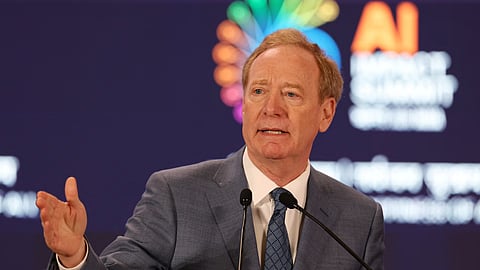
Speaking to Politico on the sidelines of the International AI Summit in Dublin, Ireland, Smith said policies that discourage talented engineers and researchers from building their careers in the United States could have lasting consequences for the country's technological competitiveness. He argued that restricting pathways to permanent residency would make it harder for American companies to attract and retain international talent at a time when competition for artificial intelligence specialists is intensifying worldwide. Smith also strongly rejected allegations by Vice President JD Vance that Microsoft had misused the H-1B programme to replace American employees with lower-paid foreign workers, describing the accusations as inaccurate and inconsistent with the company's hiring record.
𝗚𝗿𝗲𝗲𝗻 𝗰𝗮𝗿𝗱 𝗿𝗲𝘀𝘁𝗿𝗶𝗰𝘁𝗶𝗼𝗻𝘀 𝘀𝗽𝗮𝗿𝗸 𝗰𝗼𝗻𝗳𝗿𝗼𝗻𝘁𝗮𝘁𝗶𝗼𝗻
The dispute escalated after the Trump administration announced the suspension of Microsoft and seven other companies from the Permanent Labor Certification programme, commonly known as PERM. Administered by the US Department of Labor, the programme allows employers to initiate an important stage of the employment-based green card process by demonstrating that qualified and available American workers cannot be found for specific positions.
The suspension affects the companies' ability to sponsor foreign employees for permanent residency through this route. It does not, however, amount to a complete prohibition on hiring workers through the H-1B temporary visa programme. The distinction is significant because many foreign professionals already employed in the United States rely on employer-sponsored permanent residency applications to secure their long-term future in the country.
Besides Microsoft, the companies affected include Adobe, Cognizant, Infosys, Tata Consultancy Services, Wipro, HCL and Capgemini. The administration has linked the action to concerns about possible misuse of employment-based immigration programmes and the displacement of American workers.
The decision has implications beyond the companies directly involved. Employment-based immigration remains an important recruitment and retention mechanism for the American technology sector, particularly in specialised fields such as artificial intelligence, cloud computing, cybersecurity and advanced software engineering.
𝗦𝗺𝗶𝘁𝗵 𝗿𝗲𝗷𝗲𝗰𝘁𝘀 𝗩𝗮𝗻𝗰𝗲'𝘀 𝗮𝗹𝗹𝗲𝗴𝗮𝘁𝗶𝗼𝗻𝘀
The immediate controversy followed remarks by Vance, who accused Microsoft of exploiting immigration programmes while laying off American employees. At a White House news conference, the Vice President claimed that the company had dismissed approximately 6,000 American workers last year while receiving around 6,300 H-1B visas and nearly 3,000 green cards.
Vance argued that the figures indicated that foreign workers were being used to replace domestic employees, an allegation Microsoft has disputed. The administration maintains that immigration programmes must not be used to suppress wages or displace qualified American workers.
Smith challenged the interpretation of those figures, saying most of Microsoft's visa and green card applications involved employees already working for the company rather than newly recruited foreign professionals. He explained that lengthy delays in the permanent residency process often require companies to continue filing immigration-related applications for workers who have been employed in the United States for several years.
The Microsoft president also rejected suggestions that the company paid foreign-born employees less than American workers. He said Microsoft operated a common compensation system regardless of an employee's nationality or immigration status, disputing the claim that foreign professionals were being recruited primarily to reduce labour costs.
Smith further pointed out that Microsoft had hired more than 9,000 US-born workers during its previous financial year, arguing that the administration's account overlooked the company's domestic recruitment. He maintained that the figures presented by the White House did not accurately reflect the relationship between layoffs, immigration applications and new hiring.
𝗜𝗺𝗺𝗶𝗴𝗿𝗮𝗻𝘁 𝗹𝗲𝗮𝗱𝗲𝗿𝘀 𝗰𝗶𝘁𝗲𝗱 𝗮𝘀 𝗲𝘅𝗮𝗺𝗽𝗹𝗲𝘀
Smith also highlighted the contribution of immigrant executives and entrepreneurs to American technological innovation, pointing to the recent recognition of leading figures by President Donald Trump.
The Microsoft president noted that five of the six recipients of technology and science medals presented by Trump had originally arrived in the United States as immigrants. Among those honoured was Microsoft chief executive Satya Nadella, who was born in India and previously held an H-1B visa before rising through the company's leadership ranks.
Smith argued that the businesses associated with the five immigrant recipients collectively represented more than a quarter of the market value of the S&P 500 index, illustrating the economic significance of attracting talented individuals from overseas.
His comments underscored what he sees as a contradiction between recognising the achievements of immigrant technology leaders and introducing policies that could discourage future generations of skilled professionals from pursuing careers in the United States.
The Microsoft president warned that the long-term consequences could extend beyond individual companies, affecting innovation, productivity and the country's ability to maintain its position in emerging technologies.
𝗜𝗻𝗱𝗶𝗮𝗻 𝗽𝗿𝗼𝗳𝗲𝘀𝘀𝗶𝗼𝗻𝗮𝗹𝘀 𝗳𝗮𝗰𝗲 𝘂𝗻𝗰𝗲𝗿𝘁𝗮𝗶𝗻𝘁𝘆
The developments are particularly relevant to Indian technology professionals, who constitute a major group of beneficiaries of the H-1B visa programme and frequently depend on employer sponsorship to pursue permanent residency in the United States.
The H-1B programme allows American employers to recruit foreign professionals for specialised occupations, generally requiring advanced technical or professional qualifications. A green card, by contrast, provides permanent resident status and allows individuals to establish a more secure long-term future in the country.
For Indian workers already employed by American technology companies, the distinction between temporary work authorisation and permanent residency is especially important because employment-based green card applications can involve lengthy waiting periods.
Suspension from the PERM programme could complicate the permanent residency process for affected employees, although the precise consequences would depend on the status of individual applications and the scope of the government's action. The suspension does not automatically cancel existing H-1B visas or require all foreign employees of the affected companies to leave the United States.
The inclusion of major Indian-origin technology services companies among those facing restrictions also raises concerns about the wider impact on cross-border technology employment and workforce planning. Companies that depend on moving skilled professionals between India and the United States may need to reassess long-term staffing arrangements if access to permanent residency sponsorship remains restricted.
𝗔𝗜 𝗰𝗼𝗺𝗽𝗲𝘁𝗶𝘁𝗶𝗼𝗻 𝗮𝗱𝗱𝘀 𝘁𝗼 𝗽𝗼𝗹𝗶𝗰𝘆 𝗱𝗲𝗯𝗮𝘁𝗲
The confrontation comes at a time when countries are competing to attract researchers, engineers and entrepreneurs capable of developing advanced artificial intelligence systems. Smith's warning reflects concerns that uncertainty over immigration status could influence where highly skilled professionals choose to work, establish companies and undertake research.
The United States has historically benefited from its ability to attract international talent through universities, research institutions and technology companies. Foreign-born scientists and engineers have played important roles in the development of major American businesses, particularly in Silicon Valley and other technology centres.
Smith suggested that restricting permanent residency opportunities could weaken this advantage by encouraging the next generation of AI and software engineers to consider employment in other countries. Such a shift could have consequences for American companies seeking to expand research and development operations in an increasingly competitive global market.
The Trump administration, however, has defended tighter immigration controls as necessary to protect domestic employment and prevent companies from using foreign labour programmes to undermine American wages. Its position reflects a broader debate over whether skilled immigration programmes adequately safeguard local workers while meeting employers' demand for specialised expertise.
The controversy therefore raises questions not only about immigration enforcement but also about how the United States intends to balance domestic workforce protection with the need to remain attractive to international talent.
𝗕𝗿𝗼𝗮𝗱𝗲𝗿 𝗶𝗺𝗽𝗹𝗶𝗰𝗮𝘁𝗶𝗼𝗻𝘀 𝗳𝗼𝗿 𝗨𝗦 𝘁𝗲𝗰𝗵 𝘀𝗲𝗰𝘁𝗼𝗿
Smith's intervention marks a significant public challenge to the administration's approach from one of America's largest technology companies. While Microsoft has disputed the allegations against its immigration practices, the broader policy dispute is likely to remain contentious because of concerns about domestic employment, corporate accountability and the role of foreign workers in the technology industry.
The company's position is that existing immigration applications should not be interpreted as evidence that foreign workers are replacing Americans, particularly when many applications concern employees who have already been working in the country for years. The administration, meanwhile, has emphasised the need for stronger scrutiny of employers using visa and permanent residency programmes.
The disagreement has also drawn attention to the complexities of employment-based immigration, where applications for temporary work authorisation, renewals and permanent residency represent different stages of an employee's career rather than necessarily indicating new recruitment.
Although Smith criticised the administration's immigration measures, he has also expressed support for aspects of its approach to artificial intelligence regulation and export controls, indicating that the disagreement is concentrated on immigration policy rather than every element of the White House's technology agenda.
For now, the suspension of permanent residency sponsorship has introduced additional uncertainty for affected companies and their foreign employees. The outcome will depend on the administration's enforcement decisions and whether the restrictions are reconsidered or challenged.
Smith's warning places the potential long-term economic consequences at the centre of the debate. As the United States seeks to preserve its technological leadership, the dispute over skilled immigration is increasingly becoming a question of whether policies intended to protect American jobs could also make it harder for the country to attract the expertise needed to create future industries.
