.png)
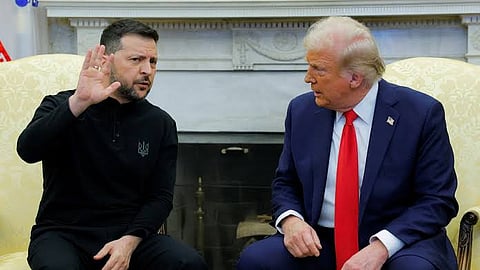
Trump defends Russia sanctions waiver, accuses Zelensky of not wanting to end war
US President Donald Trump has defended his decision to waive certain sanctions against Russia, accusing Ukrainian President Volodymyr Zelensky of being unwilling to end the war even as Washington claims to be making progress towards a peace agreement.
The dispute intensified after Trump signed an executive order on Friday, October 16, waiving several sanctions, restrictions and tariffs under the Lindsey O. Graham Sanctioning Russia and Iran Act of 2026. The law, named after the late US senator Lindsey Graham, was designed to impose sweeping measures on Russia and certain foreign entities linked to its energy trade.
Trump has also temporarily eased sanctions affecting Russian diesel supplies, allowing more fuel to enter global markets in a bid to bring down prices ahead of the US midterm elections on November 3.
The decision has drawn criticism from supporters of Ukraine, who argue that easing economic pressure on Moscow could undermine efforts to end Russia’s war against its neighbour. Trump, however, has defended the move as being in the US national interest.
Trump claims progress towards peace deal
In a post on his Truth Social platform on Sunday, Trump said negotiations towards ending the war were progressing, but accused Zelensky of failing to show a similar commitment.
“I am working towards a Peace Agreement between Russia and Ukraine, and great progress is being made,” Trump wrote.
He then criticised the Ukrainian leader, saying: “Zelensky doesn't care, and frankly, with all of the money that Europe is famously giving him... he doesn't want to end this war, and probably never did.”
Trump has repeatedly blamed Ukrainian attacks on Russian energy infrastructure for contributing to disruptions in fuel markets. He specifically accused Kyiv of targeting Russian diesel refineries despite knowing that such strikes could affect supplies internationally, including in the United States.
“Zelensky is using Diesel Refineries in Russia as a target, knowing that these attacks are seriously hurting the world diesel markets, including those in the United States,” Trump said.
The US President also argued that Ukraine could have secured better terms in negotiations two years ago. He described the country as being in ruins, referred to the loss of territory and access to its oceans and seas, and said its male population had suffered heavy losses through deaths and injuries.
“He doesn’t want to end this war, and probably never did,” Trump wrote. “I WANT THIS WAR END!”
Sanctions waiver comes amid pressure over fuel prices
Trump's decision to ease sanctions follows months of efforts to contain rising energy costs in the United States ahead of the midterm elections.
The US war on Iran has disrupted oil shipments through the Strait of Hormuz, contributing to higher global energy prices. Trump has sought to separate those increases from the conflict involving Iran, instead pointing to Ukrainian attacks on Russian energy infrastructure as a factor affecting fuel supplies.
The temporary easing of restrictions on Russian diesel is intended to increase the volume of fuel available in global markets and ease price pressures.
Under the executive order signed on October 16, Trump invoked a provision of the Graham Act that allows the President to waive specified sanctions, restrictions and duties if doing so is considered to be in the national interest. The order also provides for continued monitoring of countries' purchases of Russian oil and gas, leaving the administration room to consider further action.
The move has triggered criticism in Washington, including from lawmakers who had supported tougher measures against Moscow. Critics have argued that the waiver weakens the pressure intended to compel Russia to change its course in Ukraine.
Zelensky accuses Trump of pressuring Kyiv to surrender
Zelensky, meanwhile, has accused Trump of trying to force Ukraine to surrender to Russia. In an interview with Bloomberg News on Sunday, the Ukrainian President also alleged that the US was deliberately restricting Ukraine's access to Starlink and Starshield satellite systems.
The systems are important to Ukraine's military operations, helping its forces detect and intercept incoming Russian drones and identify safer routes for transporting food and supplies to troops.
The White House has denied involvement in the temporary restrictions. A senior US official has also said Trump did not order limitations on Ukraine's access to Starshield technology.
Zelensky linked the dispute to the approaching US midterm elections, suggesting that Washington's political calculations were influencing its approach to the war.
“Now, we have dangerous days ahead of the elections,” he said.
He described a possible arrangement under which Ukraine would stop targeting Russian diesel facilities in exchange for additional Patriot missiles to protect Ukrainian infrastructure. However, he said Washington appeared more concerned about halting the attacks than providing the requested military support.
“My latest model was: We don’t target Russian diesel, you give us missiles for Patriot systems to protect our facilities. But they just want us to stop attacking diesel. And if we strike that, they will disconnect us from something,” Zelensky said.
Zelensky expects tensions to ease after US elections
Despite the growing disagreement, Zelensky said relations with Washington could improve once the November 3 midterm elections were over.
“Politics is very aggressive during election time,” he said, adding that he expected the situation to become calmer after the vote.
“I think it is agony now, but after elections, life will continue and I believe it will be calmer,” he said.
The exchange has further strained an already difficult relationship between Trump and Zelensky, with their disagreement extending from sanctions and energy supplies to military assistance and satellite communications. While Trump says he is pursuing a peace agreement, Kyiv remains concerned that Washington's efforts to curb Ukrainian strikes and ease pressure on Russia could weaken its position in the conflict.


