.png)
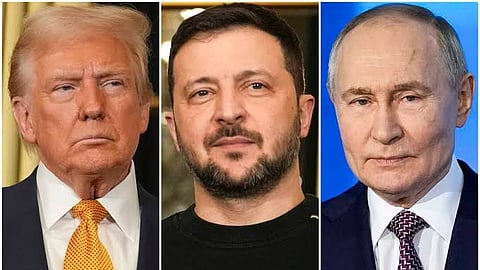
Trump claims Russia, Ukraine agree to halt attacks on energy targets amid border tensions
US President Donald Trump on Monday claimed that Russia and Ukraine have agreed to stop attacking each other's energy infrastructure, in a development he linked to the recent surge in global diesel prices.
Trump made the announcement in a post on Truth Social, saying Ukraine had agreed not to target Russian energy facilities and that Russia had agreed to reciprocate.
However, there was no immediate confirmation from either Kyiv or Moscow that a formal agreement had been reached.
The claim came a day after Trump urged Ukrainian President Volodymyr Zelenskyy to stop attacks on Russian diesel-producing facilities, arguing that the strikes were contributing to a global shortage of the fuel.
Trump links diesel price rise to Russia-Ukraine war
Trump also sought to attribute the rise in global diesel prices primarily to the Russia-Ukraine war rather than the conflict involving Iran.
"The World's Diesel price rise is mostly caused by the Russia/Ukraine War, not Iran," Trump wrote on Truth Social.
On Sunday, Trump had criticised Ukraine's attacks on Russian refineries and diesel infrastructure, saying there were other targets Kyiv could strike without disrupting fuel supplies.
A wave of Ukrainian drone attacks on Russian oil refineries in recent months has reduced Russia's fuel production and contributed to shortages inside the country. Ukraine has defended the attacks, arguing that Russia's oil industry helps finance and sustain its invasion and that refineries are legitimate military targets.
US diesel prices have also climbed sharply. The national average moved above $6 a gallon in September, adding pressure on transport, agriculture and other industries that rely heavily on diesel.
Kremlin welcomes call to stop attacks on diesel facilities
The Kremlin on Monday welcomed Trump's appeal to Ukraine to stop targeting Russian diesel infrastructure.
Kremlin spokesman Dmitry Peskov said Moscow supported calls to halt attacks on civilian economic infrastructure. At the same time, however, he attributed the broader instability in global energy markets mainly to the conflict and escalating tensions in the Persian Gulf.
Russia has faced fuel shortages in several regions following repeated Ukrainian strikes on refineries. The shortages have become a domestic political concern ahead of Russia's parliamentary elections scheduled for September 18 to 20. Moscow has also considered measures including restrictions on diesel exports to improve supplies in the domestic market.
Trump's announcement therefore comes against the backdrop of continuing attacks on energy infrastructure on both sides, rather than an established wider ceasefire in the war.
NATO promises greater support for Ukraine
While Trump was announcing the alleged energy understanding, NATO Secretary-General Mark Rutte said the alliance would increase its support for Ukraine following a series of Russian drone attacks near the country's border with Poland.
Rutte said the Russian strikes close to NATO territory demonstrated what he described as Russian President Vladimir Putin's "desperation" and desire to spread fear and terror.
"Russia is growing increasingly reckless as it continues its terrible war against Ukraine," Rutte said, according to the Associated Press.
He also rejected the idea that Russia could deter NATO from supporting Ukraine.
"He thinks that he can stop us from supporting Ukraine and that he can undermine our unity. He is wrong," Rutte said.
The latest incidents have heightened concern among NATO members over the possibility that Russia's attacks could increasingly affect territory close to the alliance's eastern flank.
Russian strikes reported near Polish border
The latest tensions followed Russian drone strikes in western Ukraine near the border with Poland.
A Russian drone struck a Kyiv-Warsaw passenger train close to the Ukrainian-Polish border, while another drone hit a gas station near the Yahodyn-Dorohusk border crossing. The attacks occurred close to Polish territory and prompted concern in Warsaw.
Polish officials have treated the incidents with the "utmost seriousness". The strikes also came as European officials were travelling through the region, further increasing concerns about the proximity of the attacks to NATO territory.
Polish Prime Minister Donald Tusk had warned that the coming weeks and months could see intensified Russian activity and said Warsaw could not rule out the escalation affecting Polish territory.
Tusk said Poland had information suggesting that Russia could target Ukrainian border areas and that Moscow could seek to disrupt or destroy Ukrainian border crossings, which could also affect Poland.
He said he would consult NATO allies on a possible coordinated response.
Moscow says attacks across Ukraine will continue
Russia has not indicated that it intends to halt its wider military campaign.
Asked about the strikes near the Polish border, Kremlin spokesman Dmitry Peskov said the targets were on Ukrainian territory and that Russian forces would continue carrying out their tasks across Ukraine.
"If I understand correctly, this is about Ukrainian territory," Peskov said, according to AFP.
"Our military are fulfilling their tasks on the whole territory of Ukraine. They will continue to do so," he added.
The comments indicate that Trump's claimed understanding on energy targets, if confirmed, would be narrower than a general cessation of hostilities.
Energy infrastructure remains central to the conflict
Energy facilities have increasingly become a major target in the Russia-Ukraine war, with both sides seeking to damage the other's ability to produce, transport or use energy.
Russia has repeatedly targeted Ukraine's power infrastructure, while Ukraine has expanded long-range drone attacks against Russian refineries and other oil facilities.
The competing attacks have added pressure to fuel and energy markets while also creating shortages within both countries.
Trump's latest claim could therefore have significant implications for fuel markets if Moscow and Kyiv formally implement a mutual halt on attacks against energy facilities. For now, however, the reported understanding remains based on Trump's announcement, with no immediate independent confirmation from either side.


