.png)
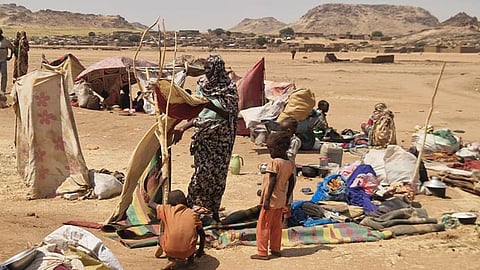
Sudan drone war kills 21 in Darfur market strike, cuts power across eastern regions
Drone attacks by Sudan's warring factions have killed 21 people at a market in the western Darfur region and disrupted electricity supplies across large parts of the country's east, medics and witnesses said on Tuesday, as the conflict intensifies and warnings grow over the risk of famine.
The latest violence comes as the Sudanese Armed Forces and the paramilitary Rapid Support Forces (RSF) increasingly rely on drones to strike targets across the country. The attacks have caused mounting civilian casualties, damaged critical infrastructure and further strained access to essential services in a conflict that began in April 2023.
Market strike in RSF stronghold kills 21
A drone struck a market in northern Nyala, the de facto capital of the RSF's administration in Darfur, at around 8 pm on Monday, according to residents who spoke to AFP.
The attack killed 21 people and wounded at least 40 others, a medical source and witnesses said. A medic at Nyala Hospital confirmed the toll but was unable to establish how many of those killed or injured were RSF fighters.
One resident said the market was hit by a drone on Monday evening. Another said the location was frequented by young men, including members of the paramilitary force.
"Twenty-one people were killed in last night's bombing, and more than 40 others injured," the medic said.
The Sudanese military regularly carries out strikes on Nyala, where the RSF has established a rival administration challenging the internationally recognised, army-backed government based in Khartoum.
The latest attack follows a series of deadly strikes on markets and other civilian locations in Sudan in recent weeks. On October 16, a drone strike on a livestock market in Nyala killed 30 people and wounded 47, according to medical sources at the time. The army said it had targeted RSF command and control centres in the city, while the paramilitary group accused the military of killing civilians.
Drone attacks disrupt electricity supplies
While the fighting continues in Darfur, RSF drone strikes have increasingly targeted power stations and other infrastructure in areas controlled by the Sudanese military.
On Tuesday, drones operated by the paramilitary group struck the Al-Markhiyat transformer station, disrupting electricity supplies across large parts of Khartoum and Al-Jazira states, a source at the national electricity company told AFP on condition of anonymity.
The strike came a day after a coordinated drone assault on power stations left millions of people without electricity in Al-Jazira, White Nile, Sennar and Gedaref states.
Reports from the state electricity company said five power substations were hit on Monday, including facilities in Singa, Al-Hawata, Al-Faw, Mashkur and Al-Junaid. The attacks caused widespread outages and severe damage to equipment, threatening the stability of Sudan's national electricity grid.
The RSF has repeatedly targeted Khartoum's airport, as well as dams and power stations across the country's east. The military and the paramilitary group have stepped up their use of drones in recent months, extending the reach of attacks across areas controlled by their opponents.
The United Nations has repeatedly warned that strikes on electricity infrastructure threaten healthcare and other essential services for millions of people already struggling with the consequences of war.
Civilian toll rises as both sides intensify drone warfare
The conflict between Sudan's military and the RSF erupted in April 2023 following a power struggle over the country's political transition and plans to integrate the paramilitary force into the regular army.
The war is now being fought increasingly through drone operations, with both sides launching sophisticated attacks across the country. The strikes have killed dozens of civilians in individual incidents and damaged markets, transport hubs and other civilian facilities.
According to a United Nations tally, drone attacks killed more than 300 people and injured hundreds more during the first three weeks of October alone.
Aid workers estimate that the war has killed more than 200,000 people since it began, although the true toll remains difficult to establish. The fighting has also triggered the world's largest hunger and displacement crises, forcing millions from their homes and disrupting food production, trade and humanitarian operations.
Recent attacks have extended beyond Darfur and the eastern states. Strikes on transport hubs and markets in other parts of Sudan have also caused mass casualties, highlighting the growing danger to civilians as both sides expand their use of unmanned aircraft.
Returnees to Khartoum face unreliable services
The disruption to electricity supplies comes as residents attempt to return to areas previously recaptured by the military.
Close to three million people have returned to Khartoum state since the army regained control of the capital last year. However, many have struggled to rebuild their lives in a city scarred by fighting and years of neglect.
Electricity and water supplies remain unreliable, while unexploded ordnance continues to make large parts of the capital unsafe. Many residents are also struggling to afford food amid the collapse of the economy.
The repeated attacks on power infrastructure threaten to make the situation more difficult by disrupting hospitals, water systems and other services needed by returning residents and displaced families.
International warning over worsening hunger
The escalating conflict has coincided with a deterioration in food security, prompting warnings from the international community that urgent action is needed to prevent famine from spreading.
On Monday, 30 countries, including the United States, France and the United Kingdom, warned that Sudan faced an alarming deterioration in food security. They cited the war, a rapidly weakening currency, higher fuel prices linked to the conflict in the Middle East and drought associated with the El Niño climate phenomenon.
The humanitarian crisis has been compounded by poor rainfall and crop losses. Recent assessments have warned that millions of people face severe hunger, while disruptions to farming, livestock production and aid deliveries threaten to worsen food shortages.
Sudan's foreign ministry rejected the warnings on Monday, insisting that the country's food security situation was "reassuring" and seeking to "refute claims of famine".
It accused "some countries and organisations" of "politically exploiting the humanitarian situation".
The Sudanese army has for years denied claims of documented famine and has faced accusations of obstructing humanitarian aid. The latest international warning adds to pressure on the warring parties to protect civilians, allow humanitarian assistance to reach affected communities and prevent further attacks on critical infrastructure.
With drone strikes continuing across multiple regions, the latest casualties in Nyala and the widespread power cuts underline how the conflict is deepening both Sudan's security crisis and its humanitarian emergency.


