.png)
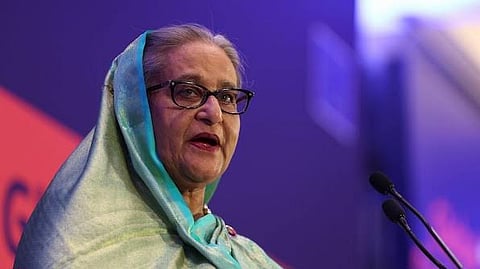
Sheikh Hasina seeks new passport, ID card ahead of planned return to Bangladesh in December
Ousted Bangladesh Prime Minister Sheikh Hasina has formally sought a new passport and national identity card (NID) from the country's diplomatic mission in New Delhi, taking a significant step towards her proposed return from India in December.
A letter seen by Reuters on Monday, November 9, shows that Hasina's lawyers have approached the Bangladesh High Commission in Delhi to request fresh travel and identity documents. It is her first such formal communication with Bangladeshi authorities since she fled the country in 2024 following a student-led uprising that ended her 20-year rule.
Hasina has told Reuters that she intends to return to Bangladesh and surrender before a court. Her aides said on Monday that the date of her return would be announced once the necessary formalities had been completed.
However, the proposed return could trigger fresh political and legal tensions. Hasina was sentenced to death in absentia by Bangladesh's International Crimes Tribunal in November 2025 over her alleged role in ordering a deadly crackdown on protesters. She has denied the charges while living in exile in India.
Lawyers seek urgent processing of passport and NID applications
The request was made by Hasina's lawyers at London-based Matrix Chambers in a letter addressed to Preeti Rahman, acting high commissioner at Bangladesh's embassy in Delhi.
The lawyers said Hasina's existing Bangladeshi passport and NID had reportedly been revoked by the interim government and other authorities. They asked the diplomatic mission to issue new documents on the basis of her Bangladeshi nationality.
"In view of the reported revocation of her existing Bangladeshi passport and National Identity Card (NID) by the Interim Government and other authorities, I respectfully request that you take the necessary steps to issue a new Bangladeshi passport and National Identity Card for our client," the letter stated.
It also requested that the applications be processed "expeditiously", citing Bangladesh's obligations under international human rights instruments.
Preeti Rahman and spokespeople for Prime Minister Tarique Rahman in Dhaka did not immediately respond to requests for comment from Reuters.
The request, however, faces a potential hurdle. Bangladesh's government has indicated that it does not intend to issue Hasina a passport or travel document to facilitate her return. State Minister for Foreign Affairs Humaiun Kobir said on November 5 that Dhaka wanted her brought back through the extradition treaty between Bangladesh and India rather than as an ordinary traveller. Law Minister Md Asaduzzaman also said on November 8 that the government would take legal steps to secure her return under the existing arrangements.
Death sentence and legal proceedings await Hasina
Hasina's planned return comes against the backdrop of the legal proceedings arising from the 2024 uprising. Bangladesh's International Crimes Tribunal sentenced her to death in November 2025 in her absence, holding her responsible for ordering a deadly crackdown on the student-led protests that led to her removal from power.
She has rejected the allegations from India. Her stated intention to return and surrender before a court would bring her directly into the country's judicial process.
The legal position could also complicate her return. In August 2026, a prosecutor at the tribunal said Hasina could face difficulties appealing against the verdict because the statutory 30-day appeal period had passed. He argued that provisions sometimes available to fugitives seeking to challenge convictions did not apply in her case.
Awami League remains banned after Hasina's ouster
Hasina's return would also have major political implications. Her Awami League was Bangladesh's largest political party before she was removed from office, but it was subsequently banned. Several of its senior leaders and colleagues have been jailed, while others have gone into self-imposed exile in India and elsewhere.
Hasina ruled Bangladesh as prime minister for a total of 20 years across multiple terms and continues to enjoy support among sections of the population. Her return could deepen political divisions at a time when the government in Dhaka is seeking to restore stability after more than two years of upheaval.
The political environment has changed considerably since her departure. The Awami League was barred from contesting the February 2026 election, which brought Tarique Rahman to power. The current government faces the challenge of managing the legal case against Hasina while dealing with the continuing political divisions following the uprising.
Return could affect Bangladesh-India relations
Hasina has been living in India since fleeing Bangladesh in August 2024, after the student-led protests forced her to leave office. New Delhi's decision to provide her refuge contributed to a sharp deterioration in relations between the two neighbouring countries.
Bangladesh has sought her extradition from India, while New Delhi has not handed her over. The passport request adds another dimension to the diplomatic and legal questions surrounding her future.
While her return could sharpen political tensions within Bangladesh, it could also create an opportunity to address some of the strains in bilateral relations with India. Whether the embassy processes her applications, and how the Bangladeshi government responds to her stated plan to return, remain key questions ahead of December.


