.png)
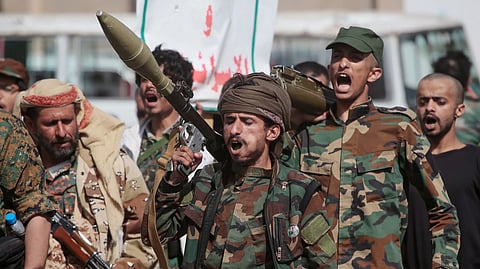
Saudi Arabia raises alert in Mecca amid Houthi threat, 'turns to Israel for intelligence help'
Saudi Arabia has reportedly heightened security preparedness around Mecca amid escalating threats from Yemen’s Iran-backed Houthis, even as reports suggest Riyadh has sought intelligence assistance from Israel to better assess the group’s military capabilities. The developments point to growing Saudi concern over the possibility that widening hostilities involving the Houthis could once again spill across its borders, while also revealing how a common security threat may be encouraging discreet cooperation between two countries that do not have formal diplomatic relations. The reported alert around Mecca is particularly sensitive given the city’s status as Islam’s holiest site and the millions of pilgrims it receives annually, although there has been no indication that the city itself has been successfully targeted.
Mecca security heightened
Saudi Arabia has extensive experience confronting the Houthis after leading a military coalition that intervened in Yemen’s civil war in 2015. In the years that followed, the group repeatedly demonstrated its ability to launch missiles and drones deep into Saudi territory, targeting airports, cities and critical energy infrastructure. Direct attacks declined as Riyadh pursued negotiations aimed at reducing hostilities and extricating itself from the conflict, but the Houthis have since developed into an increasingly formidable regional military force. Their expanding missile and drone capabilities mean developments inside Yemen continue to pose a direct security concern for the kingdom.
The latest alert reflects fears that renewed escalation could again expose Saudi territory to long-range attacks. Riyadh has spent heavily on air-defence systems and maintains extensive security arrangements around Mecca and other sensitive locations. The Houthis’ ability to operate increasingly sophisticated weapons, however, has complicated the regional threat environment, particularly as the group expands operations beyond Yemen.
Israel intelligence sought
Against this backdrop, Saudi Arabia reportedly approached Israel for intelligence related to Houthi activities and capabilities. Israel has accumulated extensive information on the Yemeni group following repeated missile and drone attacks directed towards Israeli territory and Red Sea shipping. Israeli forces have also carried out strikes against Houthi-controlled targets in Yemen, giving the country a growing operational interest in understanding the group’s command structures, launch sites and weapons networks.
Neither Riyadh nor Tel Aviv has publicly confirmed the extent of any intelligence cooperation. Nevertheless, the reported contact is significant because Saudi Arabia and Israel still lack diplomatic relations. Before the Gaza war, the United States had been attempting to broker a historic normalisation agreement between them. That process was disrupted by the conflict, with Riyadh subsequently maintaining that meaningful progress towards Palestinian statehood would be necessary before formal relations could be established.
Shared concerns about Iran and Tehran-aligned armed groups have nevertheless created areas of overlapping strategic interest. Intelligence concerning Houthi missiles, drones, weapons transfers or planned operations could therefore be valuable to Saudi Arabia without necessarily indicating that diplomatic normalisation is imminent.
Red Sea pressure grows
The Houthis have dramatically expanded their regional role since the Gaza conflict, launching missiles and drones towards Israel and attacking commercial vessels in the Red Sea and surrounding waters. They say their operations are linked to the Palestinian cause, while Israel, the United States and their allies accuse the group of endangering international shipping and regional stability.
The Red Sea is one of the world’s most important maritime corridors, connecting Asian and European markets through the Bab el-Mandeb Strait and Suez Canal. Persistent attacks have already prompted some shipping companies to send vessels around the Cape of Good Hope, increasing journey times and transportation costs. Any further Houthi military advance near the coast could therefore have consequences extending far beyond Yemen.
Riyadh faces dilemma
Saudi Arabia now faces a difficult balancing act. It wants to avoid returning to the costly military confrontation that dominated much of the previous decade while ensuring that the Houthis cannot again threaten Saudi cities, energy facilities or religious centres. Renewed fighting involving the group, Israel and other regional actors could undermine Riyadh’s attempts to preserve the relative calm along its southern frontier.
The reported Israeli intelligence request illustrates how quickly old regional alignments can become complicated when security interests converge. Saudi Arabia and Israel remain divided over the Palestinian question and formal diplomatic recognition, yet both increasingly regard Houthi military capabilities and Iran’s wider regional network as significant strategic concerns. For Riyadh, the reported Mecca alert is therefore about more than protecting one city. It reflects a broader fear that a conflict Saudi Arabia has spent years trying to leave behind could once again arrive at its doorstep.


