.png)
Nepal urges countries to restrict travel warnings to flood-hit zones, says 'rest of nation safe'
Nepal urged foreign governments to restrict their travel advisories to areas directly affected by the catastrophic floods, stressing that most of the Himalayan country remains safe, accessible and open to tourists.
The Ministry of Foreign Affairs said it was coordinating with Nepalese missions overseas and friendly countries to ensure that warnings accurately reflected the geographical extent of the disaster instead of discouraging travel across Nepal. The appeal comes as the country attempts to protect its crucial tourism industry while continuing massive search, rescue and recovery operations in the flood-ravaged north.
The United States on September 4 placed Nepal under Level 2, advising travellers to “exercise increased caution” because of natural disasters. It imposed its highest Level 4 “Do not travel” warning specifically for the Rasuwagadhi-Timure-Syafrubesi belt in Rasuwa district, including the Nepal-China border crossing, citing damaged infrastructure, disrupted transport and communications, continuing rescue operations and the possibility of further flooding and landslides.
Nepal says disaster localised
Nepal’s government has emphasised that the worst destruction is concentrated in specific areas, particularly parts of Rasuwa, Nuwakot and Dhading. Foreign Minister Shisir Khanal earlier told diplomats that airports were operating normally and major tourism destinations including Kathmandu, Pokhara, Chitwan, Lumbini, Janakpur, the Annapurna and Everest regions and Bardiya remained open.
The government’s appeal comes at a crucial time for the tourism-dependent economy, with the disaster coinciding with the beginning of Nepal’s important autumn tourism season. Authorities are concerned that sweeping travel warnings and cancellations could deepen the economic consequences of the floods for hotels, guides, restaurants and communities dependent on visitors.
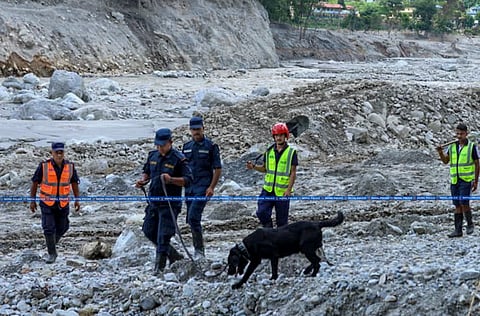
The scale of the disaster, however, remains enormous. According to the Foreign Ministry’s latest official update Sunday afternoon, 1,341 bodies have been recovered while around 5,000 people remain missing, including approximately 600 foreign nationals from 35 countries. More than 13,100 people have been rescued, including over 300 foreigners.
Search operations continued for a 12th day, including at hydropower project tunnels, with specialist teams from India, China and South Korea assisting Nepalese authorities.
Restrictions for flood zones remain
Nepal has not sought to discourage warnings for locations where conditions remain hazardous. Instead, it wants foreign governments to distinguish between devastated areas and destinations unaffected by the floods.
The Foreign Ministry said unstable terrain, landslide risks and continuing helicopter and rescue operations meant foreign journalists seeking to enter affected areas would also need accreditation through the Department of Information and Broadcasting.
The floods have caused extensive damage to transport and energy infrastructure. A preliminary assessment found around 7,570 houses affecting nearly 33,000 people damaged, along with 55 km of roads, 37 motorable bridges and 68 suspension bridges. Thirteen hydropower projects have also been affected.
As rescue and recovery efforts continue, Kathmandu is attempting to balance warnings about genuine risks in the disaster zone with the message that Nepal as a whole has not been shut to travellers.


