.png)
NASA conducts second rocket fuelling test that will decide when Artemis astronauts head to moon
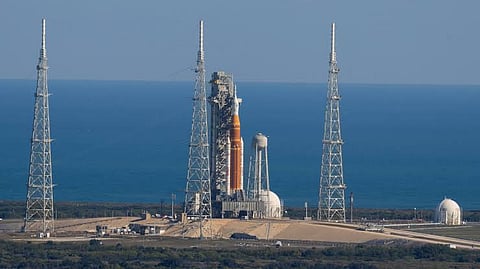
NASA took another crack at fuelling its giant moon rocket Thursday after leaks halted the initial dress rehearsal and delayed the first lunar trip by astronauts in more than half a century. For the second time this month, launch teams pumped more than 700,000 gallons (2.6 million liters) of supercold fuel into the rocket atop its launch pad. They counted all the way down to the half-minute mark as planned, then turned back the clocks to run through the final 10 minutes again. NASA completed the test late at night and said there was minimal hydrogen leakage, well within safety limits. It was the most critical and challenging part of the two-day practice countdown. Engineers were analysing the data, with the outcome determining whether a March launch is possible for the Artemis II moon mission with four astronauts.
In a positive sign, the US-Canadian crew prepared to enter a two-week quarantine period Friday to provide what NASA called flexibility within the March launch window. Three of the astronauts joined the launch team Thursday to monitor the progress. During the rehearsal two weeks ago, dangerous amounts of supercold liquid hydrogen escaped from the connections between the pad and the 322-foot (98-meter) Space Launch System rocket. Engineers replaced a pair of seals and a clogged filter in hopes of getting through the repeat test at Kennedy Space Center. NASA said Thursday's results gave engineers confidence in the new seals. The soonest the astronauts could soar is March 6. They will become the first people to fly to the moon — making a 10-day out-and-back trip with no stops — since Apollo 17 in 1972. They won't orbit or land. NASA has been battling hydrogen fuel leaks ever since the space shuttle era, which provided many of the SLS engines. The first Artemis test flight without anyone on board was grounded for months by leaking hydrogen before finally blasting off in November 2022. Going years between flights exacerbates the problem, according to NASA's new administrator Jared Isaacman, a tech entrepreneur who financed his own trips to orbit through SpaceX.
Just two months into the job, Isaacman already is promising to redesign the fuel connections between the rocket and pad before the next Artemis III launch. Still a few years away, that mission will attempt to land two astronauts near the moon's south pole. “We will not launch unless we are ready and the safety of our astronauts will remain the highest priority,” he said last week on X. Isaacman reiterated the need for safety midway through Thursday's fueling test, as he released a scathing report on Boeing's Starliner capsule program that left two astronauts stuck for months aboard the International Space Station. He said the crisis could have resulted in a loss of crew, and he blamed both Boeing and NASA leadership.
