.png)
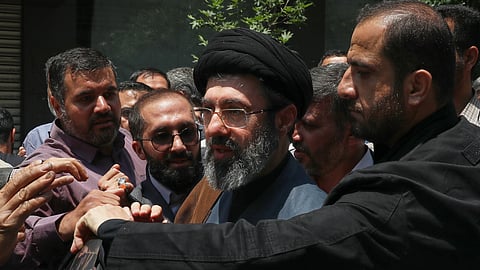
Mojtaba Khamenei stresses control over Strait of Hormuz after meeting with Mohsen Rezaei
Iran's Supreme Leader Ayatollah Mojtaba Khamenei has emphasised the importance of maintaining control over the strategically vital Strait of Hormuz while safeguarding the country's national interests, following a meeting with Supreme National Security Council chief Mohsen Rezaei on Tuesday.
According to Iranian state media, the two leaders discussed national and regional security, Tehran's conditions for ending the ongoing conflict and the need to strengthen bilateral relations with neighbouring countries.
Khamenei reportedly stressed that Iran must protect its interests and maintain its stated conditions for ending the war, even as diplomatic efforts to reduce tensions in West Asia gather momentum.
The meeting came a day after senior officials from Saudi Arabia, Turkey and Pakistan visited Tehran for discussions aimed at finding a way to de-escalate the regional conflict.
Control over Hormuz remains central
Iranian state media reported that maintaining control over the Strait of Hormuz was among the principal issues discussed during the meeting between Khamenei and Rezaei.
The narrow waterway connecting the Persian Gulf with the Gulf of Oman is one of the world's most important maritime trade routes, particularly for oil and liquefied natural gas shipments.
Before the conflict began in February, approximately one-fifth of global oil and liquefied natural gas shipments passed through the strait. Maritime traffic has since faced severe disruption amid military hostilities and restrictions.
Iran has repeatedly maintained that control over the waterway is essential to its national security and regional interests.
Rezaei has previously argued that Tehran must retain authority over the management of the strait to ensure security in the region.
The issue has emerged as a major point of disagreement between Iran and the United States, with Washington seeking the restoration of maritime traffic and Tehran linking any reopening to broader political and security conditions.
Talks follow regional diplomatic initiative
The meeting followed discussions in Tehran on Monday involving representatives of Saudi Arabia, Turkey and Pakistan.
The three countries, which signed the Mecca mutual defence pact in August, have been seeking ways to reduce tensions in the region.
Their visit marked the first high-level engagement between Iran and the three countries since the conflict expanded to involve Saudi Arabia and Yemen's Houthi movement directly.
The diplomatic initiative comes amid growing concerns about regional security, disruptions to energy supplies and the wider economic consequences of the continuing hostilities.
Iranian officials have indicated that the country's security interests and conditions for ending the war remain central to any diplomatic settlement.
Iran maintains conditions for ending war
Tehran has demanded an end to the US blockade of Iranian ports and the removal of American sanctions on Iranian oil exports as part of its conditions for ending the conflict.
The Iranian leadership has also insisted that any agreement must address its security concerns and prevent further military attacks.
An Iranian official said on Monday that the country's nuclear programme would not be discussed during the meeting with representatives of Saudi Arabia, Turkey and Pakistan.
The official maintained that nuclear negotiations would remain off the agenda until Tehran's conditions for ending the war were fulfilled.
Washington, meanwhile, has continued to press Iran to reduce its nuclear enrichment activities as part of a broader settlement.
US Vice President JD Vance recently reiterated that reducing nuclear enrichment was necessary to bring the conflict to an end.
Khamenei calls for protecting national interests
Khamenei's meeting with Rezaei also drew attention because the Supreme Leader has not appeared publicly since succeeding his father, Ayatollah Ali Khamenei, who was killed during US-Israeli strikes in February.
Iranian state media reported that the Supreme Leader had emphasised the importance of protecting national interests while pursuing measures to strengthen regional security.
Reports also indicated that Khamenei wanted an end to the country's prolonged situation of neither war nor peace, although no detailed roadmap for achieving that objective was announced.
The latest developments come as regional diplomatic efforts continue alongside unresolved disagreements between Tehran and Washington over sanctions, nuclear activities and the future management of the Strait of Hormuz.
With the strategic waterway remaining central to both regional security and international energy supplies, Iran's insistence on maintaining control is likely to remain a major issue in negotiations aimed at ending the conflict.


