.png)
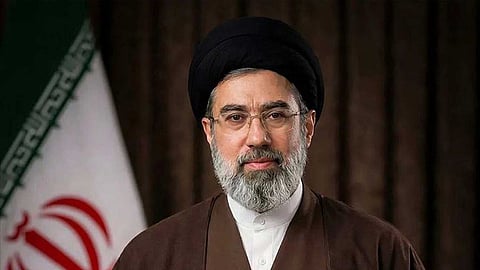
Mojtaba Khamenei calls for Muslim unity, urges Gulf states to confront ‘real enemy’
Iran’s Supreme Leader Mojtaba Khamenei on Sunday called on Muslim countries, particularly Gulf states, to strengthen cooperation and confront what he described as their “real enemy”, accusing the United States and Israel of benefiting from divisions across the Islamic world. Khamenei made the remarks in a written message issued during Islamic Unity Week, which coincides with the birth anniversary of Prophet Muhammad. The message was published on his Telegram account and carried by Iranian state media.
He argued that closer political, economic and security cooperation among Muslim countries could help address challenges confronting the region. “The solution to the Islamic Ummah’s problems lies in maintaining unity, friendship, and cooperation in the pursuit of goodness and virtue,” Khamenei said.
US, Israel accused of fuelling divisions
The Iranian leader described Washington and Israel as “sworn enemies” of Muslim unity and claimed their hostility extended beyond Iran to countries across West Asia and North Africa. He urged leaders, particularly those in the Gulf, to identify what he termed their “true enemy”, understand its strategy and respond collectively.
Khamenei also argued that religious, racial, cultural, economic, political and geographical differences had been exploited to create divisions among Muslim societies. He called for cooperation in areas including security, science, economic development and mutual defence.
Referring to the Palestinian issue, Khamenei questioned whether Palestinians would have been left in their present circumstances had Muslim countries acted with greater unity.
His characterisation of the US and Israel represents Tehran’s position and comes against the backdrop of a prolonged military confrontation involving Iran, the United States and Israel.
Appeal comes despite Gulf-Iran tensions
Khamenei’s call for solidarity with Gulf governments comes amid a complicated relationship between Tehran and its Arab neighbours. Since Iran’s 1979 Islamic Revolution, several Gulf monarchies have viewed Tehran’s revolutionary ideology and attempts to expand its regional influence with suspicion.
Those tensions have been sharpened during the current conflict. Iran has targeted US military facilities and other infrastructure in Gulf countries while responding to American and Israeli attacks, putting some of the same governments Khamenei is now urging towards greater cooperation in a difficult strategic position.
Gulf states have also maintained varying degrees of security, economic and diplomatic engagement with Washington, while some have established or expanded relations with Israel. Their strategic interests therefore do not necessarily align with Tehran’s portrayal of the regional confrontation.
Six months into Iran conflict
The statement comes around six months after US and Israeli forces launched strikes against Iran in late February, beginning a conflict that killed Khamenei’s father and predecessor, Ayatollah Ali Khamenei, and left Mojtaba Khamenei seriously injured.
The conflict has since imposed significant economic costs on Iran and disrupted trade and energy flows through the region. Tehran has faced intensified US sanctions, while Iranian officials have acknowledged pressure on foreign trade and the domestic economy.
Despite those pressures, Iran has shown little indication that it intends to fundamentally alter its regional or security policies. Khamenei’s latest message instead presents greater cooperation among Muslim states as Tehran’s preferred response to external pressure.
The Supreme Leader has not appeared publicly since suffering injuries in the February strikes, and his recent interventions have largely come through written statements.
Regional differences remain significant
While Khamenei framed Muslim unity as the answer to many of the region’s problems, substantial political and strategic differences remain among Muslim-majority countries over Iran, Israel, relations with the US and conflicts across West Asia.
His message therefore represents both a religious appeal during Islamic Unity Week and a broader political attempt by Tehran to encourage regional governments to distance themselves from Washington and Israel.
Whether Gulf governments respond to that appeal remains uncertain, particularly given their own security calculations and recent confrontations involving Iran.


