.png)
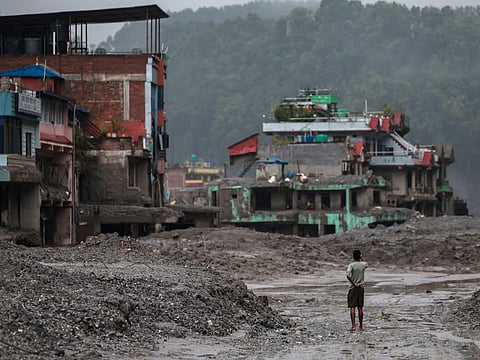
Flood alert along Budhigandaki after fresh deluge in Nepal’s Gorkha
Nepalese authorities issued a flood alert for settlements along the Budhigandaki river basin Sunday after a sudden deluge in the mountainous region of Gorkha triggered a sharp rise in water levels, raising fears of fresh flooding in areas already reeling from last month’s disaster. The Department of Hydrology and Meteorology (DHM) urged people living along the Budhigandaki and its downstream stretches to remain vigilant and take precautions as the surge moved through the river system.
According to authorities, a sudden rise in the Budhigandaki was detected following heavy rainfall and a mountainous deluge in the upper reaches of Gorkha. Residents in vulnerable settlements were advised to avoid riverbanks and other low-lying areas until the threat subsides.
Fresh threat after disaster
The warning comes less than two weeks after catastrophic floods struck Nepal on August 26, leaving more than 1,000 people dead and thousands missing across several districts. Search and rescue operations are continuing in some of the worst-hit areas, including at hydropower projects where workers were trapped inside tunnels.
Gorkha is among the districts affected by the wider disaster, which caused extensive damage to roads, bridges, drinking-water projects and other infrastructure. The recent Bhotekoshi flood alone damaged 55 drinking-water projects across Rasuwa, Nuwakot, Dhading and Gorkha.
The Budhigandaki originates in the Himalayan region and flows through Gorkha and Dhading before joining the Trishuli river system. Its steep mountainous catchment makes downstream areas vulnerable to sudden increases in discharge following intense rainfall, landslides or other events in the upper reaches.
Authorities step up monitoring
Nepal has stepped up monitoring of rivers and unstable mountain terrain following the August disaster, which also damaged several hydrological monitoring stations and disrupted early-warning infrastructure.
Authorities have been particularly concerned about the possibility of further landslides and sudden river surges as the landscape remains unstable following the massive floods. Officials have warned that fresh landslides could temporarily block rivers and create dangerous accumulations of water before suddenly releasing them downstream.
The government is also working to strengthen its flood and landslide early-warning network, including through new monitoring stations, cameras, seismic sensors and satellite-based communication systems in vulnerable Himalayan areas.
The DHM continued to monitor river levels across the country Sunday and advised residents in flood-prone areas to follow official warnings as Nepal confronts the risk of further extreme weather while recovering from one of its deadliest natural disasters in recent years.


