.png)
Deadly Nepal floods: Kathmandu seeks climate compensation, may send Balen Shah to UN
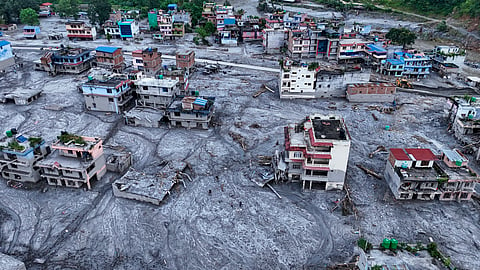
Nepal is preparing to seek international support for the devastating floods that have killed more than 1,100 people, with the government arguing that countries responsible for a large share of global emissions should help vulnerable nations deal with climate-related disasters.
Nepal has named China, the United States and India among the world's biggest greenhouse gas emitters. Foreign Minister Shisir Khanal said Kathmandu was shifting its approach from seeking aid to demanding compensation for the damage suffered by the country.
Nepal plans to take demand to UN
Kathmandu has formally approached the UN-backed Fund for Responding to Loss and Damage for urgent financial assistance. The government is also considering sending Prime Minister Balendra 'Balen' Shah to the United Nations General Assembly in New York to highlight the disaster and press for climate justice.
"We are shifting our diplomatic framework from aid to justice and compensation," Khanal said in an interview with Kantipur TV.
The 81st UNGA begins on September 8, with its general debate scheduled for the third and fourth weeks of September. Khanal had earlier been expected to represent Nepal at the gathering.
‘Not charity’, says Nepal
The floods swept through the Bhotekoshi river basin on August 26, devastating parts of Rasuwa, Nuwakot and Dhading. Homes, roads, bridges and hydropower infrastructure were damaged, while thousands were displaced.
Nepal has described the disaster as a "Himalayan Tsunami". According to figures cited from Nepal Police, at least 1,127 people have died and around 3,900 remain missing.
"This is not a matter of charity; it is a matter of legal and moral liability," Khanal told Kantipur TV.
Finance Minister Swarnim Wagle has estimated that Nepal could require $4-5 billion for reconstruction, an amount equivalent to nearly 10 per cent of the country's economy.
Nepal seeks global loss and damage funds
The country's formal request to the Fund for Responding to Loss and Damage seeks urgent financial assistance for the destruction caused by the floods. The request covers immediate needs as well as resettlement and reconstruction.
Kathmandu has also asked for specialised assistance, including tunnel-rescue teams, forensic experts and Bailey bridges, while Nepali embassies have been asked to brief other governments and donors about the country's requirements.
Although the disaster occurred near the Nepal-China border, the precise trigger and the extent of its connection to climate change require further scientific study. Initial assessments have pointed to a possible rock-and-ice avalanche and instability in the fragile Himalayan environment.
Nepal's argument is that a country contributing little to global emissions should not be left to shoulder the growing cost of disasters affecting its vulnerable mountain communities.


