.png)
China puts new battery storage factories on hold as overcapacity fears grip booming sector

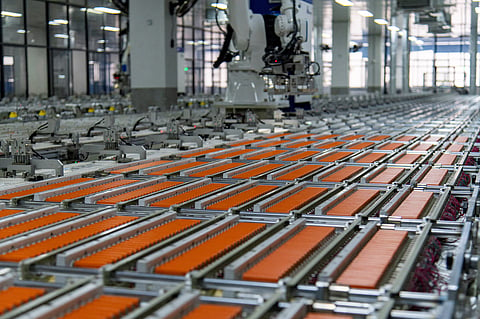
China has temporarily suspended approvals for new battery factories serving the energy storage sector as authorities review existing and planned manufacturing capacity amid growing concerns over overcapacity, according to reports. The move is significant for a country that dominates global battery manufacturing and has rapidly expanded storage capacity alongside its massive build-out of renewable power.
The review is focused particularly on battery cells and comes despite surging demand for storage systems used to balance electricity grids and provide backup power. Projects that have not yet broken ground will not proceed for the time being, while factories already under construction will remain unaffected. The policy is temporary and could be adjusted later depending on the outcome of the capacity review.
Overcapacity raises alarm
China's energy storage industry has expanded at breakneck speed as the country adds vast quantities of solar and wind generation. Batteries have become increasingly important for absorbing surplus renewable electricity and supplying it when generation drops. However, the rapid expansion of manufacturing capacity has also intensified competition among producers, putting downward pressure on battery prices and company margins.
The pattern mirrors developments in China's solar panel and electric vehicle industries, where aggressive investment and manufacturing expansion have created concerns about excess capacity and fierce price competition. Leading Chinese solar manufacturers have themselves been expanding into battery energy storage as they search for new sources of growth amid shrinking margins in their traditional businesses.
Beijing moves to rationalise market
The reported suspension is the latest indication that Chinese authorities are seeking to rationalise parts of the country's fast-growing clean-energy manufacturing sector. China has also introduced a consumption tax on lithium-ion batteries and solar cells as policymakers attempt to address imbalances created by rapid capacity expansion.
The underlying demand outlook for energy storage, however, remains strong. Contemporary Amperex Technology Co Ltd (CATL) expects energy storage to account for about half of its global sales by 2030, compared with roughly a quarter currently. The segment represented only around 2 per cent of its battery sales five years ago.
The temporary halt therefore reflects a shift towards controlling the pace of manufacturing expansion rather than weakening demand for storage itself. With China occupying a dominant position in global battery supply chains, any prolonged restriction on new manufacturing capacity could eventually have implications beyond its domestic market, even as factories already being built continue to add supply.

