.png)
India achieves Nuclear criticality, top scientist calls it "Akshay Patra Moment"

After more than two decades of painstaking scientific effort, India has crossed one of the most consequential milestones in its civil nuclear programme. The Prototype Fast Breeder Reactor (PFBR) at Kalpakkam in Tamil Nadu has achieved first criticality, the moment when a sustained nuclear fission reaction is established.
With this, India decisively advances into the second stage of its three-stage nuclear power programme, a vision first articulated by the Father of India's atomic program Dr Homi J Bhabha more than half a century ago. Calling the achievement historic, Dr Sreekumar G Pillai, Director of the Indira Gandhi Centre for Atomic Research (IGCAR), Kalpakkam said the moment represents far more than the commissioning of a reactor.
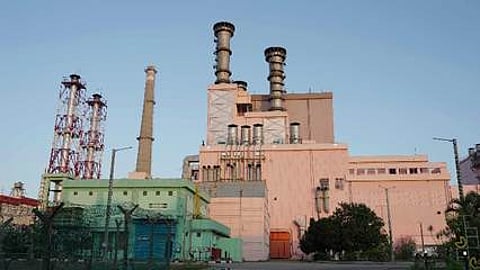
The massive pink-coloured building next to the Bay of Bengal houses a major technological breakthrough, glimpses of which NDTV got during rare access to the facility. "This attainment of the first criticality of the Prototype Fast Breeder Reactor is a defining milestone in India's nuclear power programme," Dr Pillai told NDTV. "It represents the realization of the visionary three-stage nuclear programme conceived by Dr Bhabha, aimed at ensuring long-term energy security through optimal utilization of limited uranium and vast thorium resources." The PFBR, located at Kalpakkam, is the country's first commercial-scale fast breeder reactor and among the very few such reactors operating anywhere in the world. With Russia being the only other country running a commercial fast breeder reactor at Yekaterinburg, India now joins an extremely exclusive technological club.
A Project Built on Institutional Memory
The PFBR is the product of sustained institutional effort spanning generations of scientists, engineers and policymakers. According to Dr Pillai, the achievement would not have been possible without consistent political backing and scientific leadership.
A Project Built on Institutional Memory
The PFBR is the product of sustained institutional effort spanning generations of scientists, engineers and policymakers. According to Dr Pillai, the achievement would not have been possible without consistent political backing and scientific leadership.
"This achievement has been made possible due to the sustained support and guidance of the Government of India," he said. "The leadership of Prime Minister Narendra Modi ji and the proactive role of the Prime Minister's Office have ensured policy continuity, strategic direction and timely decision making." He also credited Dr Jitendra Singh, Minister of State for Atomic Energy, for strengthening programme execution, and acknowledged the role of former and current leaders of the Department of Atomic Energy.
"The scientific leadership of Dr Ajit Kumar Mohanty has been instrumental in guiding the Department of Atomic Energy towards advanced reactor deployment and closure of the second-stage fuel cycle," Dr Pillai said. "The visionary contributions of Dr Anil Kakodkar were fundamental in shaping and advancing the fast breeder reactor programme."
Why It Took 20 Years
The PFBR project has often been described as delayed. Dr Pillai rejects that framing, calling the journey a necessary learning curve. "We were waiting for this moment for the last 10 to 15 years," he said. "There were a number of difficulties which we faced, mainly with respect to handling sodium at high temperature, materials reliability, control systems and sensors which had to be developed for a high-temperature sodium environment."
Liquid sodium is used as the coolant in fast breeder reactors. It allows efficient heat transfer but reacts violently with water and air, demanding extraordinary engineering precision.
"This was the first time such equipment was being designed and operated at this scale in the country," Dr Pillai explained. "It required elaborate testing and generation of data where no past experience was available."
The commissioning phase also took longer than anticipated. "During testing, we had to generate large amounts of data. This data does not exist in international literature and cannot be obtained from any other reactor," he said.

