.png)
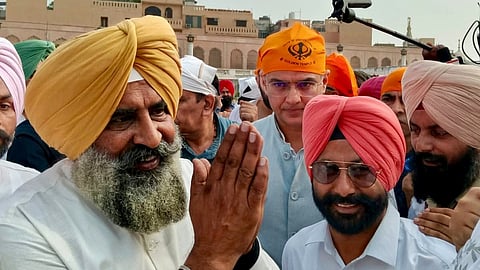
Punjab Congress challenges amended Form 6, disputes EC claim of consent to final voter rolls
The Punjab Congress has challenged the legality of the amended Form 6 used in the electoral-roll revision exercise, while disputing the Election Commission's assertion that political parties cooperated with the process and gave written consent to deletions. The confrontation comes ahead of the 2027 Punjab Assembly elections, putting the focus on voter enrolment rules, transparency and the documentation maintained by election authorities.
State Congress president Pargat Singh has termed the amended form “totally illegal”, arguing that neither Parliament nor the Supreme Court directed the changes. Hardeep Singh Kingra, the party's chief coordinator for the Special Intensive Revision (SIR) in Punjab, has separately denied that the Congress consented to the final electoral rolls, directly contradicting Chief Electoral Officer Anindita Mitra's account of the exercise.
Supreme Court yet to decide on Form 6 changes
The legal debate over the revised Form 6 has gained significance following a clarification by the Supreme Court on October 12. A three-judge bench headed by Chief Justice of India Surya Kant said the court had neither approved nor rejected the modified form and would examine the issue. Justice Joymalya Bagchi clarified that the revised form was not in existence when the court delivered its judgment upholding the constitutional validity of the SIR exercise in Bihar.
The court's clarification followed concerns over the Election Commission's September 26 statement that the declaration attached to Form 6 for SIR had been upheld by the Supreme Court. The matter has been tagged with similar petitions and is scheduled for a further hearing on October 27.
Form 6 is used by first-time voter applicants, including those who have turned 18 or acquired Indian citizenship, as well as people whose names were previously deleted and who are seeking fresh enrolment. The Registration of Electors Rules, 1960, require applicants to provide details of family members with whom they currently live, including their names and Elector Photo Identity Card numbers. The controversy concerns an additional declaration introduced in the online version of the form on the Election Commission's ECINET portal.
Election Commission cites revision figures
The SIR exercise in Punjab began on June 25, with Booth Level Officers conducting house-to-house enumeration. The draft electoral roll, published on August 13, contained 1,93,94,435 electors. Voters whose names were missing were given an opportunity to apply for inclusion through Form 6.
The final electoral roll, published on October 12, recorded 2,01,00,727 electors across Punjab's 117 Assembly constituencies. This was an increase of 3.64 per cent over the draft roll but a decline of 13.60 lakh, or around 6.33 per cent, from the 2,14,61,043 electors registered before the revision began.
The final list includes 1,03,76,026 male voters, 97,24,195 female voters and 506 third-gender electors. The Election Commission said 7,97,263 new electors had been enrolled, while 13,60,316 names were removed from the pre-revision electorate after accounting for additions and deletions.
The Commission attributed removals to deaths, permanent migration, voters who could not be traced at their registered addresses and duplicate entries. Of the 35,49,036 electors issued notices during the exercise, 86,038 were marked ineligible following verification and the issuance of speaking orders, according to reports on the final roll.
Chief Electoral Officer Anindita Mitra has maintained that the process was conducted transparently, with political parties kept informed and given opportunities to scrutinise the rolls. She said parties had cooperated with the exercise and expressed satisfaction at a meeting on Monday. She also maintained that deletions involving deaths, permanent relocation and duplicate entries had been made with the written consent of political parties.
The Congress's current position, as articulated by Pargat Singh and Kingra, directly disputes that account. The disagreement leaves the documentation of meetings, the written objections submitted by the party and the records cited by election officials central to the controversy.
Questions over consent and accountability
Pargat has challenged the legal basis for introducing additional requirements in Form 6, arguing that the changes were neither directed by the Supreme Court nor enacted by Parliament. He also questioned the Election Commission's earlier justification for the amendment, alleging that Chief Election Commissioner Gyanesh Kumar had claimed the changes were backed by a Supreme Court directive. Pargat further raised concerns about the statutory protections available to the Chief Election Commissioner.
Kingra said he had submitted several written objections, including concerns about possible data manipulation at the Election Commission level, and had sought responses from the authorities. He alleged that an official had promised a reply the following day, but said no consent, written or otherwise, had been given by the Congress.
The dispute has placed voter rights, transparency and the Election Commission's accountability at the centre of the political debate ahead of the 2027 Punjab Assembly elections. For the Congress, the challenge is to substantiate its objections to the revised form and establish the legal grounds for its claims. For the Election Commission, the issue is whether it can demonstrate that the revision complied with applicable rules, that deletions were properly documented and that eligible voters had an effective opportunity to seek inclusion.
The Supreme Court's clarification means that the legality of the modified Form 6 remains undecided. The immediate dispute in Punjab, meanwhile, concerns not only the form's additional requirements but also the sharply conflicting accounts of whether the Congress consented to the final electoral rolls.


