.png)
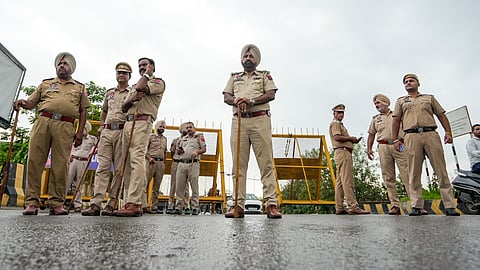
Pharma drugs overtake heroin as Punjab’s biggest narcotics challenge amid border crackdown
Pharmaceutical drugs are emerging as Punjab’s biggest narcotics enforcement challenge as an intensive crackdown on heroin smuggling from Pakistan forces trafficking networks to change their methods and supply routes, Punjab Police said on Sunday.
Police said addiction to pharmaceutical drugs was increasingly replacing heroin addiction as the foremost challenge for enforcement agencies, pointing to what they described as a major shift in Punjab’s narcotics market. The change follows the deployment of a multi-layered security network along the international border, combining anti-drone systems, specialised response teams, Border Security Force (BSF) coordination, checkpoints, CCTV surveillance and village-level intelligence.
While these measures have sharply reduced the street availability of heroin smuggled across the Pakistan border, police said pharmaceutical narcotics transported into Punjab from other Indian states were increasingly filling the supply gap.
Drug routes undergo major shift
According to Punjab Police, an estimated 80 per cent of pharmaceutical drugs now available in the state originate from places including Gujarat, Uttar Pradesh, Rajasthan, Haryana, Delhi and Himachal Pradesh.
Police described this as a reversal of an earlier pattern in which an estimated 80 per cent of illicit drugs entering Punjab were smuggled across the international border with Pakistan.
Since 2025, authorities have recovered 11.54 lakh pharmaceutical tablets and capsules from consignments linked to other states, according to police data. The substances are generally not manufactured in Punjab, police said, making interstate supply chains increasingly important to investigations. The emerging pattern has prompted authorities to seek greater coordination with states where the drugs are manufactured or through which consignments are transported.
Anti-drone shield squeezes heroin supply
Punjab Police attributed the decline in Pakistan-linked heroin availability partly to tighter surveillance against drones, which have become an important means of carrying relatively small narcotics consignments across the heavily guarded border.
Nine anti-drone systems are being deployed by Punjab Police, with three already operational in Amritsar, Tarn Taran and Ferozepur since August 2025.
The technology is designed to detect and locate unauthorised drones and identify suspected drug-drop sites, allowing security personnel to reach the locations before smugglers or their associates can collect consignments.
Police have also constituted 52 Drone Response Teams comprising 147 personnel. Working alongside the BSF, the teams respond to drone alerts, search suspected drop zones and attempt to intercept people arriving to collect packages.
The first layer of technological surveillance is reinforced by 64 second-line defence nakas manned by around 600 police personnel.
Another 2,367 CCTV cameras have been installed across 585 locations to monitor movement and assist intelligence gathering and investigations.
Village Defence Committees in border areas have also been linked with the Drone Response Teams to strengthen local intelligence and enable faster reporting of suspicious activity.
Nearly 80,000 arrested in anti-drug drive
Police said the scale of enforcement had increased considerably under the state's “Yudh Nashiyan Virudh” campaign.
Nearly 80,000 people have been arrested since the campaign began on March 1, 2025, while security agencies have recovered 486 drones linked to illegal cross-border activity, according to police.
Authorities have simultaneously intensified financial investigations aimed at dismantling the economic networks sustaining the narcotics trade.
Property worth more than Rs 336 crore has been frozen as investigators seek to prevent traffickers from retaining or reinvesting proceeds generated through illegal drug sales.
Police said the strategy was designed to move beyond individual seizures and arrests by targeting the financial


