.png)
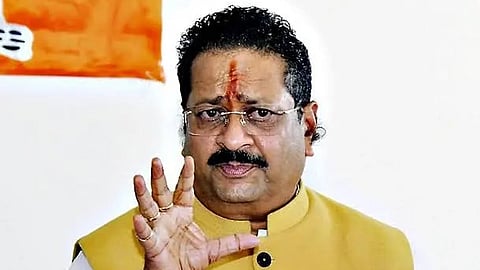
Karnataka voter roll row: Expelled BJP leader Yatnal booked over alleged false death certificates
Karnataka Police have registered a case against expelled Bharatiya Janata Party (BJP) leader and lawmaker Basanagouda Patil Yatnal and two others following allegations that death certificates were used to seek the deletion of eight living people from the electoral roll in Vijayapura during the Special Intensive Revision (SIR).
The case was initiated after Abdul Razak Bagwan, a vegetable vendor in Vijayapura, complained that he had discovered he was listed as dead and that a death certificate had allegedly been submitted to remove his name from the voter list. Bagwan told police he knew of at least seven other people who had reportedly been shown as dead in documents submitted by Yatnal.
The complaint has led to the ninth case registered in Karnataka over alleged attempts to remove genuine voters from electoral rolls during the SIR process.
A police officer said eight people, including Bagwan, had come forward to establish that they were alive despite their names being linked to death certificates. Three women also displayed their identity documents and copies of the certificates publicly on Wednesday, demanding criminal action against those responsible.
Death certificates allegedly used to challenge voter registrations
Yatnal reportedly submitted objections against 1,054 voters during the SIR, attaching documents to support his claims that their names should not remain on the electoral roll. At least eight people on the list were allegedly identified as dead.
An earlier verification found that the death certificates had been issued by a competent authority. However, the identifying details on the documents did not correspond with those of the living voters whose names were challenged.
Raziya Sheikh, who has lived in Vijayapura for nearly 30 years, said a death certificate had also been submitted in her name. She expressed concern that the alleged error could affect her access to government assistance.
“I am worried that I may lose my ration card and other government benefits,” Sheikh said.
According to the complaint, Yatnal submitted his objections to the authorities on August 31, a week after the draft electoral roll was published. The matter was subsequently referred for verification.
Yatnal, a former minister, was expelled from the BJP for six years in March 2025 over indiscipline and has since remained a prominent critic of the party leadership. He did not respond to repeated calls seeking his comments on the allegations.
Ninth case amid wider allegations of voter deletions
The Vijayapura case is the latest in a series of complaints involving bulk applications to remove names from electoral rolls, including alleged misuse of Form 7, the form used to object to a person's inclusion in the voter list.
The eight earlier first information reports (FIRs) were registered in Bhalki, Belagavi North, Ballari, Mysuru and Bengaluru. They concern allegations including bulk Form 7 submissions, the use of voters' personal details without their knowledge and forged signatures.
The Election Commission of India (ECI) has faced scrutiny over alleged attempts to delete genuine voters during the SIR. Earlier this month, it directed Karnataka's election officials to examine false Form 7 applications and take legal action wherever necessary.
The details of the eight earlier FIRs showed that none had been initiated by an Electoral Registration Officer (ERO). This highlighted a gap between police investigations into alleged wrongdoing and action under the electoral law governing false declarations.
People familiar with the matter said a complaint from the ECI or an ERO was not a blanket legal prerequisite for every FIR arising from a Form 7 dispute. Police can independently investigate other alleged criminal offences.
False declarations can attract jail term
Section 31 of the Representation of the People Act, 1950, makes it a punishable offence to knowingly make a false statement or declaration in connection with the preparation, revision or correction of electoral rolls. The provision carries a potential sentence of up to one year in prison, a fine, or both.
Karnataka Home Minister Priyank Kharge warned that people who submit false information to the ECI through Form 7 could face imprisonment for one year. He accused BJP workers of filing applications claiming that living voters had died.
The investigations are expected to examine the circumstances in which the disputed applications and supporting documents were submitted, including whether the information was knowingly falsified.
ECI faces wider scrutiny over SIR decisions
The Karnataka cases come amid broader questions about the ECI's handling of voter registration and deletion procedures during the SIR.
The Indian Express reported last month that Election Commissioners Sukhbir Singh Sandhu and Vivek Joshi had recorded objections to decisions taken in the ECI's name on at least 14 occasions over a period of 10 months.
The reported disagreements concerned changes to Form 6, which is used to apply for inclusion in the electoral roll; the centralisation of controls in Delhi; appeals against voter deletions in West Bengal; and the failure to add eligible voters in Goa.
The Vijayapura investigation adds to the scrutiny surrounding the safeguards used to verify objections and prevent eligible voters from being wrongly removed from electoral rolls.


