.png)
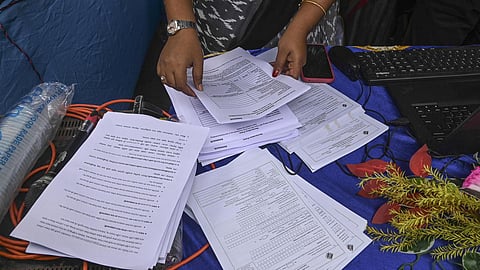
Karnataka to publish final SIR voter list as over 10 million draft exclusions face scrutiny
Karnataka is scheduled to publish its final electoral roll after the Special Intensive Revision (SIR) on Tuesday, bringing months of verification, hearings and disputes over voter exclusions to a crucial stage. The final list will show how many of the more than 10 million electors missing from the draft roll have been restored and how the state’s electorate has changed following the exercise.
Karnataka had 55.4 million registered electors when the revision began on June 30. However, the draft electoral roll published on August 24 contained 44.6 million names, marking a reduction of more than 10.8 million.
The exercise involved door-to-door verification, cross-checking entries against older electoral records and conducting hearings for voters whose details could not be verified. It also sparked a political controversy over bulk applications seeking the deletion of names and allegations of errors in electoral records.
Election officials have maintained that exclusion from the draft list did not automatically amount to permanent deletion. Voters were allowed to seek inclusion, challenge entries and correct details during the claims and objections process. The final roll is expected to reflect the outcome of those applications and the subsequent verification proceedings.
More than 10.8 million electors excluded from draft roll
The scale of the exclusions became a major concern after the draft roll was published. Of the more than 10.8 million names removed from the draft list, around 8.06 million were categorised as shifted or not found at their registered addresses.
Another 1.63 million electors were marked as deceased, more than 700,000 entries were classified as duplicates, and around 383,000 were placed in other categories.
Opposition parties and civil society groups questioned whether all the excluded voters were ineligible, pointing to the possibility that some may have been temporarily away from home, had shifted residence for a short period or had been unable to complete verification requirements.
The claims and objections process allowed electors to apply for inclusion, challenge an entry or request corrections. Although the deadline for submitting claims and objections was September 23, hearings and the disposal of cases involving notices continued beyond that date.
By October 22, the authorities had received 1.04 million Form 6 applications seeking inclusion in the electoral roll, 228,917 Form 7 applications seeking deletion or raising objections to entries, and 1.31 million Form 8 applications for corrections and changes.
Bulk Form 7 applications trigger political confrontation
Form 7 applications became the most contentious aspect of the SIR after their numbers rose sharply in the final weeks of the process. The authorities had received 58,475 such applications by September 23, but the figure increased to 228,917 by October 22, indicating that more than 170,000 applications were received after the claims and objections deadline.
The ruling Congress accused Bharatiya Janata Party (BJP) workers of filing applications in bulk to remove eligible voters, particularly in areas with large Muslim populations. The BJP denied the allegations, arguing that its workers were exercising their right to flag voters they believed should not remain on the electoral roll.
The BJP, in turn, accused the Congress of discrediting an exercise intended to remove duplicate, deceased and otherwise ineligible entries.
The dispute escalated after police complaints were filed against people accused of submitting false Form 7 applications. The BJP maintained that legitimate electoral objections should not be criminalised, while the Congress demanded action against those allegedly attempting to remove eligible voters from the list.
The Election Commission of India has maintained that the revision was intended to improve the accuracy of electoral rolls and that any deletion must follow the prescribed procedure.
Hearings conducted for voters whose records required verification
As part of the exercise, the authorities issued 4.38 million notices to voters whose records required further scrutiny. The notices were intended to give them an opportunity to establish their eligibility rather than have their names removed automatically.
The cases included missing mapping to older electoral records and logical discrepancies in voter details. The office of the Chief Electoral Officer said Electoral Registration Officers had completed hearings in these cases before the final roll was prepared.
The revision also brought attention to discrepancies between older electoral records and current documents. Harekala Hajabba, a Padma Shri awardee, received a notice after differences emerged between the way his name appeared in older electoral records and his current documents. Officials withdrew the notice after verification.
Other complaints concerned voters who were allegedly marked as deceased or shifted despite being alive and continuing to reside at their registered addresses. Election officials investigated these complaints and corrected entries where errors were established.
Draft roll showed more women than men
The draft electoral roll also indicated a difference in the gender composition of Karnataka’s electorate. As of October 16, it contained approximately 22.8 million women voters and 22.5 million men, leaving around 370,000 more women than men on the list.
The final electoral roll will provide an updated picture of the state’s electorate after the claims, objections and verification process. It will also indicate how many of the electors excluded from the draft list were reinstated and how many entries remained deleted after scrutiny.
The publication marks a key stage in the SIR, which has faced scrutiny over the scale of exclusions, the handling of deletion applications and the safeguards available to voters seeking to establish their eligibility.
