.png)
Haryana steps up deregulation drive, 8 priority areas implemented
Haryana has stepped up its compliance reduction and deregulation programme, with eight priority areas already covered and reforms in 14 more areas targeted for completion by next month. The initiative is aimed at removing unnecessary approvals, reducing duplication and making government services faster for citizens, entrepreneurs and investors.
Eight priority areas already implemented
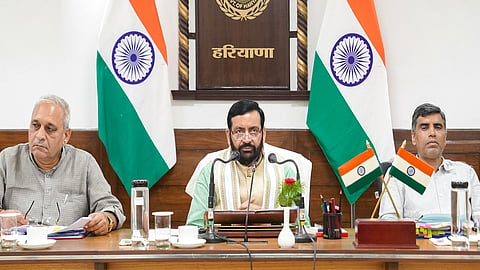
Chief Secretary Anurag Rastogi shared the state’s progress after taking part in a review meeting chaired by Union Cabinet Secretary T V Somanathan on the implementation of Phase I and Phase II of the Centre’s Compliance Reduction and Deregulation Exercise.
Haryana’s reform programme covers a wide range of areas, including land regulations, construction, utilities, industrial development, power, environment, tourism, education, healthcare and broader ease-of-doing-business measures.
Rastogi said eight priority areas have already been implemented, while work on 14 others is under way and is expected to be completed by next month. The state government has said the measures are intended to eliminate red tape, duplicate approvals and unnecessary compliance requirements while improving the delivery of public services.
The latest progress builds on Haryana’s Phase II reforms, under which 21 of 28 priority reforms had already been approved or put under implementation by August. Those reforms included measures concerning land, industrial development, building permissions, business licensing, labour, electricity, environment, healthcare, education and tourism.
Dual licences for businesses to be removed
Director General, Industries and Commerce, Yash Garg said Haryana’s proposal to eliminate dual licences for businesses has received the approval of the deregulation cell.
The measure is intended to remove overlapping licences, approvals, no-objection certificates and permits issued by different departments. The objective is to reduce avoidable compliance requirements for businesses and simplify the regulatory process.
The state has also been working on simplifying rules for shops and commercial establishments. In addition, the Haryana State Industrial and Infrastructure Development Corporation has issued a new policy concerning shared fire-fighting infrastructure.
Haryana is also moving towards an affidavit-based approval system under its proposed Right to Business framework. The system is intended to allow eligible enterprises to secure necessary approvals more quickly and reduce dependence on multiple pre-establishment clearances.
Wider push for simpler regulation
The state’s deregulation exercise forms part of a broader Centre-led effort to reduce regulatory burdens. The national Task Force on Compliance Reduction and Deregulation was constituted in January 2025 and identified land use, building and construction, labour, utilities and permissions as key areas for reform.
In Haryana, other measures announced during the reform process include greater flexibility in industrial land use, including subdivision of industrial plots and leasing of vacant plots, as well as changes to allow easier transition from leasehold to freehold ownership after the lease period. The state has also proposed a ₹500-crore SAKSHAM Fund for upgrading common infrastructure in older industrial estates.
The Haryana Enterprises Promotion Centre is also being strengthened as a one-stop investment support agency, with a proposed professional project management unit to assist investors with approvals and coordinate between departments. Digital measures include a repository of state Acts, rules and government orders, along with closer monitoring of service-delivery timelines and an enhanced Auto-Appeal system under the Right to Services framework.
Rastogi said Haryana would continue implementing pending measures within fixed timelines. The broader objective, he said, is to reduce the compliance burden, improve administrative efficiency and ensure simpler and more timely services for citizens and businesses.


