.png)
Haryana CM pushes micro-irrigation, reviews ₹402 crore projects covering 11,040 hectares
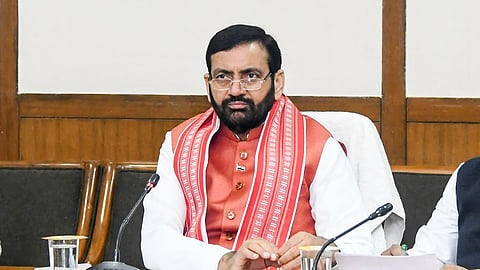
Haryana Chief Minister Nayab Singh Saini on Friday directed officials to accelerate the adoption of micro-irrigation technologies across the state, simplify subsidy disbursement procedures and ensure timely delivery of irrigation equipment to farmers, emphasising the need to conserve water and improve agricultural efficiency.
Chairing a review meeting of the Micro Irrigation and Command Area Development Authority (MICADA) at the Haryana Civil Secretariat, Saini said the efficient and judicious use of water had become essential for sustainable agriculture.
According to an official statement, the chief minister instructed departments to expedite pending applications and remove procedural obstacles preventing farmers from accessing government assistance for installing drip and sprinkler irrigation systems.
He also called for closer coordination with sugarcane growers to encourage the adoption of drip irrigation, which can reduce water consumption by delivering moisture directly to crop roots.
𝐅𝐨𝐮𝐫 𝐩𝐫𝐨𝐣𝐞𝐜𝐭𝐬 𝐰𝐨𝐫𝐭𝐡 ₹𝟒𝟎𝟐.𝟒𝟏 𝐜𝐫𝐨𝐫𝐞 𝐚𝐩𝐩𝐫𝐨𝐯𝐞𝐝
During the meeting, officials informed Saini that four projects involving an investment of ₹402.41 crore had been approved under the Micro Irrigation Fund (MIF), with loan assistance from the National Bank for Agriculture and Rural Development (NABARD).
The projects will cover 11,040 hectares of agricultural land through 61 irrigation outlets across seven districts — Mahendragarh, Ambala, Kaithal, Kurukshetra, Yamunanagar, Bhiwani and Jhajjar.
Saini directed officials to ensure that farmers were consulted before implementing irrigation infrastructure projects.
He specified that tenders for an irrigation outlet should be issued only after obtaining consent from at least 60 per cent of the beneficiaries associated with that outlet.
The directive is intended to ensure adequate farmer participation before construction and installation work begins.
𝐒𝐮𝐛𝐬𝐢𝐝𝐲 𝐩𝐫𝐨𝐜𝐞𝐬𝐬 𝐭𝐨 𝐛𝐞 𝐬𝐢𝐦𝐩𝐥𝐢𝐟𝐢𝐞𝐝
Officials informed the chief minister that farmers currently receive an 85 per cent subsidy on micro-irrigation systems under the Per Drop More Crop (PDMC) scheme.
For small and marginal farmers, the Centre contributes 33 per cent of the subsidy, while the Haryana government provides the remaining 52 per cent.
Farmers owning more than two hectares of land receive a 27 per cent subsidy from the Centre and 58 per cent from the state government.
The chief minister was informed that the existing subsidy disbursement procedure takes approximately 120 days, potentially delaying the installation of irrigation systems.
Expressing concern over the lengthy process, Saini instructed officials to review the existing mechanism and reduce the number of procedural stages.
He directed that processing time be brought down to the minimum possible period so that farmers receive financial assistance without unnecessary delays.
Officials were also asked to dispose of pending subsidy applications expeditiously and ensure the timely availability of equipment required for micro-irrigation installations.
𝐅𝐨𝐜𝐮𝐬 𝐨𝐧 𝐝𝐫𝐢𝐩 𝐚𝐧𝐝 𝐬𝐩𝐫𝐢𝐧𝐤𝐥𝐞𝐫 𝐢𝐫𝐫𝐢𝐠𝐚𝐭𝐢𝐨𝐧
Saini called for special initiatives to expand the coverage of drip and sprinkler irrigation systems across Haryana.
He said departments should implement existing schemes on a larger scale and encourage farmers to adopt technologies that improve water-use efficiency.
The chief minister particularly emphasised coordination with sugarcane cultivators to promote drip irrigation, given the crop's substantial water requirements.
He also directed officials to review the existing watercourse policy and recommend amendments to make it more practical, effective and farmer-friendly.
The review is expected to examine provisions affecting the implementation and maintenance of irrigation infrastructure.
𝐅𝐚𝐫𝐦𝐞𝐫 𝐩𝐚𝐫𝐭𝐢𝐜𝐢𝐩𝐚𝐭𝐢𝐨𝐧 𝐢𝐧 𝐰𝐚𝐭𝐞𝐫 𝐩𝐫𝐨𝐣𝐞𝐜𝐭𝐬
The chief minister further asked officials to explore ways to involve farmers in the operation and maintenance of sewage treatment plant projects.
He said greater participation by agricultural communities could contribute to the long-term sustainability of these facilities.
The proposed involvement of farmers would form part of efforts to strengthen the management of water-related infrastructure and encourage more efficient utilisation of available resources.
Saini reiterated that expanding micro-irrigation and ensuring timely access to subsidies should remain priorities for the departments concerned.
He directed officials to accelerate implementation, strengthen coordination with beneficiaries and ensure that government assistance translates into wider adoption of water-saving agricultural practices.


