.png)
Did cloud seeding really improve Delhi's AQI? Western disturbance raises questions
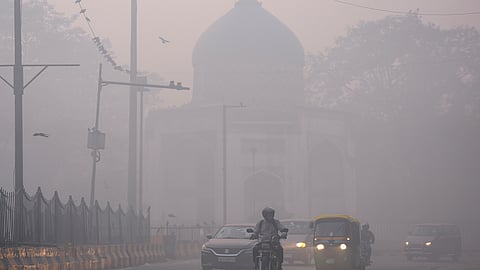
Delhi's cloud-seeding experiment may not have been solely responsible for the slight improvement in air quality and rainfall recorded in parts of the national capital on November 15. A western disturbance passing over the region around the same time could also have contributed to the changes, raising questions about the effectiveness of the exercise.
A post-flight report by Bengaluru-based Kyathi Climate Modification Consultants LLP (KCMC), the company hired by the Delhi government, linked the operation to light rainfall and a drop in pollution levels. However, weather records suggest that the western disturbance and stronger winds may have played a significant role, per a report by Hindustan Times (HT).
What did the cloud-seeding report find?
The Super King Air B200 aircraft took off from Delhi at 2.53 pm on November 14 and returned at 5.03 pm. During the sortie, it released seeding material 8 times over 7 locations across Delhi-NCR, including Siraspur, Burari, Baghpat, Loni Road and Sonia Vihar.
The report said 20 flares were used, comprising 13 glaciogenic and 7 hygroscopic flares.
Rainfall was subsequently recorded at several monitoring stations. Ayanagar received 1.4mm, IGNOU recorded 1mm, while a few other locations reported 0.5mm each. Bawana's AQI also declined from 406 to 362 between the afternoon of November 14 and the morning of November 15.
Western disturbance may have influenced AQI
However, rainfall at several locations occurred 11-15 hours after the aircraft's last release. Weather records also showed cloud cover increasing from around 4 am on November 15, coinciding with the passage of a western disturbance. Wind speeds picked up to 11-15 kmph, further helping disperse pollutants.
Air quality improvements were also recorded in places that were not part of the cloud-seeding operation. Bahadurgarh, Rohtak and Faridabad reported AQI declines of 57, 54 and 55 points, respectively. Baghpat, one of the locations where seeding was conducted, instead recorded an increase of 18 points.
“On November 14, when the trials were conducted, a western disturbance was already there. This western disturbance also led to rainfall at other places apart from Delhi-NCR. The cloud seeding trial should be conducted when there is cloud presence but no other weather system is involved,” said Mahesh Palawat, vice-president of Skymet Weather Services.
More trials planned in November
Cloud seeding involves releasing particles into clouds to encourage rainfall. However, studies have found mixed results, particularly for rain enhancement in warmer clouds, with no reliable evidence that the technique reduces air pollution.
The Delhi government is planning another round of trials between November 23 and 25, according to officials.


