.png)
Delhi pollution: Manjinder Singh Sirsa orders targeted action as AQI stays poor for third day
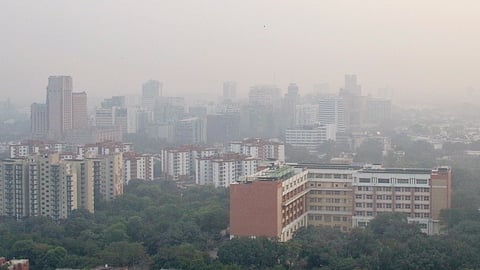
With Delhi's average air quality index (AQI) at 230 on Friday, the city remained in the 'poor' category for a third straight day. Environment minister Manjinder Singh Sirsa has asked district officials to pinpoint local sources of pollution and ensure that corrective measures are carried out within fixed deadlines.
The Central Pollution Control Board's (CPCB) daily bulletin showed that the average AQI had been 245 on Wednesday and 223 on Thursday, with both readings also falling in the 'poor' category.
Sirsa issued the directions during review meetings covering southwest and west Delhi. He called for coordinated action against traffic bottlenecks, dust from roads, illegal encroachments, unauthorised parking and the burning of waste in the open. Officials were also told to implement Stage I restrictions under the Graded Response Action Plan (Grap), which came into force across Delhi-NCR on Wednesday.
Pusa, Punjabi Bagh and RK Puram cross into very poor zone
While Delhi's overall AQI remained in the 'poor' range, three of the city's monitoring stations recorded 'very poor' readings on Friday. Pusa registered 319, RK Puram recorded 307 and Punjabi Bagh reported 302.
Of the 56 stations that provided data, 36 fell in the 'poor' category, while the others recorded 'moderate' air quality.
Under CPCB classifications, AQI readings of zero to 50 are 'good', 51 to 100 'satisfactory', 101 to 200 'moderate', 201 to 300 'poor', 301 to 400 'very poor' and 401 to 500 'severe'.
The Air Quality Early Warning System has projected that the capital will remain in the 'poor' category from October 24 to 26. It does not anticipate an immediate improvement over the next six days.
Districts asked to identify pollution sources and set deadlines
An official statement from Sirsa's office said administrations must draw up action plans for individual pollution hotspots, specifying the source of pollution, the steps needed to address it, the agency responsible and the deadline for completing the work.
Officials have also been asked to track PM10 and PM2.5 concentrations at vulnerable locations and conduct focused inspections in areas reporting high levels of particulate matter.
The minister called for more stringent dust management at construction sites, routine sprinkling of water on roads, repairs to potholes and treatment of exposed soil. Civic agencies must also ensure that waste is collected, segregated and disposed of properly to prevent rubbish from piling up or being burnt in the open.
Transport accounts for 20.38% of estimated pollution
Transport was the biggest estimated contributor to Delhi's pollution on Friday, accounting for 20.38% of the concentration, according to the Decision Support System for Air Quality Management in Delhi.
The estimated contribution of stubble burning to PM2.5 levels stood at 5.16% on Friday. That share is projected to increase to 13.6% on October 26.
To address traffic-related emissions, Sirsa has asked district officials to work with the traffic police to regulate heavy vehicles entering the capital. Authorities have also been directed to act against heavy vehicles parked illegally and obstructing traffic.
Residents urged to avoid burning waste and use public transport
Sirsa appealed to residents to support efforts to improve air quality by avoiding waste burning, keeping their pollution-under-control (PUC) certificates valid, choosing public transport and sharing car journeys wherever possible.
“Wherever pollution is being generated, its source must be identified and action must be taken at that very location,” he said.


