.png)
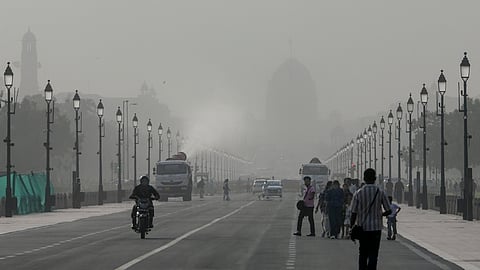
Delhi pollution: DPCC directs 7 agencies to submit daily enforcement reports by 5pm
The Delhi Pollution Control Committee (DPCC) has directed seven government agencies, including the Delhi Police, Municipal Corporation of Delhi (MCD) and the transport department, to submit daily reports on the enforcement of winter pollution-control measures by 5pm.
The move is aimed at strengthening ground-level monitoring of pollution-control measures and ensuring that the Commission for Air Quality Management (CAQM) receives regular updates on action taken by various departments.
In a letter dated October 31, issued by an additional director and addressed to the heads of the seven agencies, the DPCC called for increased deployment of ground-level officers to ensure that its directions were implemented effectively.
“Ramp up deployment of ground level officers to effectively enforce the implementation of the aforesaid directions in letter and spirit,” the letter stated.
It also made daily reporting mandatory instead of allowing agencies to submit updates periodically.
“Since, DPCC has to compile the data on action taken by various agencies on a day-to-day basis for onward submission to CAQM, it is requested to submit a consolidated Action Taken Report on daily basis by 5pm,” the letter said.
The communication was addressed to the commissioners of the MCD, Delhi Police and the transport department, the chairperson of the New Delhi Municipal Council (NDMC), the vice-chairperson of the Delhi Development Authority (DDA), the divisional commissioner of the Delhi government and the chief executive officer of the Delhi Cantonment Board.
Vehicle restrictions and PUCC checks under focus
The daily reporting mechanism will cover three major areas of enforcement, including restrictions on vehicles registered outside Delhi that do not comply with BS-VI emission standards, checks against vehicles without valid pollution-under-control certificates (PUCC), and action against dust-generating construction and demolition activities.
Under the PUCC enforcement requirements, all petrol, diesel and CNG/LPG retail outlets in Delhi must dispense fuel only to vehicles carrying valid pollution certificates.
The DPCC has directed that vehicles found obtaining fuel without valid PUCCs must be penalised, irrespective of whether they are detected through automatic number plate recognition (ANPR) cameras or other means.
The Transport Department and Delhi Traffic Police have been assigned responsibility for enforcing these provisions.
Restrictions on non-BS-VI vehicles from November 1
Another key measure involves restrictions on vehicles registered outside Delhi that do not meet BS-VI emission standards. The restrictions will remain in force from November 1 to January 31.
CNG and electric vehicles will be exempt, along with vehicles engaged in emergency and sovereign duties, including ambulances, fire tenders and police vehicles.
The agencies will have to provide detailed figures on vehicles detected at Delhi's borders, those turned back, challaned and impounded, as well as the fines imposed.
The reporting format also requires the data to be classified according to vehicle categories, including private cars, light goods vehicles, medium and heavy goods vehicles, buses and other vehicles.
Construction curbs and complete ban from December 10
The DPCC has also instructed agencies to strictly enforce restrictions on dust-generating construction and demolition activities between November 1 and January 31, with exceptions for essential public infrastructure projects.
Finishing, plumbing and electrical work may continue within construction sites, provided the activities comply with construction and demolition waste management rules and prescribed dust-prevention norms.
However, storing or dumping construction and demolition waste outside designated sites is prohibited.
The letter further states that a complete ban on construction and demolition activities will be imposed from December 10 to January 20. Exemptions will be available for urgent government projects of importance that affect public convenience, as well as work required under emergency conditions.
The agencies responsible for enforcing construction-related restrictions include the DPCC, MCD, NDMC, Delhi Cantonment Board and the revenue department.
They will have to submit details of the number of construction sites inspected, violations detected, closure directions issued, show-cause notices served and environmental compensation imposed.
Stricter GRAP measures to take precedence
The DPCC has also clarified that the winter pollution-control directions will not override any stricter measures introduced under the Graded Response Action Plan (GRAP).
The letter states that if the CAQM invokes more stringent restrictions, “such measures shall prevail and be complied with in priority over the provisions contained herein”.
The directions form part of Delhi's winter pollution-control measures, which will remain in force from November 1, 2026, to February 28, 2027. The daily reporting requirement is intended to help the DPCC monitor compliance across departments and provide the CAQM with a consolidated account of enforcement action throughout the pollution-control period.


