.png)
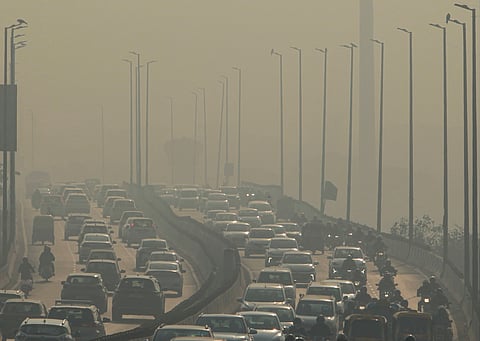
CAQM asks Delhi-NCR states to avoid school sports in November-December amid pollution concerns
The Commission for Air Quality Management (CAQM) has asked Delhi and the neighbouring NCR states to ensure that schools do not schedule physical sports activities or competitions during November and December, when air pollution typically worsens across the region.
The advisory has been issued to the governments of Delhi, Haryana, Rajasthan and Uttar Pradesh. CAQM has also said that competitions already scheduled for the two months may be rescheduled, with authorities advised to ensure that students are not disadvantaged because of the changes.
CAQM reiterates advisory ahead of winter pollution season
In its latest advisory, dated September 10 and shared on Tuesday, CAQM said the decision should be guided by the air quality trends prevailing in the areas where sporting events are planned.
The commission said the advisory was being reiterated in view of directions issued by the Supreme Court in the MC Mehta vs Union of India case. The apex court had last year expressed concern over the impact of severe air pollution on children taking part in physical sports competitions and asked CAQM to issue appropriate directions to schools in Delhi-NCR to postpone competitions scheduled for November and December.
CAQM had subsequently written to the NCR state governments on November 11, 2025, asking them to take immediate and appropriate action to postpone physical sports activities and competitions in schools.
In a related communication dated November 19, 2025, the commission had called for such competitions to be postponed while also stressing that students should not be unduly disadvantaged. CAQM's earlier directions said governments should explore rescheduling events or providing alternative opportunities for students to participate in similar activities at a later stage.
States told to protect students from pollution exposure
CAQM member secretary Tarun Kumar Pithode said the commission considered it necessary to reiterate its earlier observations for the current year.
The latest advisory asks the NCR state governments and the Government of the National Capital Territory of Delhi to ensure that physical sports activities and competitions are not scheduled during November and December, taking into account the air quality conditions expected at the venue.
Where events have already been scheduled, governments have been advised to explore ways to reschedule them or offer alternative opportunities for students to participate in similar activities at an appropriate time.
The commission has also stressed that any such changes should not compromise students' health or academic progress. It said students who cannot participate because an event has been rescheduled should not be placed at an unfair disadvantage.
The 2025 CAQM communication followed a meeting involving representatives of the Department of School Education and Literacy, NCR state governments and the Delhi government, the Sports Authority of India, NCR pollution control boards and the Delhi Pollution Control Committee.
Stubble burning, Diwali and weather can worsen Delhi's air
Delhi's pollution levels generally rise after the crop harvesting season begins in the northern plains. Smoke from crop-residue burning can coincide with emissions from Diwali firecrackers, resulting in a prolonged deterioration in air quality over the capital.
This year, Diwali falls on November 8 and is expected to coincide with the peak period for stubble burning, according to an official cited in the original report.
Weather conditions also become increasingly unfavourable for dispersion of pollutants from October onwards. Winds tend to shift towards north-westerly directions, while local wind speeds decline and temperatures fall. These conditions can cause pollutants to remain trapped close to the ground, contributing to a sharp rise in local pollution levels.
The CAQM's latest move therefore comes ahead of the winter pollution season, when the combination of emissions and unfavourable meteorological conditions can make outdoor exposure particularly concerning for children.


