.png)
Cabinet clears Rs 3,230 crore Yuge Yugeen Bharat Museum at North, South Blocks
The Union Cabinet, chaired by Prime Minister Narendra Modi, on Wednesday approved the development of the Yuge Yugeen Bharat Museum at the historic North and South Block complex in New Delhi at an estimated cost of Rs 3,230 crore.
Envisaged as a landmark cultural institution, the museum will showcase the continuity, diversity and richness of India's civilisational legacy through an integrated presentation of the country's tangible and intangible cultural heritage.
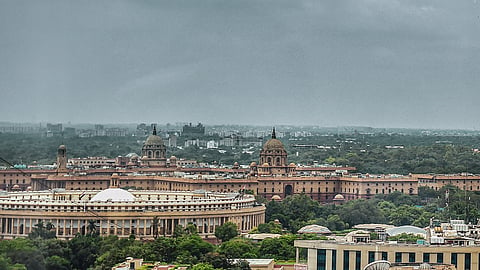
The Cabinet Committee on Economic Affairs (CCEA) said the project would involve the adaptive reuse of the iconic North and South Blocks, preserving their architectural character and historical significance while transforming them into a major public museum.
"The Cabinet Committee on Economic Affairs, chaired by the Prime Minister Narendra Modi, today has approved the development of the Yuge Yugeen Bharat Museum (YYBM) at the North and South Block Complex, New Delhi, at an estimated total project cost of Rs 3,230 crore, as appraised by the Public Investment Board (PIB)," an official statement said.
The museum will have a proposed built-up area of approximately 1,78,509 square metres and will incorporate contemporary exhibition practices, immersive technologies and visitor-oriented facilities.
According to the government, the institution is being planned to have the world's largest museum display area, benchmarked against leading international museums.
𝗙𝗶𝗿𝘀𝘁 𝗴𝗮𝗹𝗹𝗲𝗿𝘆 𝘁𝗼 𝗼𝗽𝗲𝗻 𝗶𝗻 𝟮𝟬𝟮𝟳
The project will be implemented in phases between the financial years 2026-27 and 2030-31.
The first inaugural gallery, themed "Adornment", is expected to open to the public in the North Block during the latter part of 2027.
The ambitious museum project was first announced by Prime Minister Modi on May 18, 2023.
It will present India's civilisational journey through curated thematic galleries, exhibitions and interpretations of the country's diverse cultural traditions, knowledge systems, artistic practices and heritage.
The project includes gallery development, collection storage and conservation facilities, visitor amenities, advanced technologies, immersive experiences, landscaping, intelligent building systems and supporting infrastructure.
The CCEA said the museum was being developed in accordance with international best practices in museum planning, heritage conservation, exhibition design and sustainable cultural management, adapted to India's cultural context.
The estimated project cost of Rs 3,230 crore is based on detailed architectural and exhibition designs, engineering assessments and museum planning requirements, including technical evaluations undertaken by the agencies concerned.
𝗖𝗮𝗽𝗮𝗰𝗶𝘁𝘆 𝗳𝗼𝗿 𝗼𝗻𝗲 𝗰𝗿𝗼𝗿𝗲 𝘃𝗶𝘀𝗶𝘁𝗼𝗿𝘀
The government said the museum would be equipped to accommodate approximately one crore visitors annually, making it a major destination for cultural tourism and public education.
The institution is expected to generate recurring revenue through ticket sales, food and beverage facilities, events, venue rentals, digital experiences, guided tours, retail outlets and other visitor services.
It is being developed as a national public cultural institution catering to students, researchers, scholars, cultural practitioners, domestic and international tourists and the general public.
"As a public cultural and educational institution, it will provide opportunities for learning, research, cultural engagement and appreciation of India's civilisational heritage. A fixed beneficiary count is not applicable to this project," the CCEA said.
𝗛𝗶𝘀𝘁𝗼𝗿𝗶𝗰 𝗯𝘂𝗶𝗹𝗱𝗶𝗻𝗴𝘀 𝘁𝗼 𝗴𝗲𝘁 𝗻𝗲𝘄 𝗿𝗼𝗹𝗲
The relocation of government offices from the North and South Blocks has created an opportunity to repurpose the historic structures for a major public cultural institution.
The government said the project would preserve the architectural and heritage character of the buildings while assigning them a new institutional role.
Located on Raisina Hill, the North and South Blocks flank Rashtrapati Bhavan, formerly the Viceroy's House, and form part of the architectural ensemble developed when the British administration shifted India's capital to Delhi.
The buildings, along with the nearby old Parliament House, were constructed as part of the development of the new capital between 1912 and 1931.
The proposal was appraised by the Public Investment Board on July 27, 2026, and the Ministry of Culture subsequently concurred with its recommendations.
The government said the museum would combine heritage conservation with modern exhibition infrastructure, transforming two of the capital's most recognisable administrative landmarks into a public institution dedicated to India's cultural and civilisational history.


