.png)
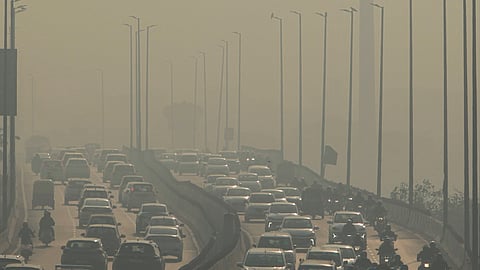
AI, drones and satellite imagery among tech solutions proposed to tackle Delhi-NCR air pollution
Technology firms and start-ups have proposed using artificial intelligence (AI), satellite imagery, drones and real-time sensors to tackle air pollution in Delhi-NCR, pitching solutions to Union Environment Minister Bhupender Yadav during an interaction on Saturday.
The discussions focused on developing affordable, scalable and technology-driven interventions that can be deployed on the ground to address pollution at its source. The proposals covered industrial emissions, road dust, construction activities, diesel generator sets and the burning of waste and agricultural residue.
According to the environment ministry, the proposed interventions included AI-enabled systems to identify violations of industrial emission standards, alongside tamper-proof online continuous emission monitoring systems and pollution-under-control testing. Technologies to monitor combustion efficiency and emissions from diesel generator sets were also discussed.
Technology-based measures to curb road and construction dust
Road dust was another key focus, with participants proposing low-cost mechanised road sweeping and systems to monitor the resuspension of dust. Portable technologies for pothole repairs and modular dust-containment systems for construction sites were also presented as potential solutions.
These measures are intended to help control dust at its source, particularly along roads and around construction sites, where loose material can become airborne and contribute to pollution.
Recycled waste and crop residue as alternatives to burning
The interaction also explored ways to reduce pollution caused by waste and agricultural residue. One proposal involved connecting recycled construction and demolition waste with market demand, potentially helping to improve the use of recovered materials and reduce waste-related pollution.
Biochar-based solutions and materials derived from crop residue were also showcased as alternatives to open-field burning. Such approaches could provide uses for agricultural waste while helping to reduce emissions associated with stubble burning.
The proposals formed part of a broader push to identify practical, technology-led interventions that can be scaled up and deployed to address different sources of air pollution across Delhi-NCR.


