.png)
Know your rights when a flight is cancelled | What consumer courts have ruled

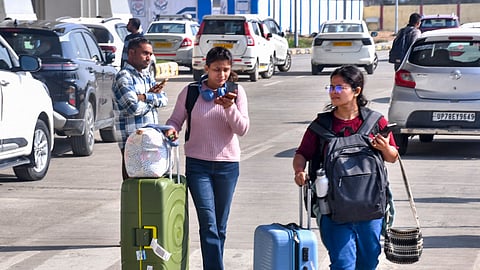
The wave of IndiGo cancellations over the past week has left thousands of passengers stranded, out of pocket, and unsure of what compensation they are entitled to. While operational disruptions are not new to Indian aviation, the scale and suddenness of the cancellations have renewed questions about passenger rights, airline obligations, and how consumer courts have interpreted these disputes.
At the centre of the confusion lies a simple but often overlooked truth: Indian law does offer protections, but the onus remains on passengers to know them — and enforce them.
What the Rules Say: Refunds, Rebooking & Compensation
Under the Directorate General of Civil Aviation (DGCA) Civil Aviation Requirement (CAR), airlines must follow a clear framework when they cancel flights:
1. Full Refund or Free Rebooking
If a flight is cancelled at least two weeks to 24 hours before departure, passengers must be offered a full refund or an alternate flight at no extra cost.
2. Compensation for Short-Notice Cancellations
If an airline cancels a flight less than 14 days before departure, it must—under certain fare conditions—pay compensation ranging from ₹5,000 to ₹10,000 depending on the ticket cost and flight distance.
3. Meals and Accommodation
When cancellations cause long delays, especially for passengers already at the airport, airlines are obligated to provide meals, refreshments, and hotel stay, where applicable.
In practice, however, airlines often interpret these obligations narrowly. Passengers frequently complain that refunds are delayed, alternative flights are limited or costly, and compensation is rarely offered proactively.
What Consumer Courts Have Held: A Pattern of Accountability
Over the past decade, consumer forums and courts across India have delivered a number of rulings that clarify — and often strengthen — passenger rights during flight disruptions.
1. Compensation for Mental Agony and Harassment
Consumer commissions have repeatedly ruled that merely refunding money is not enough when airlines exhibit negligence. In several cases involving last-minute cancellations without proper communication, forums have awarded additional compensation for harassment and inconvenience.
2. Poor Communication = Deficiency in Service
Courts have taken a tough stance on communication lapses. When an airline fails to inform passengers in time — even if the cancellation was unavoidable — it has been held liable for deficiency in service.
Passenger claims have succeeded when airlines sent messages too late, provided incomplete information, or failed to update airport counters.
3. Mandatory Duty of Care
In cases where passengers were left stranded without food, alternative options, or accommodation, courts have imposed penalties, ruling that airlines are responsible for basic care once a passenger is in their custody.
4. Medical Emergencies and Overseas Travel
There are precedents where cancellations disrupted international connections or medical travel. Courts have granted substantial compensation in such cases, considering the cascading consequences of a missed onward flight or a crucial hospital appointment.
5. 'Operational Reasons' Not a Blanket Defence
Airlines often cite "operational reasons" — a broad term that can cover anything from crew shortage to technical checks. Consumer forums have clarified that this does not automatically absolve carriers.
If the airline cannot demonstrate due diligence, the cancellation may still attract liability.
Why Enforcement Remains Weak
India’s aviation rules sound robust on paper, but passengers rarely receive what is due to them unless they push back.
Most travellers do not know their entitlements
Airlines seldom inform passengers about compensation rules
Filing a consumer complaint is still perceived as cumbersome
Airlines often settle disputes quietly to avoid precedent
The imbalance of information and power ensures that passengers often settle for refunds alone — even when they are owed more.
What Passengers Should Do Immediately
1. Ask for compensation in writing
Airlines rarely offer it upfront, but the DGCA rules are enforceable.
2. Keep every document
Boarding passes, cancellation messages, screenshots of app updates — courts accept all of it as evidence.
3. File a complaint with DGCA’s AirSewa
While not a judicial forum, it often pressures airlines to resolve cases quickly.
4. Approach Consumer Court if denied rights
Most flight cancellation disputes are decided within months and compensation is common.
Why This Matters Now
India’s aviation ecosystem is expanding rapidly, with high passenger loads and tight turnaround schedules. Any disruption — whether due to crew shortages, network resets or internal mismanagement — quickly cascades into large-scale cancellations.
The IndiGo episode has again exposed the vulnerability of passengers in such moments. But it has also re-centred the conversation on rights, duties, and the need for transparent communication.
As courts have repeatedly reminded airlines:
When a passenger buys a ticket, they buy reliability — not uncertainty.

