.png)
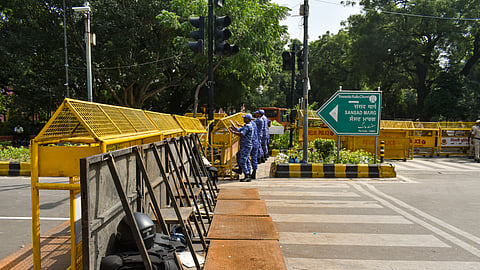
From Rajpath to Jantar Mantar, Delhi's shrinking spaces for public protest
The sprawling lawns along Rajpath, now Kartavya Path, once served as one of India's most prominent spaces for public dissent, where farmers, workers and citizens from distant regions gathered to make their grievances visible to those in power. Over the decades, however, the geography of protest in the national capital has undergone a fundamental transformation, with demonstrations gradually moving away from the country's political and administrative centre.
The latest shift came after Delhi Police denotified Jantar Mantar as a designated protest site and identified Ramlila Maidan, Burari Ground and CBD Ground in east Delhi as alternative locations for demonstrations. The decision, taken amid protests against the Special Intensive Revision (SIR) of electoral rolls and Chief Election Commissioner Gyanesh Kumar, has renewed questions about the relationship between public spaces, political visibility and the constitutional right to peaceful assembly.
A study by researchers at the Indian Institute of Technology (IIT) Indore offers a historical perspective on these changes, arguing that the mere existence of designated protest sites does not necessarily guarantee meaningful access to public spaces. Their location, accessibility and proximity to institutions of power are equally important in determining whether demonstrations can effectively communicate public grievances.
𝗙𝗿𝗼𝗺 𝗥𝗮𝗷𝗽𝗮𝘁𝗵 𝘁𝗼 𝗝𝗮𝗻𝘁𝗮𝗿 𝗠𝗮𝗻𝘁𝗮𝗿
For decades after Independence, the lawns along Rajpath were a prominent destination for groups seeking to draw national attention to their demands. The area, known as Kingsway during British rule, became a gathering place for people from different regions, occupations and social backgrounds.
The lawns often resembled a village of tents as protesters arrived from across the country. Residents of hill regions demanding separate statehood, farmers seeking better agricultural prices and industrial workers protesting retrenchment were among those who used the space to voice their concerns.
Its importance extended beyond the availability of open land. Located close to the country's principal institutions of government, Rajpath allowed demonstrations to remain visible to political leaders, administrators and the wider public.
That arrangement changed in 1993 when restrictions on collective demonstrations at the Boat Club led to Jantar Mantar being designated as Delhi's official protest site.
Although Jantar Mantar remained within the heart of the capital, the IIT Indore study argues that the shift reduced the visibility of demonstrations and increased their distance from the principal centres of political authority.
For much of the following three decades, Jantar Mantar became synonymous with public protest, hosting movements involving students, farmers, civil society organisations and political groups. It also served as a venue for demonstrations against the National Eligibility-cum-Entrance Test (NEET) earlier this year.
𝗦𝘁𝘂𝗱𝘆 𝗲𝘅𝗮𝗺𝗶𝗻𝗲𝘀 𝗽𝗿𝗼𝘁𝗲𝘀𝘁 𝗴𝗲𝗼𝗴𝗿𝗮𝗽𝗵𝘆
The IIT Indore study, titled Spatial Denial and Displacement: Exploring the Literary Lineage of Protest Sites (Public Spaces), examined how Delhi's protest locations have evolved from the Mughal and British periods through Independence and subsequent decades.
The researchers explored how political authority has shaped access to public spaces and how restrictions on gathering at particular locations have influenced the ability of citizens to express dissent.
Their central argument is that protest sites cannot be assessed solely by whether they have been officially designated. Their accessibility, visibility and relationship with institutions of power determine their significance as spaces for democratic participation.
The study questioned what happens when citizens are no longer permitted to demonstrate near the institutions they seek to influence. Moving protests to alternative locations may preserve the formal possibility of assembly, the researchers argued, but can alter the effectiveness and visibility of collective action.
𝗗𝗲𝗻𝗶𝗮𝗹, 𝗱𝗲𝘀𝗶𝗴𝗻𝗮𝘁𝗶𝗼𝗻 𝗮𝗻𝗱 𝗰𝗿𝗲𝗮𝘁𝗶𝗼𝗻
To explain the changing geography of demonstrations, the researchers identified three interconnected processes: denial, designation and creation.
Denial refers to restrictions that prevent people from accessing particular public spaces for collective action. Designation describes the official allocation of specific locations where demonstrations are permitted. Creation occurs when protesters establish or occupy alternative spaces after access to established venues becomes restricted.
The study argued that these processes frequently operate together. When authorities restrict demonstrations at centrally located sites, protesters may shift to officially designated grounds or establish new locations elsewhere.
However, the emergence of alternative protest sites does not necessarily indicate an expansion of democratic space. According to the researchers, it may instead reflect declining access to established public areas, particularly those close to political institutions.
The study identified an increase in newly created protest spaces alongside growing patterns of official designation and displacement.
𝗣𝗿𝗼𝘁𝗲𝘀𝘁𝘀 𝗺𝗼𝘃𝗲 𝘁𝗼 𝗻𝗲𝘄 𝘀𝗶𝘁𝗲𝘀
The researchers examined several major protest movements to illustrate how restrictions on established gathering places have contributed to the emergence of alternative locations.
These included demonstrations at Ramlila Maidan in 2017, the protests against the Citizenship Amendment Act at Shaheen Bagh in 2019-20 and the farmers' agitation at Delhi's Singhu, Tikri and Ghazipur borders during 2021-22.
Each movement demonstrated how citizens and organisations adapted their methods of collective action when access to conventional protest spaces became limited.
The researchers interpreted the changing locations as evidence of a broader transformation in the relationship between urban space and political participation.
They argued that demonstrations increasingly taking place away from the capital's political centre could affect the ability of protesters to communicate their demands directly to those exercising authority.
𝗟𝗶𝘁𝗲𝗿𝗮𝘁𝘂𝗿𝗲 𝗺𝗲𝗲𝘁𝘀 𝘂𝗿𝗯𝗮𝗻 𝗽𝗹𝗮𝗻𝗻𝗶𝗻𝗴
The study adopted an interdisciplinary approach, combining literary analysis with architectural research, handmade maps and digital mapping techniques.
Researchers examined fiction, non-fiction, poetry and visual representations of protest movements to understand how public spaces acquire political and social meaning.
By studying the physical locations of demonstrations alongside their portrayal in literature and other cultural material, the researchers traced how access to urban spaces has changed under different political and administrative arrangements.
The approach also highlighted how the significance of a protest site extends beyond its geographical boundaries. Public spaces can acquire symbolic importance through repeated collective action and their association with particular political demands.
𝗖𝗼𝗻𝗰𝗲𝗿𝗻𝘀 𝗼𝘃𝗲𝗿 𝗽𝘂𝗯𝗹𝗶𝗰 𝗮𝗰𝗰𝗲𝘀𝘀
The researchers also raised concerns about the declining availability of accessible public spaces and the increasing privatisation of urban areas.
They argued that public spaces perform functions extending beyond transportation, recreation and commercial activity. Such locations also facilitate social interaction, collective expression and participation in public affairs.
Restrictions on access to these spaces, particularly in politically significant locations, can therefore have implications for the exercise of democratic rights.
The latest decision to remove Jantar Mantar's designated status adds another chapter to Delhi's changing history of protest locations. While Ramlila Maidan, Burari Ground and CBD Ground remain available as officially designated venues, the IIT Indore study suggests that the consequences of such changes cannot be measured by the availability of alternative grounds alone.
The broader question is whether citizens retain meaningful opportunities to make their concerns visible and accessible to the institutions they seek to address, even as authorities regulate demonstrations in the interests of public order and urban management.


