.png)
EXPLAINER | Why Iran's economy hasn't collapsed despite war, sanctions and soaring inflation

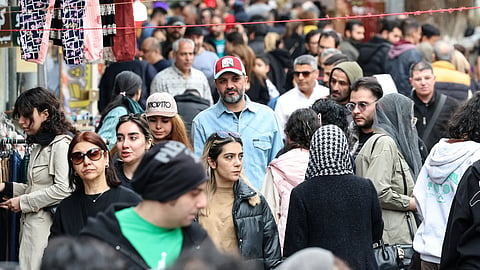
Five months of war with the United States, years of crippling sanctions and one of the world's highest inflation rates have left Iran under immense economic pressure. Yet, despite these shocks, the country's economy continues to function. Government salaries are being paid, markets remain open and oil exports have not stopped completely. At the same time, millions of Iranians are becoming poorer, with rising prices eroding incomes and pushing more families below the poverty line.
Here is a closer look at why Iran's economy has survived—and why ordinary citizens are bearing the cost.
Has Iran's economy collapsed?
Not yet.
Economists generally define an economic collapse as a situation where the government can no longer pay employees, maintain basic public services or keep essential goods available. Iran has not reached that stage.
Instead, the country is experiencing prolonged economic distress marked by extremely high inflation, a weakening currency, shrinking household incomes and falling living standards.
Why has the economy remained functional?
Several factors have helped Iran avoid a complete breakdown:
A diversified economy: Unlike many oil-producing countries, Iran has spent decades expanding agriculture, manufacturing, mining and services alongside its energy sector.
Self-sufficiency: Since the 1979 Islamic Revolution, sanctions have forced Iran to produce many goods domestically rather than rely on imports.
Alternative trade networks: Iran continues selling oil through indirect channels, discounted exports and regional trading partners despite Western sanctions.
Large informal economy: Significant economic activity occurs outside the formal financial system, allowing businesses to continue operating even when sanctions disrupt banking.
How have sanctions shaped Iran's economy?
US-led sanctions have affected almost every major sector.
Restrictions on oil exports, banking, shipping and international finance have reduced government revenues, discouraged foreign investment and limited access to advanced technology.
Over time, sanctions have also increased production costs, weakened the currency and made imported goods significantly more expensive.
How has the recent war worsened the situation?
The conflict has added fresh economic pressure.
Military strikes have damaged infrastructure, including bridges, tunnels, electricity facilities and parts of Iran's natural gas sector.
The disruption of shipping through the Strait of Hormuz has complicated imports while increasing freight costs, affecting both businesses and consumers.
Power shortages have forced industries to operate with regular electricity cuts, reducing production.
Why are prices rising so rapidly?
Inflation has become the biggest challenge.
The Iranian rial continues to lose value against the US dollar, making imports more expensive.
Food prices have risen sharply, with staples such as meat, cooking oil, eggs and dairy becoming increasingly unaffordable.
Although goods are still available in markets, many households simply cannot afford them.
Who is paying the biggest price?
Ordinary Iranians.
Economic shocks are increasingly being absorbed by households rather than the government.
Families have been forced to:
Cut spending on food
Delay medical treatment
Reduce education expenses
Dip into savings
Struggle to pay rent
The country's middle class has shrunk significantly, while poverty continues to rise.
How serious is poverty?
According to estimates cited by Iranian researchers, around 45% of Iranians are now living below the poverty line, compared with just over 30% five years ago.
Economists warn that rebuilding lost savings, education opportunities and healthcare access could take years even if economic conditions improve.
What role does corruption play?
Many economists argue that sanctions alone do not explain Iran's economic problems.
Corruption, political patronage and weak institutions have reduced productivity and discouraged private investment.
Iranian officials have themselves acknowledged that billions of dollars from oil sales and export earnings have failed to return to government accounts, highlighting governance challenges.
Can China and Russia offset Western sanctions?
Only partially.
China remains a major buyer of Iranian oil, while Russia and neighbouring countries provide important trading opportunities.
However, these partnerships cannot fully replace access to Western financial markets, technology, investment and global supply chains.
What is the biggest risk ahead?
The combination of continuing sanctions and geopolitical instability.
As long as tensions remain high in the Gulf and the threat of further conflict persists, businesses are unlikely to invest, foreign capital will remain scarce and economic recovery will remain fragile.
Bottom line
Iran's economy is surviving because it has spent decades adapting to sanctions and isolation through self-sufficiency, diversified production and alternative trade networks. But resilience is coming at a steep social cost. Inflation, a collapsing currency and declining purchasing power have shifted the burden onto ordinary citizens, shrinking the middle class and pushing millions into poverty. Unless geopolitical tensions ease and sanctions are relaxed through diplomacy, Iran is likely to remain an economy that can endure crises—but struggles to deliver sustained growth or rising living standards.

