.png)
EXPLAINER | What is happening on Day 14 of the West Asia crisis?

The war between the United States, Israel and Iran entered its fourteenth day with intensified air strikes, expanding regional retaliation and growing political pressure in Washington. Fresh attacks across Tehran, missile exchanges with Israel and drone strikes targeting Gulf states underline how the conflict is rapidly widening beyond its original theatre.
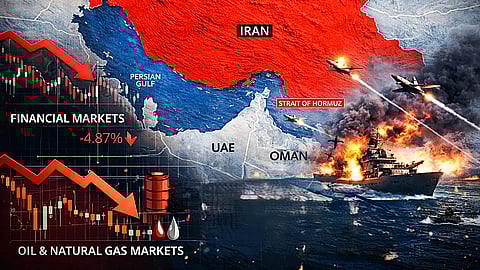
At the same time, the closure of the Strait of Hormuz — one of the world’s most crucial energy corridors — has disrupted global oil shipments and pushed crude prices above $100 per barrel, raising fears of a prolonged geopolitical crisis.
Here is what has happened in the past 24 hours.
Heavy Strikes Hit Tehran
Israel launched what it described as a new “extensive wave” of air attacks on Iran’s capital, Tehran, early Friday morning.
• Thick smoke was reported across several districts of the city.
• Israeli forces said they targeted checkpoints operated by the Basij force of Iran’s Revolutionary Guards.
• The attacks are part of Israel’s effort to weaken Iran’s internal security networks.
The strikes came shortly after Iran’s new Supreme Leader Mojtaba Khamenei, appointed last week after the assassination of his father, issued his first public warning.
Khamenei said attacks on US bases and Israeli targets in the region would continue unless countries hosting American military forces shut those bases down.
Rising Civilian Death Toll
Iran says the human cost of the conflict continues to climb sharply.
According to Iran’s ambassador to the United Nations Amir Saeid Iravani:
• 1,348 civilians have been killed since the start of the conflict
• Victims range from eight months to 88 years old
The figures highlight the scale of the humanitarian crisis emerging inside Iran as air strikes intensify.
Strait Of Hormuz Closed, Oil Prices Surge
One of the most significant global consequences of the war is the disruption of shipping through the Strait of Hormuz.
The narrow passage between Iran and Oman is the only maritime exit for Gulf oil and gas producers.
Key developments include:
• Iran declared the strait under Iranian control
• Ships linked to Israel or the United States are banned from passing
• Other vessels must receive Iranian approval to transit the waterway
The disruption has already pushed Brent crude prices above $100 per barrel, triggering fears of a wider global energy shock.
Iran Expands Attacks Across Gulf States
Iran has widened its retaliation by targeting countries hosting US military assets.
Bahrain
• Authorities say they have intercepted 114 missiles and 190 drones since February 28.
Saudi Arabia
• Air defences intercepted 10 drones over the eastern region.
• An additional 28 drones were destroyed after entering Saudi airspace.
United Arab Emirates
• Iranian drone strikes reportedly damaged Dubai International Airport and several hotels.
• The UAE strongly condemned the attacks.
These strikes highlight the growing risk that the conflict could engulf the wider Gulf region.
Evacuations Begin Across Region
Several countries are now evacuating citizens and diplomatic staff.
• Australia has ordered all non-essential officials to leave the UAE and Israel.
• Citizens have been urged to leave the Middle East while it remains possible.
Meanwhile, Qatar has taken emergency measures to assist stranded travellers.
Qatar’s Response
• National airspace remains officially closed.
• Qatar Airways has scheduled more than 140 special flights to repatriate residents and citizens.
Qatar also rejected Israeli media claims that it deliberately halted LNG production to manipulate energy prices, saying the disruption was caused by an Iranian drone attack on energy facilities.
Political Pressure Mounts In Washington
The war is also creating growing political tensions inside the United States.
President Donald Trump told reporters the military campaign against Iran was progressing “very rapidly”.
“Our military is unsurpassed,” Trump said at the White House.
However, domestic opposition is increasing.
More than 250 US organisations have signed a letter urging Congress to halt funding for the conflict.
Their argument:
• $11.3 billion spent in the first six days of the war
• Money should instead fund domestic programmes such as food benefits
No Ground Troops — But War Could Continue
US Senator Lindsey Graham suggested the conflict may last longer than initially expected.
While playing down the possibility of American troops being deployed in Iran, Graham said:
“I don’t see this conflict ending today.”
The comment indicates Washington expects a prolonged military campaign rather than a quick resolution.
New Missile Barrage Targets Israel
Israel said Iran launched another wave of missiles early Friday.
• Residents in affected regions were told to seek shelter immediately.
• Israel’s air defence systems were activated across several areas.
Prime Minister Benjamin Netanyahu said the war could create the conditions for regime change in Iran, though he added that any such shift would ultimately depend on the Iranian people themselves.
Israel also says it is trying to prevent Iran from moving nuclear and ballistic programmes underground.
War Spreads To Iraq And Lebanon
The conflict is now affecting multiple neighbouring countries.
Iraq
• A US KC-135 refuelling aircraft crashed in western Iraq.
• Iraqi armed groups claim they shot it down.
• US Central Command says the crash occurred in friendly airspace.
Iraq has also shut port operations after an Indian crew member was killed during an attack on a US-owned oil tanker.
Kurdish Region
• A drone attack in Erbil wounded six French soldiers, according to French President Emmanuel Macron.
Heavy Casualties In Lebanon
Lebanon is experiencing some of the most severe humanitarian consequences.
• Israeli bombardments continue across southern towns.
• A strike near Sidon killed nine people, including five children.
Lebanese officials say:
• 687 people have been killed since last Monday
• 98 of the victims were children
The intense attacks have displaced 700,000 to 750,000 people, creating a growing refugee crisis.
A Region On Edge
As the war enters its third week, the scale of military activity across Iran, Israel and neighbouring countries shows how quickly the conflict has evolved into a broader regional confrontation.
With energy routes disrupted, missile exchanges continuing and political pressure building in Washington and other capitals, the crisis shows little sign of slowing.

