.png)
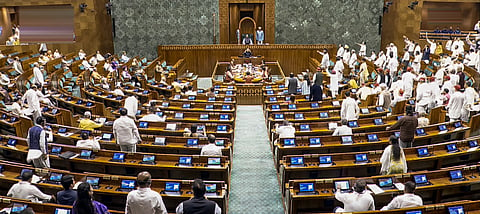
Crores spent, hours lost: The cost of Parliament's Monsoon Session explained
The Monsoon Session of Parliament came to a conclusion (sine die) following a period characterised by continuous protests, demonstrations, disruptions and adjournments. In light of this, we are once again faced with the age-old question: how much does it cost to run the Parliament and what happens to those expenses when the Houses are closed?
While there is no updated official figure for the cost of running Parliament for a day, the most circulated number appears to be from former Parliamentary Affairs minister Pawan Kumar Bansal’s statement back in 2012 where he mentioned that the cost of running both Houses was Rs 2.5 lakh every minute. Thus, according to this estimate, six hours of Parliament work amounts to about Rs 9 crore a day.
What does the Rs 9 crore estimate cover?
The figure is not simply the salaries of MPs or the cost of sitting in the two chambers.
Former Lok Sabha Secretary General PDT Achary told the Financial Express in 2023 that the estimate includes the upkeep of Parliament buildings, electricity, water, petrol and food, along with security, salaries and allowances of MPs, their security personnel, parliamentary staff and other employees involved in running the institution.
MPs also receive a daily allowance of Rs 2,500 for days of duty during a session, according to the Ministry of Parliamentary Affairs' 2025-26 annual report. Their monthly salary is Rs 1.24 lakh, apart from constituency and office expense allowances.
What about this year's disruptions?
The Monsoon Session for the year 2026 was to take place over a course of 19 meetings from July 20 till August 13.
The session began with repeated disruptions, with the Opposition demanding discussions on issues including alleged police action against students and other matters.
As per the reports from PRS Legislative Research cited by NDTV, during its first week, the Lok Sabha worked for 1.6 hours which makes up 5 per cent of the total working time. Although some laws were passed during the session, interruptions prevented the time allotted for discussions to happen.
So, is Rs 9 crore the actual daily bill?
Not necessarily. It is a calculation based on a 2012 estimate, not a current government-issued daily invoice.
And when proceedings are disrupted, many expenses, including building maintenance, security, staff and other operational costs, do not simply stop. The financial impact is therefore more complicated than multiplying every minute of lost debate by Rs 2.5 lakh.


