.png)
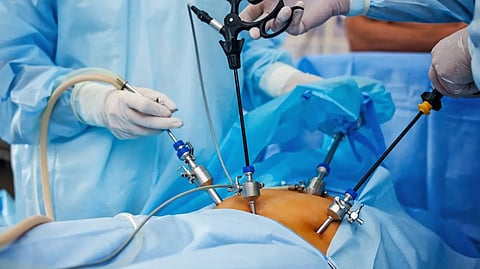

Minimally invasive surgery (MIS) has transformed the treatment landscape for colon cancer, offering patients a safer and more effective alternative to traditional open surgery. As colon cancer remains one of the leading causes of cancer-related deaths worldwide, the need for advanced surgical techniques that improve outcomes and reduce recovery time has never been greater. Laparoscopic and robotic-assisted procedures are now considered the gold standard for many cases, significantly enhancing patient care.
Shift from Open Surgery to Minimally-Invasive Techniques
For decades, open colectomy—requiring large abdominal incisions—was the primary surgical approach for colon cancer. While effective, it was associated with prolonged hospital stays, increased pain, and a higher risk of complications. With technological advancements, MIS has become the preferred approach, particularly for early and mid-stage colon cancer.
Laparoscopic surgery, introduced in the 1990s, marked the beginning of this transformation. It involves small incisions through which a camera and specialized instruments are inserted, allowing surgeons to remove cancerous tissue with greater precision. More recently, robotic-assisted surgery has further improved accuracy, offering enhanced visualization and better control during complex procedures.
Benefits of Minimally Invasive Surgery in Colon Cancer
Surgeons and oncologists widely agree that MIS provides several advantages over traditional surgery. These include:
• Smaller Incisions and Less Scarring – Unlike open surgery, which requires large cuts, MIS involves only a few small incisions, leading to better cosmetic results and lower infection risks.
• Reduced Postoperative Pain – Patients undergoing MIS experience significantly less pain, reducing the need for opioid pain medications and lowering the risk of dependency.
• Faster Recovery and Shorter Hospital Stays – Studies show that patients who undergo laparoscopic or robotic-assisted colectomy are often discharged earlier and return to normal activities faster than those who have open surgery.
• Lower Risk of Complications – MIS reduces blood loss, infection rates, and complications such as bowel obstructions, which are more common in open surgeries.
• Comparable Oncologic Outcomes – Research confirms that minimally invasive techniques achieve the same cancer removal efficacy as traditional open surgery while enhancing patient recovery.
Who Can Benefit from Minimally Invasive Surgery?
MIS is suitable for most patients diagnosed with early to mid-stage colon cancer. However, in advanced cases where the tumor has invaded surrounding structures or caused complications like obstruction, open surgery may still be necessary. Robotic-assisted procedures, with their increased dexterity, allow for greater precision in complex cases, expanding the eligibility for MIS.
Future of Colon Cancer Surgery
The continuous evolution of minimally invasive techniques, including artificial intelligence-assisted robotic surgery and image-guided interventions, is further refining colon cancer treatment. With growing expertise and technological advancements, MIS is expected to become even more accessible, improving survival rates and quality of life for patients worldwide.
As surgery remains the foundation of curative treatment for colon cancer, minimally invasive techniques are now leading the way, making procedures safer, faster, and more effective than ever before.
The writer is a minimal access and gastrointestinal physician and surgeon

