.png)
Lok Sabha seating rejig moves DMK, NCP-SP closer to Treasury benches ahead of delimitation debate
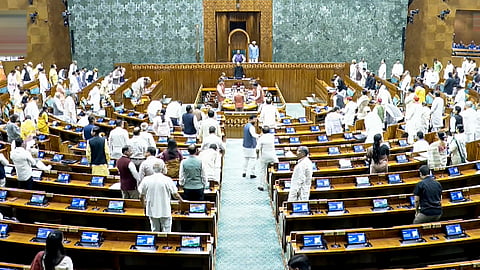
The Lok Sabha Secretariat has revised the seating arrangements of 97 MPs ahead of Parliament's special session beginning on Monday, moving members of the Dravida Munnetra Kazhagam (DMK) and the Nationalist Congress Party-Sharadchandra Pawar (NCP-SP) closer to the Treasury benches.
The reshuffle places the 22 DMK MPs, who were previously seated alongside the Congress bloc, in the second and third blocks, closer to the ruling National Democratic Alliance (NDA). Eight NCP-SP MPs have also been allotted new seats as part of the changes.
The revised arrangement comes amid a shift in the political equations within the INDIA bloc, with the DMK having announced its support for the Centre's revised delimitation proposals. The NCP-SP has also indicated that it is open to backing the legislation, although its position has been subject to scrutiny of the Bill's provisions.
According to the revised seating plan, former Union minister and DMK MP TR Baalu will move from seat number 496 to 355. Party leader K Kanimozhi has been allotted seat number 357, replacing her earlier seat at 435. NCP-SP working president Supriya Sule will move from seat number 434 to 358.
The new arrangement places Sule alongside DMK MPs, including Kanimozhi, Dayanidhi Maran and A Raja. The seating changes also affect members of the Congress, Samajwadi Party (SP) and Shiv Sena (Uddhav Balasaheb Thackeray).
Akhilesh Yadav to sit closer to Congress
The Samajwadi Party's MPs will be seated closer to the Congress bloc under the revised arrangement. SP chief Akhilesh Yadav has been allotted the seat previously occupied by Congress chief whip K Suresh.
In the Lok Sabha, seat numbers also correspond to members' division numbers during voting. The reshuffle therefore reflects the changing parliamentary alignments ahead of a crucial legislative contest, with the INDIA bloc facing the prospect of losing the support of some of its key regional partners.
The changes come after the DMK and Congress parted ways in Tamil Nadu. The DMK had sought separate seating in the Lok Sabha following the breakdown of its alliance with the Congress, which subsequently joined hands with the Tamilaga Vettri Kazhagam (TVK) in the state.
The DMK announced on Saturday that it would support the Centre's revised delimitation proposals, saying its key concerns over Tamil Nadu's share of parliamentary representation had been addressed. The party has maintained that the state's existing 7.18% share of Lok Sabha seats must be protected.
The NCP-SP, meanwhile, has not made its position entirely clear through its parliamentary leadership. Party spokesperson Jitendra Awhad has indicated support for the proposal, while Sule has said the party would examine the draft legislation before taking a final call.
Special session to focus on delimitation and women's reservation
Parliament is scheduled to meet for a four-day special session beginning Monday, with the proposed constitutional changes and related delimitation legislation at the centre of proceedings.
The Constitution (132nd Amendment) Bill, 2026, proposes a 50% increase in the number of seats in the Lok Sabha and state legislative assemblies. The legislation is linked to the implementation of the 33% reservation for women in Parliament and state assemblies.
The proposed changes seek to raise the Lok Sabha's maximum strength to 850, including up to 815 members from states and 35 from Union territories. The ceiling on the strength of state legislative assemblies is also proposed to increase from 500 to 650.
The government has argued that the uniform increase in seats would address concerns raised by southern states over a potential reduction in their share of parliamentary representation following delimitation. The revised proposals also seek to maintain the existing balance in seat allocation between states for the next 25 years.
The special sitting is expected to test the government's ability to secure the support required for the constitutional amendments, which need a special majority in Parliament. The changed seating arrangement, alongside the DMK's decision to back the proposals and the NCP-SP's indications, has added a new dimension to the political contest ahead of the debate.


