.png)
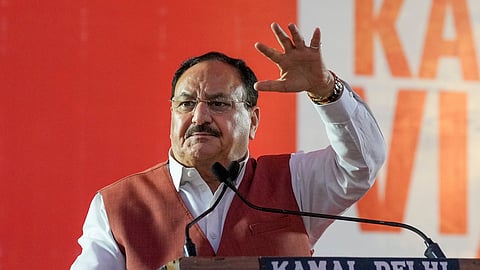
JP Nadda launches JOSH teams across 55 districts to boost India's TB elimination drive
Union Health and Family Welfare Minister JP Nadda on Thursday launched JOSH (Joint Squad for Health) teams under the TB Mukt Bharat Abhiyaan, bringing together young volunteers and National Cadet Corps (NCC) cadets to strengthen India's grassroots fight against tuberculosis.
The teams will initially operate across 55 districts in 11 states and Union territories, with the initiative eventually set to expand nationwide. The launch took place at Bharat Mandapam in New Delhi and brought together the health, youth and defence networks as part of a whole-of-government and whole-of-society approach to TB elimination.
How the JOSH teams will work
Each JOSH team consists of five MY Bharat volunteers and five NCC cadets and is headed by a designated Class-I officer at the block or ward level.
The teams will work as a community-level interface for the TB elimination programme, carrying out regular field and household outreach to improve public understanding of the disease, encourage early diagnosis and treatment, tackle myths and misconceptions and increase community participation.
Their interactions with households and communities will focus on common TB symptoms, preventive measures, the benefits of early diagnosis and the importance of completing prescribed treatment.
The teams will also seek to counter stigma and discrimination surrounding TB and encourage people affected by the disease to seek care and remain connected with the treatment system.
Youth brought into TB campaign
Health Secretary Punya Salila Srivastava said the teams were constituted after Prime Minister Narendra Modi suggested at a recent review meeting that young people should be involved in the TB elimination campaign in an institutionalised manner.
The initiative is being implemented by the Ministry of Health and Family Welfare in collaboration with the Ministry of Youth Affairs and Sports and the Ministry of Defence, with the participation of the Delhi government.
Nadda said the teams would work at district and block levels and use digital mechanisms for monitoring and implementation. He said the youth-led model would help identify gaps, strengthen outreach and ensure that TB-related services reach people who remain outside the formal healthcare system.
The minister also stressed the importance of active case finding, saying that identifying people with TB at the earliest stage is essential for timely treatment and for interrupting transmission within families and communities.
JOSH teams will therefore focus on vulnerable populations and encourage people with symptoms or concerns to come forward for testing.
Government intensifies last-mile TB push
The government began its intensified TB campaign in December 2024 and launched its second phase earlier this year to cover the remaining gaps in the elimination programme.
India is seeking to eliminate TB ahead of the World Health Organisation's global target of 2030.
According to the latest WHO figures cited by the government, TB incidence in India has fallen by 21%, compared with a 12% decline globally. India's TB treatment coverage has risen to 92%, against 78% globally.
The government has also recognised 67,933 Panchayats across 697 districts as TB Mukt in 2026, describing the achievement as a reflection of community participation and local leadership.
Nadda cautioned against complacency despite the progress. He said sustained momentum and intensified efforts were necessary to ensure that every person with TB is diagnosed, receives timely treatment and is supported throughout the course of care.
He urged NCC cadets and MY Bharat volunteers to become ambassadors of the TB Mukt Bharat movement and take messages on prevention, early testing, timely treatment and stigma reduction to households and communities.
New digital tools launched alongside teams
The launch was accompanied by new information, education and communication material, including a JOSH Flipbook and JOSH Brochure to support the teams' awareness and outreach work.
The government also introduced Khushi Avatar, an e-Sangini initiative that provides information on TB symptoms and treatment options, answers common questions and reminds patients to take their medicines on time. The service is available in 12 Indian languages.
A dedicated JOSH Teams feature was also added to the TB Mukt Bharat App to support the teams' activities and enable digital engagement.
The national launch saw virtual participation from all 804 districts. While 55 districts in 11 states and Union territories have been covered in the first phase, the remaining districts will undergo orientation and mobilisation before the initiative expands across the country.
Community participation at the centre
Nadda said India's TB elimination effort had evolved from a conventional health programme into a broader people's movement, with Jan Bhagidari and community ownership playing a central role.
Youth Affairs and Sports Minister Mansukh Mandaviya said MY Bharat had been created as a platform to guide, engage and empower young people in nation-building activities. He said the involvement of NCC cadets and youth volunteers could help identify people who may have TB, spread awareness about prevention and nutrition, counsel patients on treatment adherence and reduce stigma.
Minister of State for Defence Sanjay Seth said the energy and outreach of NCC cadets and MY Bharat volunteers could provide fresh momentum to the campaign by encouraging testing, promoting healthy practices and supporting patients and their families.
Delhi Chief Minister Rekha Gupta welcomed the initiative, saying that bringing together the health, youth and defence ministries could significantly expand the campaign's reach at the community level.
The initiative builds on earlier government efforts to use the NCC network for TB awareness rallies, screening camps, household contact education and nutrition support for patients.
With JOSH teams now being deployed at the grassroots, the government is seeking to strengthen the final-mile response and make youth participation a more institutionalised part of India's effort to achieve a TB-free country ahead of 2030.
