.png)
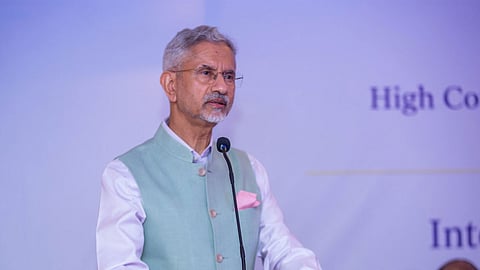
Jaishankar arrives in UAE for strategic talks, Raisina Middle East amid Gulf tensions
External Affairs Minister S Jaishankar arrived in Abu Dhabi on Wednesday for an official visit to the United Arab Emirates (UAE), during which he will review the progress of the India-UAE Comprehensive Strategic Partnership and participate in the second edition of the Raisina Middle East Forum against the backdrop of escalating security tensions in West Asia.
Jaishankar was received on arrival by UAE Minister of State for International Cooperation Reem Al Hashimy. In a post on X, the External Affairs Minister thanked her for the welcome and said he looked forward to his discussions during the visit.
The Ministry of External Affairs (MEA) said Jaishankar would hold bilateral talks with his UAE counterpart, Sheikh Abdullah bin Zayed Al Nahyan, to comprehensively review cooperation between the two countries. The official visit is scheduled from October 14 to 16, with discussions expected to cover strategic relations, trade, economic engagement and regional developments.
𝗦𝘁𝗿𝗮𝘁𝗲𝗴𝗶𝗰 𝗽𝗮𝗿𝘁𝗻𝗲𝗿𝘀𝗵𝗶𝗽 𝘂𝗻𝗱𝗲𝗿 𝗿𝗲𝘃𝗶𝗲𝘄
The bilateral meeting will provide an opportunity for India and the UAE to assess progress under their Comprehensive Strategic Partnership and identify areas for further cooperation. The relationship has expanded considerably in recent years, encompassing trade, investment, energy, connectivity, defence and emerging technologies.
The UAE remains one of India's most important economic partners in the Gulf, with bilateral trade reaching $100 billion in 2025. It is also a significant source of foreign direct investment and a major energy supplier to India.
The two countries cooperate through several multilateral and regional initiatives, including BRICS, the India-Middle East-Europe Economic Corridor and the I2U2 grouping comprising India, Israel, the UAE and the United States.
Jaishankar's discussions are expected to reinforce this engagement at a time when instability across West Asia has raised concerns about energy security, trade routes and the safety of expatriate communities.
𝗥𝗮𝗶𝘀𝗶𝗻𝗮 𝗠𝗶𝗱𝗱𝗹𝗲 𝗘𝗮𝘀𝘁 𝗼𝗻 𝗮𝗴𝗲𝗻𝗱𝗮
The External Affairs Minister will also participate in the second Raisina Middle East Forum in Abu Dhabi, which brings together policymakers, diplomats and strategic experts to discuss regional and international challenges.
The 2026 edition, being held on October 14 and 15, is organised around the themes of security, connectivity and investment. Discussions will examine changing geopolitical alignments, regional instability, economic cooperation and the challenges facing the international rules-based order.
The forum is taking place amid growing uncertainty over security in West Asia, where recent conflicts have heightened concerns about the protection of critical infrastructure, maritime navigation and international trade.
At the inaugural Raisina Middle East event last year, Jaishankar had described the region as India's extended neighbourhood and emphasised the importance of strengthening engagement with countries across the Gulf, the wider Middle East and the Mediterranean.
He had highlighted the region's importance as a gateway connecting India with Africa, Europe and the Atlantic, while calling for closer cooperation to address shared challenges and opportunities.
𝗚𝘂𝗹𝗳 𝘀𝗲𝗰𝘂𝗿𝗶𝘁𝘆 𝗰𝗼𝗻𝗰𝗲𝗿𝗻𝘀 𝗶𝗻𝘁𝗲𝗻𝘀𝗶𝗳𝘆
Jaishankar's visit comes amid heightened regional tensions following a series of Houthi attacks on Saudi Arabia, including the October 10 strike on King Khalid International Airport in Riyadh that left 13 people dead, among them an Indian national.
The developments have prompted renewed calls from Gulf leaders for stronger collective security arrangements and closer coordination to protect regional infrastructure.
Earlier this week, UAE presidential adviser Anwar Gargash called for the revival of joint Gulf security and defence cooperation, warning that attacks on one Gulf country threatened the security of the entire region.
Gargash argued that the security of Gulf nations was indivisible and that the targeting of Saudi Arabia also undermined the security of the UAE and other neighbouring countries. He called for strengthening the collective security framework in response to the escalating threats.
His remarks reflected growing concerns among Gulf states about the vulnerability of civilian infrastructure and the wider consequences of continued regional hostilities.
𝗜𝗻𝗱𝗶𝗮 𝗰𝗼𝗻𝗱𝗲𝗺𝗻𝘀 𝗮𝘁𝘁𝗮𝗰𝗸𝘀 𝗼𝗻 𝗰𝗶𝘃𝗶𝗹𝗶𝗮𝗻 𝗶𝗻𝗳𝗿𝗮𝘀𝘁𝗿𝘂𝗰𝘁𝘂𝗿𝗲
India on Wednesday strongly condemned the recent attacks on civilian infrastructure in Saudi Arabia and called for their immediate cessation.
During a media briefing, MEA spokesperson Randhir Jaiswal described the attacks, including those targeting critical infrastructure in the region, as unacceptable and expressed India's solidarity with the government and people of Saudi Arabia.
Providing details about Indian casualties in the Riyadh airport attack, Jaiswal said 11 Indian nationals had been injured. Of these, three had been discharged from hospital, while eight remained under medical supervision, including four in intensive care.
He confirmed that an Indian national had died from injuries sustained in the attack and that the last rites had been performed in Riyadh.
The spokesperson said the Indian Embassy was extending assistance to the affected nationals and their families, reiterating the government's commitment to protecting the safety and welfare of Indians living and working abroad.
India also expressed hope that peace and stability would be restored in the region, underscoring the importance of preventing further attacks on civilian facilities.
𝗘𝗻𝗲𝗿𝗴𝘆 𝗮𝗻𝗱 𝗿𝗲𝗴𝗶𝗼𝗻𝗮𝗹 𝘀𝘁𝗮𝗯𝗶𝗹𝗶𝘁𝘆 𝗶𝗻 𝗳𝗼𝗰𝘂𝘀
The diplomatic engagement assumes additional significance because of India's economic and energy interests in the Gulf.
The UAE is an important crude oil partner for India, while regional instability has increased uncertainty in global energy markets and raised concerns about disruptions to supply chains and shipping routes.
Recent tensions involving Iran and the United States have added to the volatility, with attacks in the Gulf complicating efforts to stabilise regional energy supplies.
For New Delhi, maintaining close diplomatic coordination with Gulf partners remains essential not only for energy security and economic cooperation but also for safeguarding the large Indian community living across West Asia.
Jaishankar's meetings in Abu Dhabi are expected to provide an opportunity to exchange assessments of the regional situation while advancing bilateral cooperation under the Comprehensive Strategic Partnership.
The visit also underscores India's continuing diplomatic engagement with West Asian countries as the region confronts security challenges with implications extending well beyond the Gulf.


