.png)
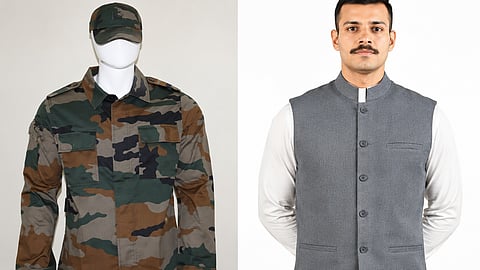
Indian Army unveils new uniform code, sheds colonial-era dress traditions

The Indian Army has introduced a comprehensive revision of its dress and appearance regulations, replacing several practices inherited from the colonial era with guidelines that reflect a more contemporary Indian identity. Among the notable changes are the approval of closed-neck bandi jackets as formal attire, the discontinuation of ceremonial pouch belts in certain dress categories, and making it optional for reviewing officers to carry swords during parades.
The changes are detailed in the newly released Army Uniforms–2026, a 174-page manual that replaces the previous edition issued eight years ago. According to officials familiar with the matter, the updated regulations are intended to align military traditions with India's evolving national ethos while preserving the dignity and heritage of the armed forces.
A section titled “Indigenisation and Alignment with National Ethos” explains that the revisions are part of a conscious effort to remove lingering colonial influences from military customs and terminology. The document notes that these changes seek to balance modernisation with the preservation of the Army's long-standing traditions and professional standards.
As part of the overhaul, a new winter uniform designated as Dress 3B has been introduced for personnel of all ranks. The attire consists of an angola shirt paired with a battle jacket and beret.
The manual extends beyond uniforms to cover grooming and personal appearance norms, including regulations on tattoos, body piercings, hairstyles, moustaches and cosmetics.
For the first time, officers have been authorised to wear bandi jackets as part of formal dress. The garment can be worn over a full-sleeved shirt and is permitted alongside other formal options such as the bandhgala, lounge suit, combination dress, or shirt-and-tie ensemble. The jacket may be designed with or without a neck hook fastening but must be in a plain, sober colour and accompanied by matching formal trousers and closed footwear.
The revised rules also specify dress options for women officers. They may wear sarees in understated shades or a kurta-salwar paired with ankle-length straight trousers and a dupatta. Sleeveless kurtas and casual styles such as palazzo or cigarette pants are not permitted.
One of the significant ceremonial changes involves the pouch belt, which has been removed from Mess Dress No. 5 and No. 6. These numbered dress categories are used by the military for standardisation and easy reference. However, pouch belts will continue to be authorised for officers up to the rank of colonel in select arms and regiments, including the Armoured Corps, Mechanised Infantry, Regiment of Artillery, Rifle Regiments, Maratha Light Infantry, Jammu and Kashmir Light Infantry and the Corps of Signals.
Under the new regulations, pouch belts may still be worn with ceremonial uniforms during regimental or corps events but will no longer form part of Mess Dress No. 5 and No. 6. These dress categories are typically worn at state functions hosted at Rashtrapati Bhavan and Raj Bhavans, formal receptions, dining-in events, and ceremonies honouring visiting foreign dignitaries.
The updated manual also removes colonial-era terminology, including references to the word “royal”. In the foreword, Adjutant General Lieutenant General VPS Kaushik states that the publication represents a deliberate move towards harmonising Army dress regulations with modern Indian values by eliminating outdated customs, accessories and expressions rooted in the colonial past.
The Army's broader push towards indigenisation gained momentum following Prime Minister Narendra Modi's address to the Combined Commanders' Conference in Kevadia, Gujarat, five years ago. During that meeting, he urged the armed forces to review and replace colonial-era traditions with practices that better reflect Indian culture and identity.
The manual reiterates strict rules regarding personal appearance. Tattoos and body piercings remain prohibited, and personnel are not allowed to wear bracelets while in uniform, except for a single sacred thread on the wrist during a religious ceremony. Visible religious symbols or markings are generally disallowed, although Sikh personnel continue to enjoy specific exemptions.
Moustaches are permitted but must not exceed a length of 12 centimetres. The use of perfumes and deodorants while in uniform is banned, although after-shave lotions remain acceptable.
Women personnel are subject to specific cosmetic guidelines. Lipstick, coloured nail polish, bindis and nose pins are not authorised while in uniform. Married women may wear sindoor, provided it remains concealed beneath the beret or peaked cap and is not visible when the headgear is worn.

