.png)
India hits back at China over Ladakh map, says no denial can change its status
India on Tuesday rejected China's objections to its decision to standardise the names of 28 geographical features in Ladakh, reiterating that the Union Territory is an integral and inalienable part of the country.
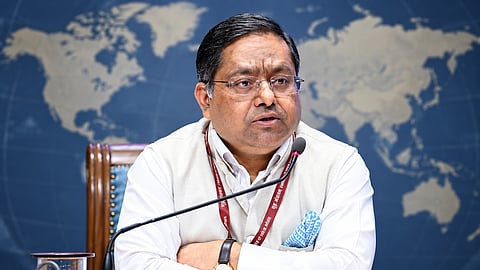
“No amount of denial by the Chinese side can change this established fact,” Ministry of External Affairs spokesperson Randhir Jaiswal said, responding to remarks from Beijing.
The diplomatic exchange followed China's criticism of India's decision to formally identify the locations on the official Survey of India map. Beijing described the move as “illegal and invalid” and said it did not recognise what it called the “so-called” Union Territory of Ladakh.
India defends move to name 28 geographical features
Jaiswal defended the government's decision, saying the Union Home Ministry's announcement was “self-explanatory”. The exercise, announced on October 2, involved identifying 28 places and geographical features using standardised names on the Survey of India's official map.
The Ministry of Home Affairs carried out the exercise in consultation with the Ladakh administration and local stakeholders. According to the government, the objective is to ensure accurate identification of the locations and improve public awareness about the region's geographical features.
The 28 features comprise 10 peaks, two passes, three mountains, seven land areas, two glaciers, two water bodies, a valley and a river.
The list includes prominent peaks such as Zorawar Peak, Kanishka Peak and Atisha Giri, along with Chapchingal Pass, Shachmirk Pass and Shkorga Valley. Gogra and Hot Spring, locations associated with the India-China military standoff in eastern Ladakh, are also among the features identified.
The inclusion of these locations on the official map is part of the government's effort to establish consistent geographical names in official records and public references.
Beijing calls India's decision illegal and invalid
Chinese foreign ministry spokesperson Mao Ning said on Tuesday that India’s decision to standardise the names could not alter what Beijing described as the status of the western section of the China-India border.
China has territorial claims in the region and has repeatedly opposed India's administrative and cartographic measures relating to Ladakh. New Delhi, however, maintains that the Union Territory is an integral part of India and rejects Beijing's claims.
The latest disagreement reflects a broader pattern of competing geographical naming exercises along the disputed border. China has previously announced standardised names for locations in Arunachal Pradesh, which it refers to as “south Tibet”. India has consistently rejected the Chinese claims over Arunachal Pradesh, maintaining that assigning names to places does not change their territorial status.
India's latest mapping exercise in Ladakh follows a similar initiative in Arunachal Pradesh, where the government had identified 27 places and geographical features by standard names on Survey of India maps. The exercises underscore the continuing dispute over territorial claims and the use of official maps to record each country's position.
India-China ties remain shadowed by border dispute
The latest exchange comes as India and China continue efforts to normalise bilateral relations following the military standoff along the Line of Actual Control (LAC) that began in 2020 and lasted more than four years.
The confrontation in eastern Ladakh led to prolonged military deployments and repeated rounds of diplomatic and military-level talks. The two countries have since pursued discussions aimed at addressing their longstanding boundary dispute and managing tensions along the frontier.
Despite these efforts, their competing territorial claims remain unresolved. The latest disagreement over the naming of geographical features highlights how administrative decisions and official maps continue to be points of friction between New Delhi and Beijing.


