.png)
India highlights equity, finance needs for developing countries at UN Environment Assembly

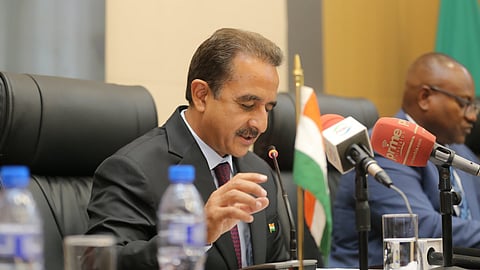
India has told the UN Environment Assembly (UNEA-7) in Nairobi that global environmental solutions must remain "people-centred" and rooted in equity, calling for accessible finance, technology transfer and capacity building for developing countries. Delivering India's national statement on Thursday, Minister of State for Environment Kirti Vardhan Singh said the theme of UNEA-7 --"Advancing Sustainable Solutions for a Resilient Planet" -- aligns with India's long-standing commitment to live in harmony with nature and pursue inclusive, climate-resilient development. Singh said, "India approaches UNEA7 with the conviction that environmental solutions must remain centred on people and that global action must be guided by the principles of equity, common but differentiated responsibilities and respective capabilities and respect for national circumstances." These principles, he said, enable ambition, foster trust and strengthen multilateral cooperation. The minister highlighted that India's domestic actions over the past decade show what "determined national efforts can achieve".
India has already achieved 235 gigawatts of non-fossil fuel installed electricity capacity, significantly ahead of target, he said. He also underlined India's lifestyle movement Mission LiFE, which promotes mindful consumption and sustainable lifestyles. Singh said the country's 'Ek Ped Maa Ke Naam' campaign has become a mass movement, drawing a parallel between caring for one's mother and nurturing the Earth. "More than 2.6 billion saplings have been planted under the initiative to restore degraded landscapes and build ecological resilience," he said. He pointed to river restoration work, including Namami Gange, as examples of "science-based and community-driven approaches" to improving ecological health. On resource efficiency, the minister said India's circular economy measures and extended producer responsibility rules for plastics, batteries, e-waste and end-of-life vehicles are promoting sustainable production and consumption. Internationally, Singh highlighted India's role in building collective action through the International Solar Alliance, Global Biofuel Alliance, Coalition for Disaster Resilient Infrastructure and International Big Cat Alliance, along with other knowledge-sharing platforms. "These reflect India's commitment to South-South cooperation and strengthening the voice of the Global South," he said. Emphasising implementation challenges, Singh said, "For many developing countries, accessible finance, technology, transfer and capacity building remain essential enablers of effective implementation." The minister also announced that India has piloted a resolution on "integrated fire management" to address the rising threat of wildfires. He thanked co-sponsors and member states for their constructive engagement and support on the proposal.

