.png)
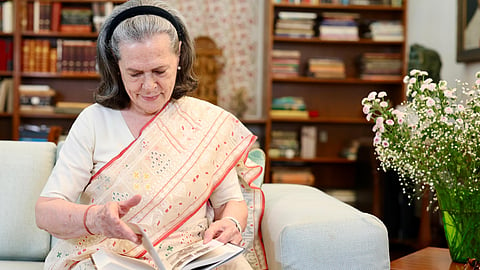
'I'd been too hasty': Sonia Gandhi on Congress's failed bid to form government in 1999
Sonia Gandhi has revisited her unsuccessful attempt to form a government in 1999, recalling how she approached Rashtrapati Bhavan believing that the Congress could gather enough support to secure a majority, only to see the plan fall apart when promised backing failed to materialise.
In her memoir, Belonging: A Journey of Love, Sonia describes the political uncertainty following the collapse of the Atal Bihari Vajpayee-led government. The BJP government had lost a confidence vote by just one vote after AIADMK chief J Jayalalithaa withdrew support. The Congress, then the largest opposition party, explored the possibility of forming an alternative government with regional parties and the Left.
The Congress and its allies had the backing of 233 MPs, while several other parties had reportedly assured support. With 272 required for a majority in the 543-member Lok Sabha, Sonia believed the remaining numbers could be secured.
Recalling her first major interaction with a large group of journalists after meeting the President, she writes: “As I walked towards them, I could feel my heart sink."
Sonia admits miscalculation in government formation bid
Sonia says questions from reporters about the Congress's numbers and its confidence in forming the government left her struggling to project certainty. Although she maintained that discussions with other parties were continuing, the negotiations eventually failed.
In the memoir, she attributes the setback partly to competing ambitions among potential allies, with several leaders aspiring to become prime minister. Looking back, she acknowledges that she acted too quickly.
“I’d been too hasty, single-mindedly focused on trying to dislodge the right-wing government," she writes.
She also says she should have followed senior Congress leader Arjun Singh's advice to exercise caution instead of listening to another leader, whom she describes as “thoroughly dishonest".
Rejecting the suggestion that the Congress had brought down the Vajpayee government, she says: “We didn’t bring them down; it was their coalition that collapsed."
Pawar's dissent triggers Congress split
The failed government formation attempt was followed by an internal crisis in May 1999, when Sharad Pawar, PA Sangma and Tariq Anwar questioned Sonia's foreign origin and her suitability for high office.
Sonia recalls breaking down during a Congress Working Committee meeting. “I hadn’t entered politics to grab position and power," she writes.
The dissent led to the three leaders leaving the Congress and forming the Nationalist Congress Party. Fresh elections followed, with the BJP-led National Democratic Alliance, comprising 20 allies, returning to power under Vajpayee after a month-long campaign.


