.png)
‘Head Master fast losing grip’: Congress targets PM Modi as ministers huddle at Chintan Shivir
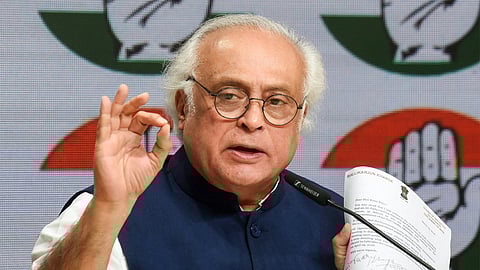
The Congress launched a sharp attack on Prime Minister Narendra Modi as his Council of Ministers concluded a two-day Chintan Shivir, with party leader Jairam Ramesh describing him as a “Head Master who is fast losing his grip, image and credibility” and claiming the government’s brainstorming exercise had been overshadowed by controversies surrounding the Election Commission and the Opposition’s attack on the poll body.
Ramesh, the Congress general secretary in charge of communications, claimed the meeting had come at a time of “great Chinta” for Modi and his “self-declared Chanakya factotum”, an apparent reference to Union Home Minister Amit Shah. His remarks coincided with the second day of the government conclave, where ministers were asked to identify gaps in their departments, improve delivery of welfare programmes and work towards 100 per cent coverage of major schemes.
‘Head Master losing his grip’
“The implosion in the Election Commission and Rahul Gandhi ji’s explosive PC have drowned out news of and interest in the Chintan Baithak of all Union Ministers herded together by the Head Master who is fast losing his grip, image and credibility,” Ramesh said. The claims about Modi’s standing were political assertions by the Congress leader rather than independent assessments.
Ramesh also claimed that the government had originally intended to use this period for a special session of Parliament to make another attempt at passing delimitation-related legislation. He alleged that such legislation was intended to “further compromise India’s elections”, but did not provide evidence establishing that motive.
According to Ramesh, the proposed special session did not materialise because the Home Minister could not be certain of securing the constitutionally required majority. “But since the Home Minister could not be confident of a supertainted two-thirds majority, plans for a special session got derailed,” he claimed.
Congress links meeting to political pressure
Ramesh sought to contrast the government’s stated purpose for the conclave with what he described as mounting political pressure on its leadership. He said the Chintan Baithak had arrived at a moment of “great Chinta” for the Prime Minister and Shah, using wordplay to sharpen the Congress attack.
The Congress leader also referred to recent reports about differences during internal deliberations of the Election Commission. The poll body has rejected suggestions that those discussions represented an institutional split and has maintained that its final decisions concerning the electoral-roll revision exercise were unanimous.
The government did not frame the Chintan Shivir around those political controversies. The two-day meeting instead focused on governance, reforms, coordination among ministries and expanding the reach of welfare and development programmes.
100% coverage of schemes
A key objective discussed at the conclave was ensuring that eligible beneficiaries were covered by government schemes, with ministers told to work towards saturation rather than leaving deserving people outside their ambit. They were asked to study the details of around 40 to 45 major schemes and programmes, communicate their benefits to citizens and identify shortcomings in implementation.
The discussions centred on two themes — “Swayam ka Vikas”, or self-development, and “Jan Viswas se Jan Bhagidari”, referring to greater public participation through trust. Ministers were asked to identify challenges, gaps and specific action points within their departments rather than treating the meeting merely as a review of existing programmes.
Effective public communication also emerged as a priority. Ministers were told to familiarise themselves with current issues before speaking publicly and to explain government programmes and development measures more effectively to citizens.
Modi interacts with eight groups
For the second consecutive day, the Council of Ministers was divided into eight groups, with Modi interacting separately with each group in addition to addressing the ministers collectively. The Prime Minister took feedback from participants and discussed ways to improve governance and delivery, with ministers also asked to share what they had learnt from colleagues during the exercise.
The first day had focused on governance, reforms and outreach to women and young people, while the broader deliberations examined ways to improve coordination among ministries and departments. The exercise also covered the government’s priorities under its Viksit Bharat 2047 agenda.
The conclave ended with the government emphasising saturation of welfare schemes and better communication, while the Congress sought to cast the exercise as evidence of political anxiety at the top. The competing narratives ensured that what was designed as an internal governance review also became the latest arena for a political confrontation between the government and the principal Opposition party.


