.png)
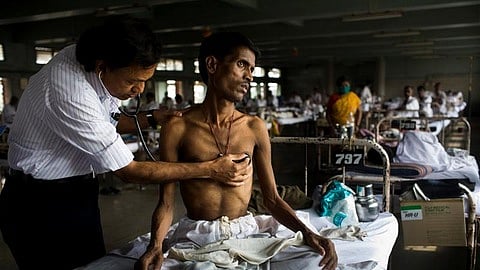
Govt doubles monthly aid for TB patients to Rs 1,000, introduces shorter treatment regimen
The government has increased monthly nutritional assistance for tuberculosis patients from Rs 500 to Rs 1,000 and introduced shorter treatment regimens for drug-resistant TB, Union Health Minister JP Nadda said on Tuesday, highlighting a series of measures aimed at accelerating India’s fight against the disease.
Under the Ni-kshay Poshan Yojana, TB patients will receive Rs 1,000 per month for the duration of their treatment. The government has also expanded nutritional interventions and community support for patients as part of its TB elimination strategy.
Shorter treatment for drug-resistant TB
Nadda said the government has introduced shorter and more advanced treatment regimens for drug-resistant TB, aimed at improving outcomes while reducing the burden of prolonged treatment on patients.
The government has also introduced a daily regimen for drug-sensitive TB. According to the Health Ministry, these measures have helped push the treatment success rate to 87 per cent.
National guidelines have also been introduced for the BPaLM regimen for drug-resistant TB, designed to standardise the administration of the shorter treatment and improve outcomes among patients.
The minister said the expansion of diagnostic infrastructure has played a major role in detecting cases earlier. India now has more than 9,000 molecular testing machines, while nearly 3,000 indigenous AI-enabled handheld X-ray units are being deployed to improve access to diagnosis, particularly in remote and underserved areas.
Nutritional support strengthened
The monthly assistance under the Ni-kshay Poshan Yojana has been doubled from Rs 500 to Rs 1,000 for every TB patient. The assistance is intended to address the nutritional needs of patients during treatment.
The government has also introduced energy-dense nutritional supplementation for underweight TB patients and expanded the Ni-kshay Mitra initiative to provide support to household contacts of patients.
More than five lakh Ni-kshay Mitras have been mobilised across the country to provide nutritional and social assistance to those undergoing treatment.
The Health Ministry has said Ni-kshay assistance worth Rs 3,338 crore has been transferred directly to the bank accounts of more than 1.17 crore TB patients.
India records decline in TB incidence
Citing the WHO Global TB Report 2025, Nadda said India recorded a 21 per cent decline in TB incidence between 2015 and 2024, compared with a global decline of 12 per cent during the same period.
India’s TB treatment coverage has reached 92 per cent, against the global average of 78 per cent, according to the government.
The Centre has also made notification of TB cases mandatory for private healthcare providers so that patients can be tracked and brought under the treatment system.
Focus on early detection
The government is increasingly focusing on identifying TB among vulnerable and high-risk populations, including people who do not display symptoms.
AI-enabled portable X-ray equipment, indigenous TruNat molecular diagnostic machines and mobile screening facilities are being used to take testing closer to communities.
The second phase of the TB Mukt Bharat Abhiyaan, launched in March 2026, has focused on nearly 1.58 lakh high-risk villages and urban wards across the country.
Nadda said eliminating TB would require sustained participation from governments, elected representatives, healthcare workers, civil society organisations and communities, with early detection, timely treatment and nutritional support remaining central to the strategy.


