.png)
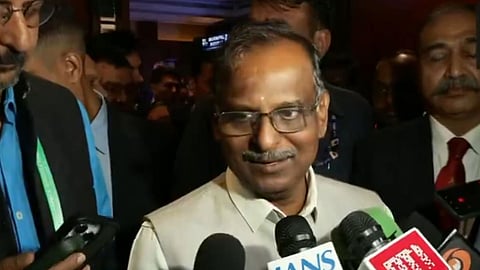
'Gaganyaan mission not delayed, preparations in final phase', says ISRO chief
Indian Space Research Organisation (ISRO) Chairman V Narayanan on Tuesday dismissed reports of a delay in the Gaganyaan mission, stating that preparations for India's human spaceflight programme had reached the final stage.
Speaking on the sidelines of the fifth India International Space Conclave in New Delhi, Narayanan said the launch vehicle was ready while work on the orbital module was continuing.
He described the mission as a technologically complex undertaking and said the launch would take place at the earliest possible opportunity.
His clarification followed reports that the first uncrewed flight could be postponed from December 2026 to February 2027. However, the ISRO chairman did not specify a launch date.
𝗘𝘅𝗽𝗮𝗻𝗱𝗶𝗻𝗴 𝗽𝗿𝗶𝘃𝗮𝘁𝗲 𝘀𝗲𝗰𝘁𝗼𝗿 𝗽𝗮𝗿𝘁𝗶𝗰𝗶𝗽𝗮𝘁𝗶𝗼𝗻
Narayanan highlighted the growing involvement of private enterprises in India's space programme, referring to the contract awarded to the Larsen & Toubro and Hindustan Aeronautics Limited consortium for manufacturing five Polar Satellite Launch Vehicles (PSLVs).
The first industry-manufactured launch vehicle is expected to take off in 2027.
He also emphasised the need to expand India's existing fleet of 56 space assets to meet increasing requirements in communication, navigation and earth observation.
𝗔𝗱𝘃𝗮𝗻𝗰𝗲𝘀 𝗶𝗻 𝗶𝗻𝗱𝗶𝗴𝗲𝗻𝗼𝘂𝘀 𝘀𝗲𝗺𝗶𝗰𝗼𝗻𝗱𝘂𝗰𝘁𝗼𝗿𝘀
Highlighting India's efforts to reduce dependence on imported electronic components, Narayanan pointed to the development of the indigenous Vikram processor through collaboration between ISRO and the Semiconductor Laboratory in Chandigarh.
While the Vikram 16 processor is already operational, efforts are underway to introduce the newly developed Vikram 32 chip to the market.
𝗚𝗿𝗼𝘄𝗶𝗻𝗴 𝘀𝗽𝗮𝗰𝗲 𝘀𝘁𝗮𝗿𝘁𝘂𝗽 𝗲𝗰𝗼𝘀𝘆𝘀𝘁𝗲𝗺
Narayanan said government reforms and institutional support had helped increase the number of Indian space startups to more than 440.
On international cooperation, he highlighted India's partnerships with 64 countries and said the country had launched more than 400 satellites for 34 nations over the past 12 years.
The ISRO chairman stressed that greater collaboration between industry, academia and startups would be essential to expanding India's space capabilities and contributing towards the Viksit Bharat 2047 vision.
The conclave, organised by the Indian Space Association in collaboration with ISRO and IN-SPACe, brought together industry representatives, researchers, entrepreneurs and international stakeholders to discuss the future of India's space sector.


