.png)
Draft voter rolls published in 16 states, UTs under SSR 2027; UP list due on November 17
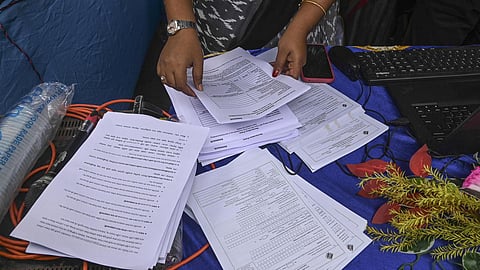
The Election Commission of India (ECI) on Thursday released draft electoral rolls in 13 states and three Union territories under the Special Summary Revision (SSR) 2027, opening a month-long period for voters to check their details and file claims and objections. The exercise follows the completion of the Special Intensive Revision (SIR) in most of the regions and marks the return of the routine annual electoral roll update.
The draft rolls were originally scheduled for publication across 17 states and Union territories, with January 1, 2027, as the qualifying date. However, Uttar Pradesh deferred the release of its draft list by five days and will now publish it on November 17.
The 13 states covered in Thursday's exercise are Assam, Bihar, Chhattisgarh, Goa, Gujarat, Kerala, Madhya Pradesh, Manipur, Punjab, Rajasthan, Tamil Nadu, Uttarakhand and West Bengal. The three Union territories are Andaman and Nicobar Islands, Lakshadweep and Puducherry.
Voters in these 16 regions can submit claims and objections until December 11, 2026, while those in Uttar Pradesh will have time until December 16. The final electoral rolls are scheduled to be published on January 4, 2027.
The qualifying date refers to the cut-off by which an individual must have turned 18 to be eligible for enrolment in the electoral roll.
State-wise voter additions after SIR
The draft rolls indicate a gradual increase in the number of registered electors compared with the final lists published after the SIR, although several states remain below their pre-revision voter strength.
In Kerala, the draft electoral roll contains 27,360,254 names, compared with 26,953,644 in the final post-SIR list. This represents an increase of approximately 406,000 electors. The state had around 27.8 million voters before the SIR exercise began.
Manipur's draft roll has 1,994,357 electors, approximately 33,700 more than its post-SIR tally. During the intensive revision, around 189,000 names were deleted, while 56,871 electors were added.
Goa recorded approximately 43,000 additions and at least 11,000 deletions in its latest draft list.
Assam, where the ECI conducted a Special Revision instead of the SIR, registered a net addition of 218,771 electors, taking its total electoral strength to around 25.2 million. The state's draft roll includes 287,233 young voters aged between 18 and 19.
Rajasthan's draft electoral roll lists 52,667,416 registered voters.
Tamil Nadu, meanwhile, continues to have fewer electors than it did before the intensive revision. The state had approximately 64.1 million voters before the SIR, but the figure fell to 56.7 million in the post-SIR electoral rolls. The latest draft SSR list puts its electoral strength at 57.7 million.
In Bihar, the draft roll contains approximately 75.5 million electors, an increase of around 1.3 million compared with the 74.2 million recorded in the final post-SIR list.
A separate comparison of the draft rolls across nine states and Union territories showed increases ranging from 0.1% to 3% over their respective post-SIR electoral rolls. Goa recorded the highest increase at 3%, followed by Rajasthan at 2.22%. Bihar and Tamil Nadu registered increases of 1.8% each, while Manipur recorded 1.7%.
How SSR differs from intensive revision
Thursday's publication formally opens the public revision phase under SSR 2027. It is the first routine electoral roll update in most of these states since the completion of the SIR.
A senior ECI official told Hindustan Times that the exercise was being conducted in accordance with the Commission's October 15 notification.
"This is in line with the ECI notification issued on October 15. SSR is a routine process and the exercise will proceed as usual and in accordance with the Representation of the People Act (1950)," the official said.
The SSR is an annual exercise in which the existing electoral roll serves as the starting point. Names of existing electors are generally carried forward into the draft list, while eligible citizens can seek additions, deletions or corrections.
This differs from the SIR, under which electoral rolls are effectively rebuilt through enumeration forms. Existing electors are required to submit these forms to establish their eligibility, rather than having their names automatically carried forward.
Under the SSR, booth-level officers (BLOs) verify applications submitted by voters, while Electoral Registration Officers (EROs) examine and decide on the claims and objections before the final rolls are published. Unlike the SIR, the routine summary revision does not involve a fresh enumeration of all existing electors through house-to-house visits.
First-time voters can apply through Form 6
The ECI has also opened opportunities for young citizens who are approaching the eligible voting age to register themselves.
First-time voters can submit Form 6 to seek inclusion in the electoral rolls. Advance applications will also be accepted from those who turn 18 on April 1, July 1 or October 1, 2027.
The January 1, 2027, qualifying date means that citizens who have attained the age of 18 by that date can apply for enrolment in the current revision. Those becoming eligible on the three subsequent qualifying dates can submit applications in advance.
The SSR process begins with the publication of draft electoral rolls, followed by a window during which voters can raise claims and objections. BLOs verify applications, and EROs take decisions before the final electoral rolls are issued.
The exercise is being undertaken in accordance with Section 21 of the Representation of the People Act, 1950, which provides for the revision of electoral rolls.
With the claims and objections window now open, voters in the 16 states and Union territories have until December 11 to verify their names and seek necessary changes, while Uttar Pradesh voters will have an additional five days under the revised schedule.


