.png)
Delhi under sweeping security curbs ahead of anti-CEC protest, 57 Metro stations shut
Delhi was placed under extensive security restrictions on Friday ahead of the Cockroach Janta Party's (CJP) proposed protest against Chief Election Commissioner Gyanesh Kumar on October 10, with authorities announcing the closure of 57 Metro stations, cancellation of several long-distance trains and stringent checks at the capital's borders, hotels and major transport hubs.
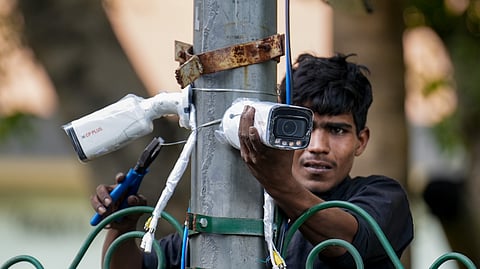
Delhi Police prepared a 37-point security plan to prevent large-scale mobilisation towards Jantar Mantar, where the CJP and student organisations have called for a demonstration over alleged irregularities in the Special Intensive Revision (SIR) of electoral rolls. The measures included restrictions on public transport, heightened surveillance, deployment of additional security forces and coordination with private transport operators.
According to the arrangements reported on Friday, the entry and exit gates of 57 Metro stations were scheduled to close from 9 pm until the security situation normalised. The affected stations were spread across central, northern, southern, eastern and western Delhi, extending the restrictions well beyond the immediate vicinity of the proposed protest venue.
The authorities also announced the cancellation of train services scheduled to arrive at or depart from New Delhi and Hazrat Nizamuddin railway stations between 4 am and 2 pm on Saturday. The cancellations included the Howrah-New Delhi and Sealdah-New Delhi Rajdhani Express trains departing West Bengal on Friday.
Extensive security deployment
Delhi Police mobilised substantial additional manpower to enforce the restrictions, with 221 companies of central forces made available between October 8 and 12. More than 23,000 personnel were reportedly deployed or mobilised across the capital as preparations intensified.
Around 5,000 Delhi Police personnel were deployed in New Delhi district, which includes Jantar Mantar and several important government establishments. Officials indicated that the deployment in the district could increase to 15,000 depending on the security assessment.
Police also established heightened surveillance at the capital's entry points, where personnel were instructed to identify and intercept individuals suspected of travelling to participate in unauthorised gatherings.
Hotels and guesthouses in central Delhi, particularly around Paharganj, were advised to restrict fresh bookings by people believed to be arriving for the demonstration. The instructions raised questions about how establishments could distinguish prospective protesters from ordinary travellers.
Metro and railway restrictions
The proposed Metro restrictions covered major interchange stations and important commuter destinations, including Rajiv Chowk, New Delhi, Central Secretariat, Mandi House, Kashmere Gate, Janpath, Patel Chowk, Supreme Court, ITO, Khan Market and Hauz Khas.
The geographical spread of the closures raised concerns about their impact on commuters who were not participating in the demonstration.
During the previous CJP protest on July 20, restrictions had reportedly affected 16 Metro stations. The latest plan identified 57 stations, reflecting a considerably wider security operation.
The Railway Board separately announced the cancellation of services serving New Delhi and Hazrat Nizamuddin stations during the 10-hour period on Saturday, citing intelligence inputs and anticipated traffic congestion.
Mail and Express trains departing after 2 pm on Friday and scheduled to reach either station between 4 am and 2 pm on Saturday were also affected.
Railway officials maintained that the restrictions were preventive measures intended to protect passengers from possible disruption and congestion around major transport terminals.
Hotels, cabs face restrictions
Beyond public transport, Delhi Police planned to regulate access to central Delhi through coordination with ride-hailing companies Ola and Uber.
Officials were preparing restrictions on vehicles entering New Delhi district, although the precise operational arrangements for app-based taxis had not been clearly specified.
Hotels, guesthouses and other accommodation providers were also brought within the security arrangements, with police seeking to prevent the arrival of large groups travelling specifically for the protest.
Liquor shops across the capital were ordered closed on October 9 and 10 as part of the preventive measures.
The combined restrictions prompted concerns about their potential consequences for businesses, visitors and residents, particularly those dependent on public transport and hospitality services.
Supreme Court questions curbs
The security measures also came under judicial scrutiny on Friday when the Supreme Court expressed serious concern over the proposed closure of Metro stations and cancellation of railway services.
A bench comprising Chief Justice Surya Kant and Justices Joymalya Bagchi and V Mohana emphasised that restrictions imposed to maintain law and order must satisfy the constitutional principle of proportionality.
The Chief Justice observed that authorities could not use excessive measures to address a comparatively limited security concern, cautioning that preventive action should not unnecessarily disrupt the lives of ordinary citizens.
The bench said law enforcement agencies were entitled to regulate movement and take appropriate precautions but could not bring essential transport services to a complete halt.
Justice Bagchi suggested that regulating train frequency could be considered instead of suspending services altogether, while the bench stressed the need to protect students, employees, senior citizens and patients who depended on public transport.
Solicitor General Tushar Mehta, appearing for the Centre, defended the security arrangements and argued that authorities required operational flexibility to respond to unpredictable law-and-order situations.
The court also suggested that the government consider identifying an alternative designated venue for peaceful demonstrations, equipped with essential facilities.
Protest organisers remain defiant
Despite Delhi Police denying permission for the October 10 demonstration, CJP founder Abhijeet Dipke maintained that the protest would proceed.
The movement has demanded the resignation of Chief Election Commissioner Gyanesh Kumar over alleged irregularities in the electoral roll revision exercise.
Opposition parties have accused the Election Commission of facilitating large-scale disenfranchisement through the SIR process, while the poll panel and the BJP have rejected allegations of electoral manipulation.
The CJP has also alleged that supporters travelling from different states were being detained or prevented from reaching Delhi. The full extent of these alleged detentions could not be independently established.
The restrictions have intensified the debate over the balance between maintaining public order and protecting constitutional freedoms, particularly the right to peaceful assembly.
With the demonstration scheduled for Saturday, the immediate focus remained on whether the authorities would modify the announced transport restrictions following the Supreme Court's observations and how police would respond if protesters attempted to assemble at Jantar Mantar without permission.
