.png)
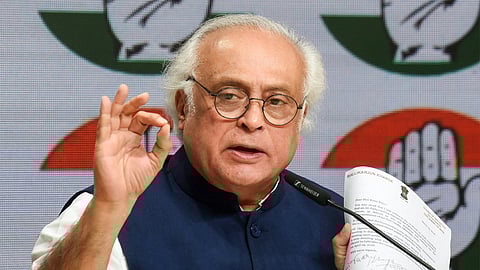
Congress says SIR has shrunk electorate to 2015 level, targets EC over voter deletions
Stepping up its attack on the Election Commission over the Special Intensive Revision (SIR) of electoral rolls, the Congress on Friday alleged that the exercise had reduced the size of India’s electorate to around its 2015 level, claiming that more than 13 crore voters had been removed from draft rolls.
Congress general secretary in-charge of communications Jairam Ramesh cited an analysis of electoral roll data to claim that the electorate across 31 states and Union Territories had increased from around 81.7 crore in 2015 to approximately 95 crore before the SIR process began, but had subsequently fallen to about 81.8 crore.
The Election Commission has rejected allegations that the SIR is designed to disenfranchise voters or favour a political party. It has maintained that revision exercises are intended to ensure accurate electoral rolls and that eligible voters omitted during the process have avenues to seek inclusion.
Congress flags deletions
Ramesh described the reduction as unprecedented and alleged that more than 13 crore names had been removed during the draft-roll stage of the SIR. He claimed that the eventual number could be higher as revision-related processes remained underway in several states and Union Territories.
The Congress leader used the phrase “Mass Disenfranchisement Of Indians (MODI) through the Shah Instigated Removal (SIR)” to attack the Centre and the poll body. The formulation is a political allegation by the Congress and does not establish that the SIR was initiated or controlled by Union Home Minister Amit Shah.
Ramesh also cited Maharashtra and Delhi to support the party’s argument. He claimed that Maharashtra’s electorate had initially increased by 5.6 per cent between the 2024 Lok Sabha election and the SIR before declining by 21 per cent during the revision, while Delhi’s electorate had fallen by 16 per cent compared with its 2014 level.
The Congress has characterised the deletions as part of what it calls a “vote chori” pattern. The Election Commission has rejected accusations of partisan manipulation and has maintained that eligible electors can use the prescribed claims and inclusion procedures where their names are missing.
ECINet under fire
Separately, Ramesh targeted the Election Commission over ECINet, its digital platform for election-related services and electoral-roll management. He referred to the Commission’s September 26 decision to constitute a committee to examine whether the system complies with applicable electoral laws and rules.
The Election Commission had announced a review of ECINet and its IT modules, with the exercise involving a senior poll official and an independent technology expert from an IIT or IIIT. The review followed controversy over the operation of the system and reported concerns within the Commission over electoral-roll processes.
Ramesh argued that compliance with electoral law should have been established before the platform was deployed. He contrasted the latest review with the Commission’s earlier position that ECINet had been developed in accordance with the Constitution, the Representation of the People Acts and the Registration of Electors Rules.
The Congress leader alleged that restrictions placed on Electoral Registration Officers’ access to the electoral-roll system and interventions in states including Goa and West Bengal had undermined powers vested in EROs under electoral law.
These remain allegations made by the Congress. The Election Commission has said its decisions carry legal sanction and follow established statutory procedures.
Questions over ERO powers
At the centre of the latest dispute is the role of Electoral Registration Officers, who exercise statutory functions in preparing and revising electoral rolls. The Congress contends that excessive centralisation of the digital system could interfere with those responsibilities.
Ramesh referred to reported concerns from Maharashtra’s Chief Electoral Officer and said the state official had written to the Election Commission on September 24 seeking changes to the existing arrangement.
The controversy over ECINet has unfolded alongside a wider debate within the Election Commission itself. Election Commissioners Sukhbir Singh Sandhu and Vivek Joshi were reported to have recorded objections on at least 14 occasions over 10 months to decisions concerning voter registration, deletion of names, Form 6 and access to electoral-roll databases.
The Election Commission has disputed suggestions that these exchanges show its final decisions lacked collective approval. It has said observations and suggestions during the drafting and deliberative stages are normal in an institution and maintained that final decisions on the SIR were taken unanimously by the full Commission.
EC orders review
Amid the controversy, the Commission has announced several measures relating to electoral-roll management. These include the review of ECINet and steps aimed at helping eligible voters whose names may have been omitted during revision exercises.
Election officials have also been directed to facilitate the inclusion of eligible voters, including through Form 6, and special efforts have been announced in several states and Union Territories. Booth Level Officers have been tasked with assisting voters in resolving discrepancies rather than requiring every affected elector to navigate the process without field-level support.
The measures have not ended the political confrontation. Opposition parties have argued that remedial steps themselves demonstrate problems with the SIR, while the Commission maintains that revisions, corrections and inclusion mechanisms are inherent parts of maintaining accurate electoral rolls.
Opposition plans marches
The Congress attack comes as the INDIA opposition bloc prepares a wider campaign against the Election Commission. Leaders of 19 parties have announced “Save Democracy” marches and demonstrations across the country, with Opposition MPs scheduled to march to the Election Commission office on October 6.
The grouping has also proposed five major rallies and plans to approach the President over its concerns about the electoral-roll revision process. Opposition leaders have demanded greater transparency in the SIR and have called for the resignation of Chief Election Commissioner Gyanesh Kumar.
The INDIA bloc has additionally called for future elections to be conducted using ballot papers and urged the Supreme Court to expedite cases relating to the SIR and alleged electoral irregularities. These demands form part of the Opposition’s political campaign and have not been accepted by the Election Commission.
Battle over voter rolls
The dispute is increasingly centred on two competing claims. The Congress and other Opposition parties argue that large-scale deletions risk excluding legitimate voters and have demanded restoration of names they say were improperly removed.
The Election Commission, meanwhile, has maintained that electoral-roll revision is intended to remove ineligible or duplicate entries while ensuring that every eligible citizen has an opportunity to register. It has also defended its institutional decision-making, saying differing views during internal deliberations should not be equated with illegality or lack of consensus.
With protests beginning across the country and Opposition MPs preparing to march to the Election Commission next week, the controversy over the SIR has moved beyond a technical debate about electoral rolls. The central question now confronting the poll body is whether its review and corrective measures can address concerns over exclusions while preserving public confidence in the integrity of the voter-registration process.


