.png)
Airbus finds fuselage coating defect in A321neo jets, some IndiGo aircraft affected
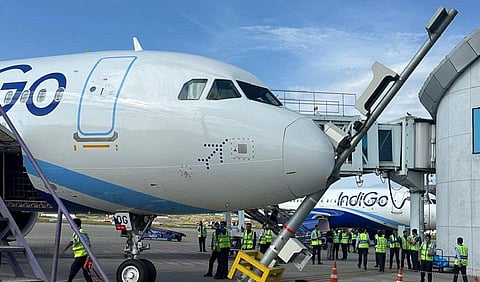
Airbus has detected a manufacturing quality issue involving surface protection on structural components inside some A321neo fuselages, with a small number of aircraft operated by IndiGo among those affected. The European planemaker has stressed that the problem does not pose a safety risk and that the aircraft can continue flying normally.
The issue involves a deviation in the protective coating applied to stringers — structural components running lengthwise along an aircraft’s fuselage — in the lower front section of certain A321 aircraft. Airbus said the problem was identified during standard rework, its source had since been identified and contained, and a remedy was available.
Around 500 jets affected
Around 500 A321neo aircraft are understood to be affected globally, split roughly equally between aircraft already delivered to airlines and those still at different stages of production. Airbus has not publicly disclosed a complete airline-wise breakdown of the affected fleet.
Some A321neo aircraft operated by IndiGo are among those impacted, though the number is understood to be limited. The development is significant for the Indian aviation market because IndiGo is one of the world’s largest operators of Airbus A320-family aircraft and has a substantial A321neo fleet.
The defect can reduce corrosion resistance within the affected part of the fuselage if left unaddressed. Airbus has, however, said the issue is a manufacturing-quality deviation rather than an immediate airworthiness or flight-safety concern.
Affected aircraft already in service do not require immediate grounding, and airlines can continue operating them. The corrective work also does not require the affected stringers to be removed, reducing the complexity of the intervention.
No immediate grounding
Airbus has told customers that there is no immediate requirement to repair aircraft already in service, although inspections and corrective work could be carried out over time. Aviation regulators could eventually prescribe a timeframe within which affected aircraft must undergo the necessary work.
For passengers, the key distinction is that the problem concerns the durability of corrosion protection rather than the immediate structural integrity of the aircraft. Airbus has said the source of the deviation has been contained and newly treated components comply with the required specifications.
The longer-range A321XLR is not affected by the issue, according to information available so far. The problem is confined to certain A321neo aircraft and comes as the model has become one of the most important aircraft in Airbus’s commercial portfolio.
Fresh production headache
The discovery presents another manufacturing challenge for Airbus at a time when the company is attempting to accelerate production of its popular narrow-body aircraft. Jets still on the production line may require additional corrective work before or around delivery, potentially adding pressure to an already stretched manufacturing system.
Airbus is seeking to raise monthly A320-family production substantially as airlines worldwide wait for new aircraft. The A321neo has become particularly important to that strategy because carriers increasingly use the larger narrow-body jet on high-density domestic routes as well as medium-haul international services.
The latest problem follows a separate fuselage-related manufacturing issue identified last year involving panels that did not meet specified production tolerances. That problem was also described as a quality issue without immediate safety implications, though the resulting inspections and rework contributed to delivery disruption.
IndiGo fleet in focus
For IndiGo, the latest development is not expected to trigger widespread disruption because affected aircraft have not been ordered out of service. Any inspections or corrective work would be carried out in accordance with Airbus instructions and requirements issued by aviation regulators.
The airline’s large Airbus fleet means even manufacturing issues affecting a relatively small proportion of A320-family aircraft can attract attention in India. The absence of a grounding requirement, however, means the current problem is fundamentally different from an emergency safety directive requiring aircraft to be immediately withdrawn from service.
The focus will now be on how quickly Airbus completes corrective work on aircraft still in production and how it schedules inspections or rework for jets already flying. For airlines and passengers, Airbus’s assessment remains clear: the coating deviation requires attention, but it does not currently prevent affected A321neos from continuing normal operations.


