.png)
Ladakh’s winter snow leopard adventure earns a spot among world’s top wildlife experiences

For travellers who would rather trade a traditional safari vehicle for a pair of binoculars and a freezing Himalayan trail, Ladakh offers a very different kind of wildlife adventure.
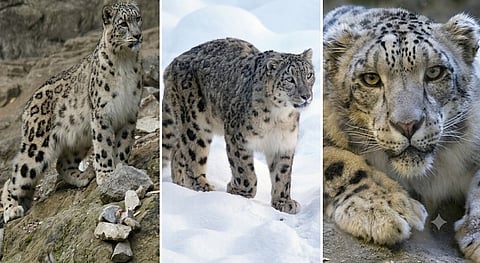
Snow leopard tracking in Ladakh has been ranked the fourth-best wildlife experience in the world in a new Wildlife Experience Index released by travel company Bailey Robinson. The high-altitude experience, centred on the elusive “Ghost of the Mountains", scored 85.5 out of 100.
It ranked behind mountain gorilla trekking in Rwanda or Uganda, emperor penguin expeditions in Antarctica and saiga antelope trips in Kazakhstan.
A wildlife encounter in the high Himalayas
The index assessed 30 wildlife experiences on six parameters—rarity, remoteness, conservation importance, exclusivity, accessibility and encounter potential. Eight of the top 10 experiences featured threatened species.
In Ladakh, snow leopard tracking takes visitors deep into the winter landscape of Hemis National Park. Local trackers and experienced guides look for signs of the elusive cat across areas including the Rumbak, Uley and Shang valleys.
The search can also bring encounters with other Himalayan wildlife. Blue sheep, or bharal, Asiatic ibex, Tibetan wolves and red foxes inhabit the region, while lynx sightings are possible on occasion.
Why winter is the season to go
For those willing to brave the cold, November to March is generally regarded as the best period for snow leopard trekking.
Winter changes the movement of the animals. Blue sheep and ibex descend towards lower valleys in search of food, which can bring snow leopards closer to areas where trackers have a chance of spotting them.
There is, however, little comfort in the pursuit. Temperatures can fall well below freezing, while the terrain remains rugged and sits at high altitude. Trekkers may spend long stretches outdoors, scanning slopes through binoculars or scopes while waiting for movement.
The adventure begins before the trek
Acclimatisation is an important part of the experience. Travel specialists recommend spending time in Leh before heading into the mountains so the body can adjust to the altitude.
Sarah Parker of Bailey Robinson noted that the most extraordinary wildlife encounters often require travellers to go further into wild places and support the communities and projects that protect them.
Snow leopard trekking in Ladakh embodies that idea—a demanding journey into the high Himalayas where patience, preparation and a little luck can lead to one of the world's rarest wildlife sightings.

