.png)
Can India's junk food ban near schools help fight childhood obesity? What WHO says
A child’s eating habits are shaped not just by what is served at home but also by what is available outside school, in nearby shops and through advertisements. Easy access to chips, sugary drinks and fast food can make these products a regular part of a child’s diet.
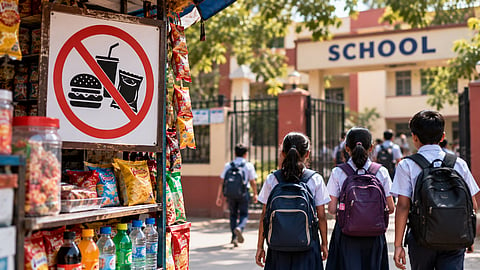
The World Health Organisation’s (WHO) first global guidelines on managing obesity in children and adolescents have brought renewed attention to the need for healthier food environments. In India, efforts to restrict the sale of foods high in fat, salt and sugar (HFSS) within 50 metres of schools have raised a related question: can limiting access to junk food around educational institutions help tackle childhood obesity?
What do WHO's new guidelines say?
WHO estimates that 170 million children and adolescents aged 5–19 were living with obesity in 2024. The prevalence in this age group has quadrupled since 1990, rising from 2 per cent to 8 per cent.
The guidelines recommend structured interventions combining dietary changes, physical activity and behavioural support for children and adolescents with obesity. They also stress that care should be appropriate to a child’s age and individual needs.
The recommendations place the issue beyond weight management alone. WHO has called for wider measures to make healthy diets and physical activity more accessible and affordable, noting that treatment by itself cannot reverse the growing prevalence of obesity.
Can restrictions near schools make a difference?
India’s proposed restrictions, being advanced by the Food Safety and Standards Authority of India (FSSAI), seek to limit the availability of HFSS foods and drinks within a 50-metre radius of schools.
The move focuses on an environment children encounter daily. School canteens and shops in the surrounding area can influence which snacks and drinks are within easy reach during breaks or on the journey home.
Maharashtra has already adopted stricter measures, prohibiting the sale, free distribution and advertising of HFSS processed and packaged foods and beverages within schools and a 50-metre radius of them.
Why a school food ban may not be enough
Restrictions around schools cannot eliminate children’s exposure to unhealthy food elsewhere. The same products may remain available at home, in supermarkets and through food delivery apps, while advertising can continue to shape preferences.
WHO’s recommendations call for action across sectors, including education, urban planning, transport and social protection. Limiting junk food sales near schools could therefore form one part of a broader effort, alongside nutrition education and affordable, healthier alternatives for children and their families.


