.png)
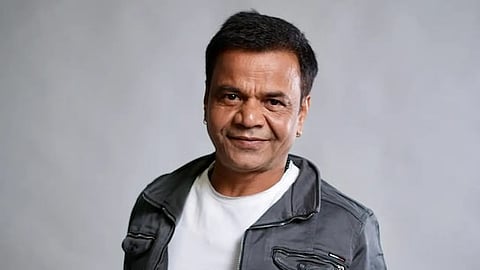
‘Your place is in jail’: SC raps Rajpal Yadav over failure to pay dues
The Supreme Court on Monday sharply pulled up Bollywood actor Rajpal Yadav for failing to comply with its directions to deposit money in a long-running cheque bounce dispute, with the Bench telling his counsel that the actor’s “place is in jail” after another payment deadline was missed.
A Bench comprising Chief Justice of India Surya Kant and Justices Joymalya Bagchi and V Mohana expressed displeasure over Yadav’s failure to honour commitments made before the court. The actor had earlier received protection from surrender while being given time to arrange funds and present a concrete proposal for clearing the outstanding dues.
Court questions compliance
During Monday’s hearing, Yadav’s counsel produced a copy of a demand draft for Rs 50 lakh and told the court that it was being processed by the bank. The Bench was not convinced and questioned whether the payment instrument was genuine and whether the promised amount had actually been deposited.
The court noted that Yadav had been given sufficient time to comply with its earlier directions. On September 15, the Bench had granted him another two weeks after his counsel sought additional time to arrange the funds.
The Supreme Court had earlier directed Yadav to deposit Rs 5 crore with its Registry as a condition for protection from surrender. At the September 15 hearing, his counsel had undertaken that at least Rs 2 crore would be deposited to demonstrate his bona fides while a concrete proposal would be presented for payment of the remaining dues.
When the matter returned to court on Monday, however, the promised payment had not been made.
‘Your place is in jail’
The hearing witnessed a sharp exchange after Yadav’s counsel remarked that the complainant was “not poor”. Justice Bagchi took exception to the submission and rebuked the actor’s side.
The judge said the complainant might be richer than Yadav but remained deprived to the extent of the money involved in the dispute. He said the “arrogance” needed to be put in its proper place and told the counsel that Yadav’s “place is in jail”.
The complainant’s counsel also accused the actor of repeatedly failing to honour assurances made before courts and argued that his conduct showed disregard for judicial directions.
The Bench indicated that it could dismiss Yadav’s appeal over his conduct but was conscious that such a course might make it more difficult for the complainant to recover the outstanding money. The court therefore sought to balance enforcement of its orders with the complainant’s interest in recovering the dues.
24-hour deadline
The Supreme Court gave Yadav another opportunity to make the payment, directing that it be done by Tuesday. The matter is scheduled to return before the court on Wednesday, when compliance with the direction will be examined.
The latest extension came despite the Bench expressing strong displeasure over Yadav’s repeated inability to meet deadlines.
At an earlier hearing, the court had already questioned the actor’s conduct, observing that his past actions did not inspire confidence. The Bench had nevertheless agreed to provide what it described as a final opportunity after his counsel said funds would be arranged.
Dispute dates back to 2010
The cheque dishonour litigation stems from financial assistance of Rs 5 crore received in connection with a film project in 2010. The dispute involves private company Murli Projects Pvt Ltd and Yadav, his wife and their company.
According to the complainant, the money was provided for the film project and subsequent agreements were entered into between the parties after the project could not be completed within the agreed timelines.
The complainant alleged that Yadav later issued cheques towards settlement of the financial liability but several of them were dishonoured when presented for payment. This resulted in criminal complaints under the Negotiable Instruments Act.
Yadav has contested aspects of the complainant’s case. His plea has argued, among other things, that a subsequent consent agreement affected the validity of the earlier cheques on which the complaints were based.
Conviction challenged
The litigation has travelled through the trial court, sessions court and Delhi High Court before reaching the Supreme Court. Yadav and his wife were convicted in the cheque dishonour cases, with the actor subsequently challenging the orders against him.
The Delhi High Court upheld his conviction and eventually directed him to surrender after noting repeated failures to comply with assurances regarding payment. Yadav has challenged the conviction and sentence before the Supreme Court.
The top court had initially granted him protection from surrender subject to payment conditions. As those conditions remained unfulfilled, the issue of compliance has repeatedly returned to the Bench.
Court had given ‘last opportunity’
On September 15, Yadav’s counsel told the Supreme Court that the actor needed additional time to raise money and sought two weeks to work out a concrete settlement proposal. The Bench granted the request despite reservations over his previous conduct.
His counsel had indicated that immovable property could be sold to arrange the necessary funds. The court consequently extended his protection from surrender until October 5 and expected the promised payment to be made within the stipulated period.
Monday’s hearing showed that the deadline had passed without the undertaking being fully honoured. The production of a copy of a Rs 50 lakh demand draft did little to satisfy the Bench, which questioned why the earlier directions had not been complied with.
The case will now return to the Supreme Court after the fresh payment deadline, with Yadav’s continued protection and the fate of his challenge likely to depend significantly on whether he complies with the court’s latest direction.


